Whole Home Mold Remediation in Ridgefield, Crawl Space to Attic Across Eight Areas
 1 / 9
1 / 9The crawl space joist bay. This is the surface directly under the floor of the rooms above, which is why a crawl space condition does not stay in the crawl space.
See How the Work Was Done
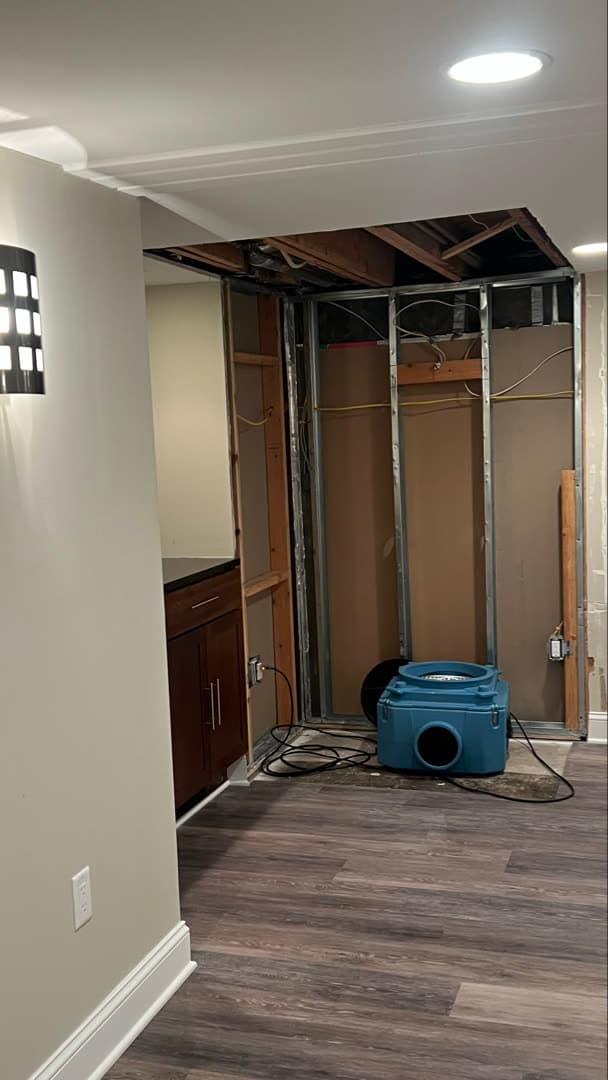
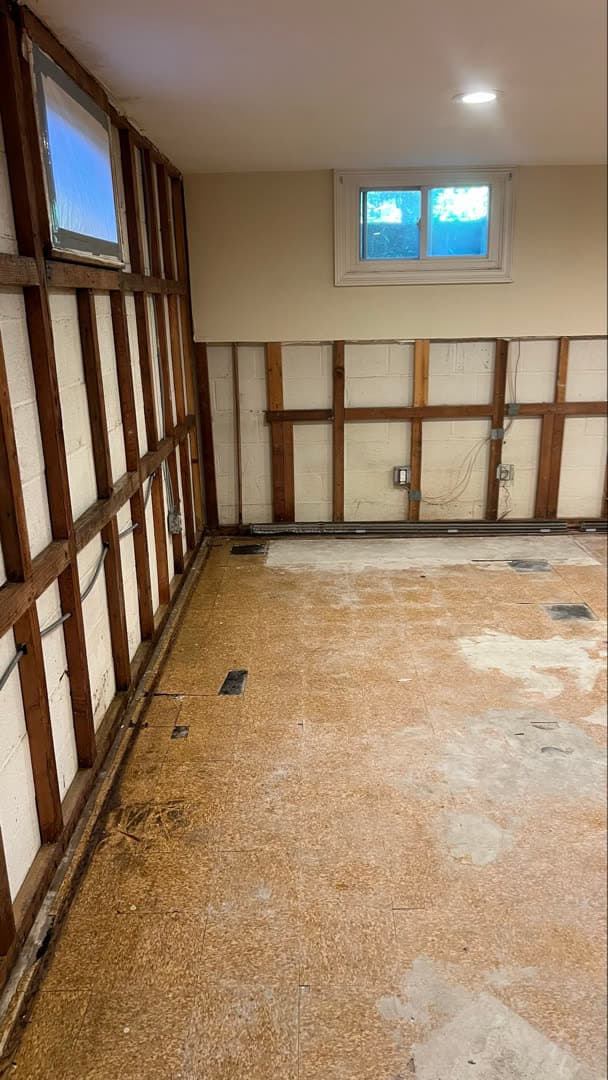
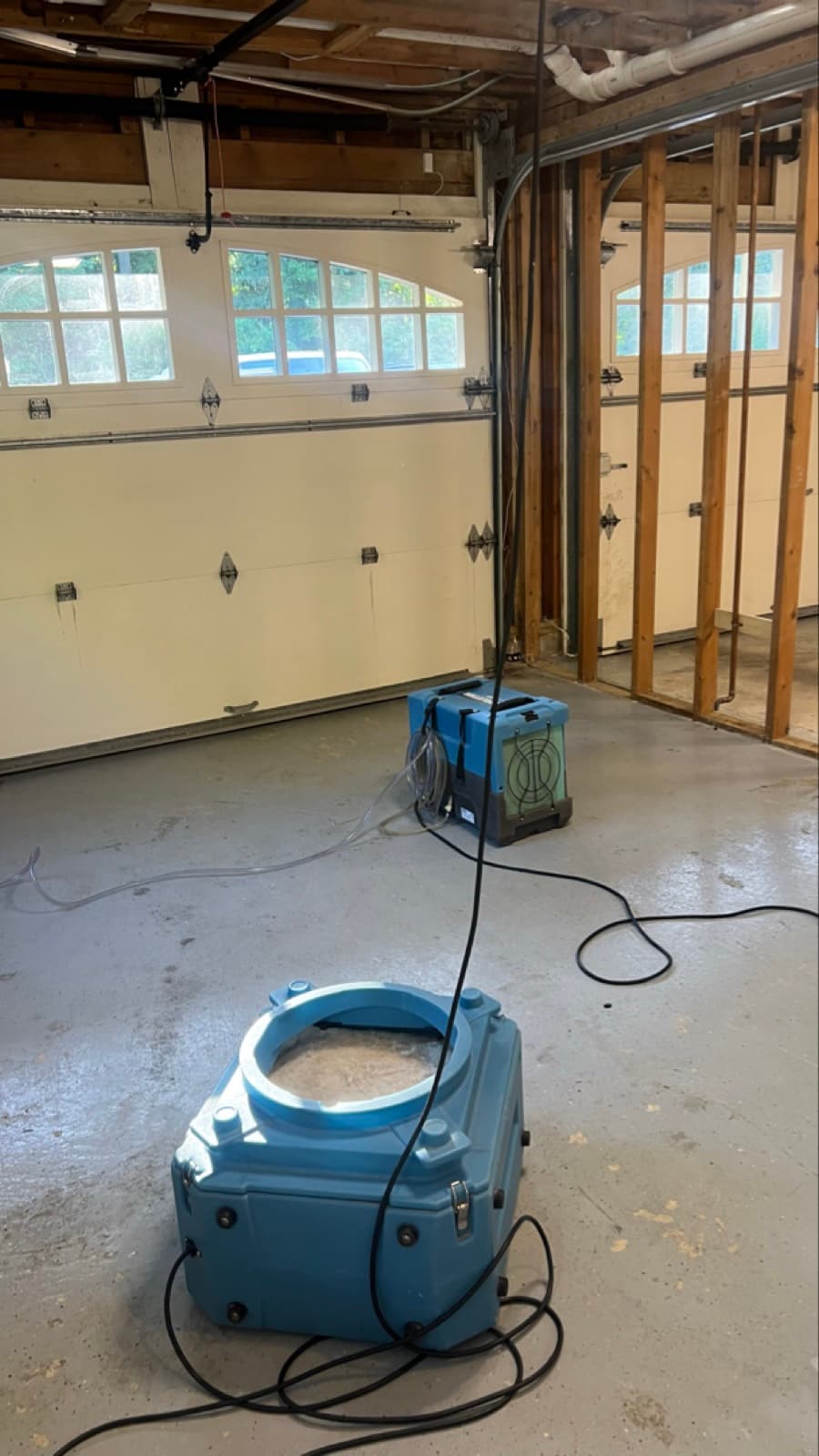
Real photos from this Ridgefield job: the mold in the crawl space joist bays, the containment and negative air, the contents wrapped in place, and structure cleaned back to bare wood.
What Happened
The instruction on this job was three words: start in garage and crawl space. It did not finish there. Over the course of the project the crew worked the crawl space, the garage, the family room ceiling, a bathroom, the living room, the master bathroom ceiling, the attic and the master bedroom, and the reason that progression matters is that it is what mold in a house actually looks like. It is rarely one room. It is one condition expressing itself wherever the building gives it a surface and some moisture.
What makes a job this size manageable rather than chaotic is containment discipline, and the numbers describe it. 360 square feet of containment barrier with a decontamination chamber, four zipper airlock doors, 432 square feet of floor protection, and ten separate 24 hour negative air periods. Ten periods on one project is the single most telling number here. It means the work zone was held under negative pressure continuously as it moved through the house, so opening a ceiling in the family room did not seed the bedrooms, and clearing a crawl space did not load the living space above it.
The removals were specific rather than wholesale. 450 square feet of drywall came out along with 450 square feet of insulation from confined space, then another 168 square feet of drywall and 28 square feet beyond that. The garage ceiling and the master bathroom ceiling were each scoped as their own remediation. What was not removed was cleaned: 450 square feet of joist system, 168 square feet of stud wall, 900 square feet of attic, 580 square feet of crawl space, and 720 square feet of visible mold cleaned and removed directly. Then 2,190 square feet of horizontal and vertical surfaces were cleaned as a single environmental pass.
Only after all of that did 2,116 square feet of walls and ceilings receive one coat of antimicrobial coating. The order is the point. Coating a surface that has not been cleaned buries the problem rather than removing it. The last decision on this job is the one most projects skip. Two HVAC systems were cleaned for mold contamination. A forced air system that has been running in a house with mold in the crawl space, the garage and three ceilings has been moving that air everywhere, and leaving the ductwork untouched means handing back a clean house with a dirty distribution network in it.
Scope of Damage
Crawl Space
SevereGrowth on the underside of the subfloor and through the joist bays. Insulation was torn out and bagged from confined space, and 580 square feet of crawl space was cleaned.
Garage Ceiling
SevereScoped as its own full mold remediation. The affected sheetrock ceiling came down, and the exposed structure was HEPA vacuumed and cleaned before anything closed back up.
Family Room And Bathroom Ceilings
ModerateAffected ceilings were opened and removed, then the cavity above was HEPA vacuumed and cleaned. Recorded in the crew notes in the order the rooms were worked.
Master Bathroom Ceiling
ModerateScoped as a separate mold remediation line from the garage ceiling, because the two areas were priced and worked independently.
Attic And Master Bedroom
ModerateThe last areas worked. 900 square feet of attic cleaning, followed by antimicrobial coating as recorded in the final crew note.
Two HVAC Systems
ModerateBoth air handler systems were cleaned for mold contamination, because forced air had been circulating through a house with affected crawl space, garage and ceilings.
How We Solved It
- 1
Containment And Airlocks First
360 square feet of containment barrier with a decontamination chamber and four zipper doors, plus 432 square feet of floor protection, before any material was disturbed.
- 2
Ten Negative Air Periods
Ten separate 24 hour negative air scrubber periods held the work zone under negative pressure as it moved room to room, so opening one ceiling did not contaminate finished areas.
- 3
Contents Manipulation
Contents were moved clear of each work area and protected in place, then reset. On a job that crosses eight areas this happens repeatedly rather than once.
- 4
Targeted Removals
450 square feet of drywall plus 450 square feet of confined space insulation, then a further 168 and 28 square feet of drywall. Affected ceilings in the garage, family room, bathroom and master bathroom came down.
- 5
Clean What Stays
450 square feet of joist system, 168 square feet of stud wall, 900 square feet of attic, 580 square feet of crawl space, and 720 square feet of visible mold cleaned and removed.
- 6
Environmental Cleaning Pass
2,190 square feet of horizontal and vertical surfaces cleaned as one pass, so the rooms around the removals were addressed rather than only the openings.
- 7
Antimicrobial Coating Last
2,116 square feet of walls and ceilings sealed with one coat of antimicrobial coating, applied only after cleaning. Coating an uncleaned surface buries a problem instead of removing it.
- 8
Clean The Ductwork
Two HVAC systems cleaned for mold contamination, so the distribution network was not handed back dirty in a house that had just been cleaned.
Tools & Equipment Used
Questions Homeowners Ask
Why did a crawl space job end up covering eight areas of the house?
Because mold is usually one condition expressing itself wherever the building offers a surface and moisture, not one isolated patch. This Ridgefield project began in the crawl space and garage and extended to the family room ceiling, a bathroom, the living room, the master bathroom ceiling, the attic and the master bedroom as the crew worked through it.
What does antimicrobial coating do, and when should it be applied?
An antimicrobial coating is applied to cleaned structural surfaces to resist future growth. The critical point is sequence. On this project 2,116 square feet received one coat only after cleaning was complete. Coating a surface that has not been cleaned seals material in rather than removing it, which is why the order matters more than the product.
Why clean the HVAC system during mold remediation?
A forced air system circulates air through the whole house. When affected areas include a crawl space, a garage and three ceilings, the ductwork has been moving that air everywhere for as long as the condition existed. Two HVAC systems were cleaned for mold contamination on this project so the distribution network was not left dirty in a cleaned house.
How many negative air periods should a large mold job have?
It scales with how long the work zone stays open, not with room count. This project carried ten 24 hour negative air scrubber periods because the containment moved through eight areas over an extended schedule. Ask how many periods are in your quote, because it tells you how long the contractor expects to hold containment.
Was any testing or clearance performed on this project?
No. No mold testing, no air sampling and no clearance testing were sold or performed on this job, so none is claimed here. The scope covered containment, removal, cleaning, antimicrobial coating and HVAC cleaning. Testing and clearance are separate services and are quoted separately when a project calls for them.
Do you serve Ridgefield and Fairfield County?
Yes. Green Restoration serves Ridgefield and towns across Fairfield County for mold remediation, water damage, crawl space cleaning and air duct cleaning. Our crews are IICRC certified, licensed and insured, and BBB A+ Rated. Call (203) 674-9573 for a free estimate.
Ridgefield is served by
Green Restoration of Fairfield County
Available 24 / 7 for emergency response