Mold Removed From a Well Water Room in Stamford
 1 / 11
The well water room at the assessment: softener and filter tanks, the brine tank and the pressure tank.
See How the Work Was Done
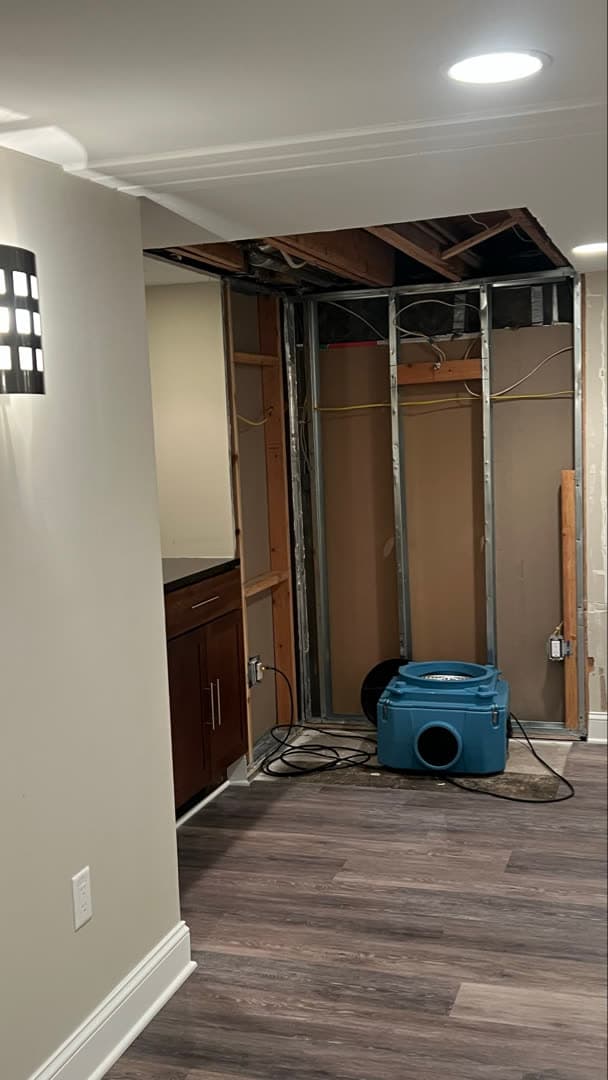
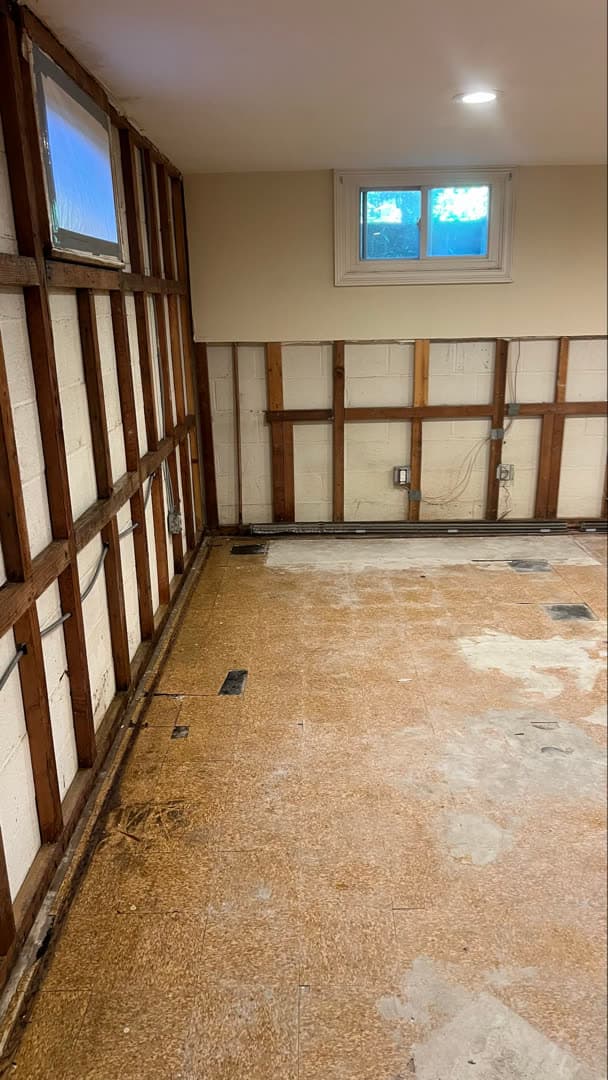
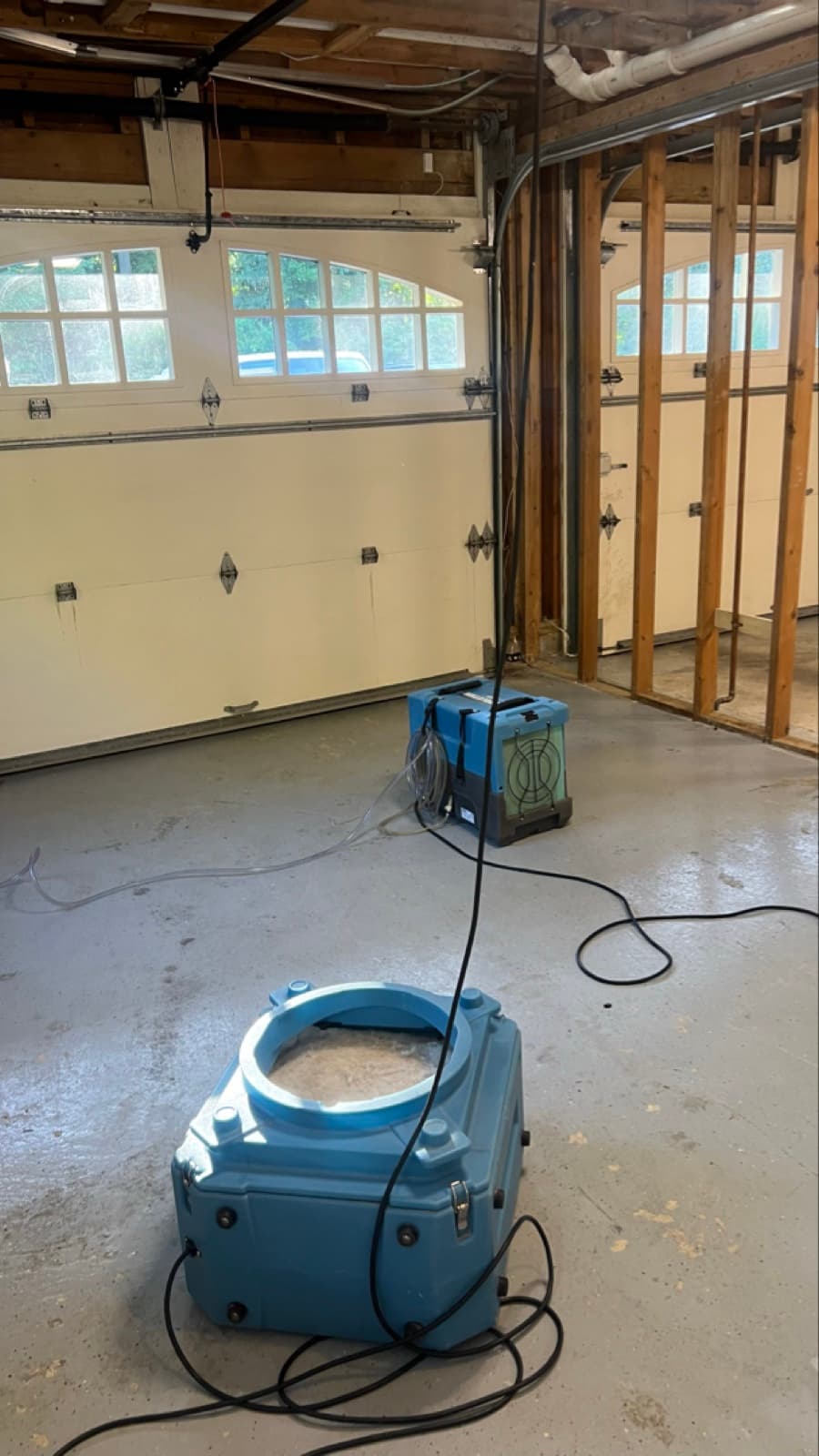
Real photos from this Stamford job: mold along the floor line behind the well water tanks, the containment and zip door, the wall opened to the studs, and the room after cleaning.
What Happened
A well water treatment room is a small, closed space full of equipment that handles water all day: softener and filter tanks, a brine tank, a pressure tank and the pipes between them. In this Stamford home that room had been doing it for years, and the walls showed it. The homeowner asked for help with mold growing in the room. At the assessment the growth ran along the floor line on every wall: dark spotting on the bottom of the painted drywall, heavier on the green foam board insulation behind the tanks, and across the floor and the wire shelving in the corner. The tanks themselves were spotted too.
Because the growth was concentrated low on the walls and the drywall and insulation behind it hold moisture, the scope was to remove the affected wall about 4 feet up, around the room, rather than wipe the face of it. On October 21 the crew protected the floors and sealed the room with 240 square feet of containment and a zip door. HEPA negative air scrubbers ran for three 24 hour periods, exhausting through 25 feet of lay-flat duct and a HEPA filter so the air leaving the work area was filtered.
Then 160 square feet of drywall and 160 square feet of insulation came out and were bagged inside the containment. The exposed studs and framing were HEPA vacuumed in detail, wet wiped and bio cleaned, and the same 160 square feet was fogged with a plant based antimicrobial through a cold ULV fogger to reach the gaps a wipe cannot. The rest of the room was HEPA vacuumed and bio cleaned, and the debris was hauled away. This job did not include testing, putting the walls back, or any work on the water treatment equipment itself. A room like this stays humid, so how it is ventilated before new drywall goes in is worth a conversation.
Scope of Damage
Drywall at the Floor Line
SevereDark growth along the base of the painted drywall on the walls of the room. 160 square feet removed and bagged, about 4 feet up.
Foam Board Behind the Tanks
SevereHeavy spotting on the foam board insulation along the floor behind the treatment tanks. 160 square feet of insulation removed with the drywall.
Wall Framing
ModerateExposed once the wall was open. HEPA vacuumed, wet wiped, bio cleaned and fogged across 160 square feet.
Equipment and Shelving
ModerateSpotting on the tanks and on the wire shelving in the corner. The rest of the room was HEPA vacuumed and bio cleaned.
How We Solved It
- 1
Floors Protected, Room Sealed
Floor protection first, then 240 square feet of containment with a zip door so the work stayed inside the well water room.
- 2
Filtered Negative Air
HEPA negative air scrubbers ran for three 24 hour periods, exhausting through 25 feet of lay-flat duct and a HEPA filter.
- 3
Wall Removed About 4 Feet Up
160 square feet of mold affected drywall and 160 square feet of insulation cut out and bagged inside the containment.
- 4
Framing HEPA Vacuumed and Bio Cleaned
The exposed studs were HEPA vacuumed in detail, then wet wiped and bio cleaned. The rest of the room was HEPA vacuumed and bio cleaned.
- 5
Fogged and Hauled
The 160 square feet of framing was fogged with a plant based antimicrobial through a cold ULV fogger, and the debris was hauled away.
Tools & Equipment Used
Questions Homeowners Ask
Why does mold grow in a well water treatment room?
The room holds equipment that handles water all day, the tanks sweat, and these rooms are usually small and closed. Moisture settles at the floor line, which is exactly where the growth in this Stamford room was heaviest.
Why remove the wall instead of cleaning it?
Drywall and the insulation behind it hold moisture, and growth on the painted face usually means more on the back. Here it was concentrated low on every wall, so 160 square feet came out about 4 feet up and the framing behind it was cleaned and treated.
Why containment for one small room?
Cutting moldy drywall releases spores. The 240 square feet of containment, the zip door and three 24 hour periods of HEPA negative air kept that inside the work area, and the exhaust left through a HEPA filter.
Was the water treatment equipment affected?
The tanks had spotting on the outside, and the room was HEPA vacuumed and bio cleaned. No work was done on the water treatment system itself.
Do you serve Stamford and Fairfield County?
Yes. Green Restoration serves Stamford, including Shippan, Glenbrook, Springdale, North Stamford and Cove, for mold remediation, water damage and environmental cleaning. Marvin Riveira's team is an IICRC Certified Firm, licensed and insured, and BBB A+ Rated. Call (203) 674-9573 for a free estimate.
Stamford is served by
Green Restoration of Fairfield County
Available 24 / 7 for emergency response