Mold Remediation Across Two Lower-Level Rooms in Wallingford
 1 / 6
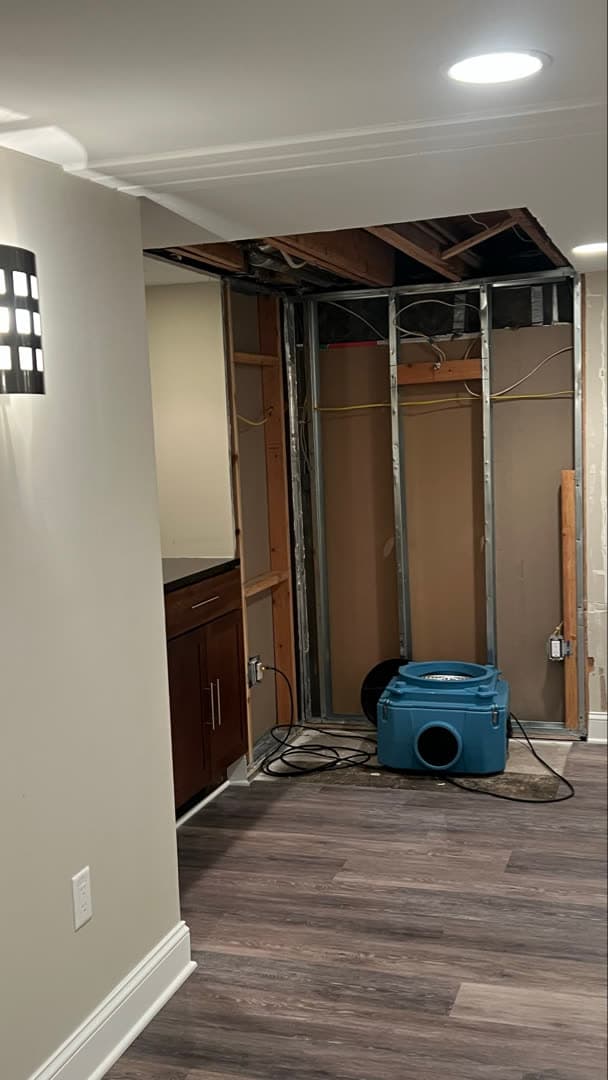
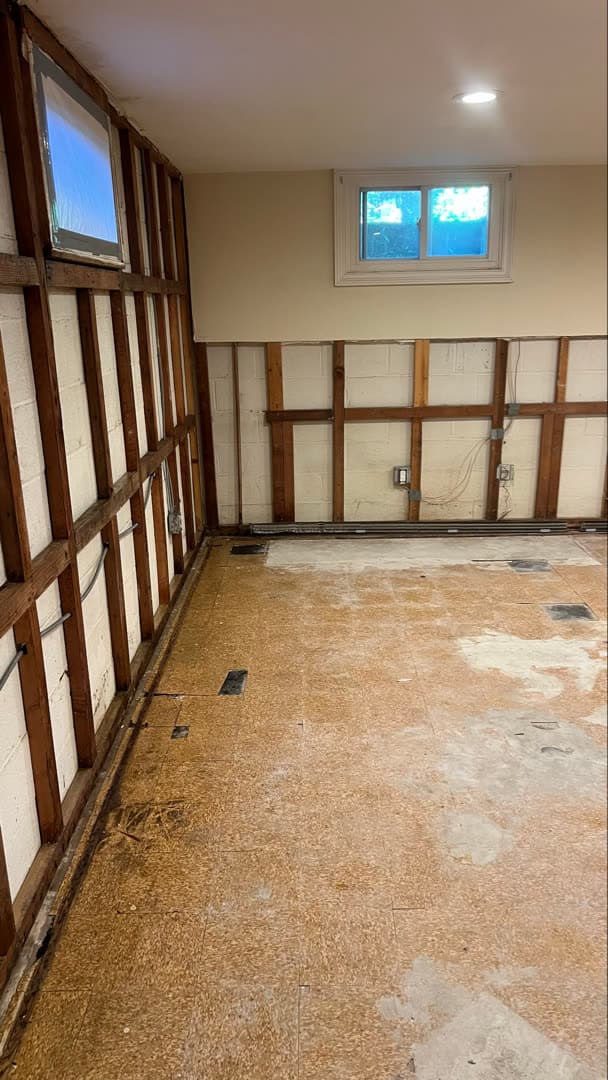
1 / 6Dark band of mold growth along the base of a wall in the Wallingford, CT lower level before remediation
What Happened
The tell in this Wallingford home was a dark band running along the base of the walls where they met the floor, the signature of moisture sitting low against the drywall rather than a leak coming from above. The rooms were measured before anything was cut, at roughly 260 square feet in the larger room and 180 square feet in the room under the kitchen, so the scope followed the actual affected footprint. Contaminated drywall was cut out in a strip to four feet and 16 linear feet of baseboard came out with it, both bagged for disposal.
With the wall bases open, the drop ceiling was pulled to expose the joists and subfloor above so nothing hidden was left behind. Two HEPA air scrubbers with HEPA exhaust filters ran the space while the crew HEPA vacuumed the demo room in detail and gave the adjoining room a lighter pass, then deep cleaned and disinfected every surface where visible mold had been. All three pieces of equipment, both scrubbers and the HEPA vacuum, were decontaminated before they left the property.
Scope of Damage
Wall Bases & Baseboard
SevereA continuous band of mold growth along the wall to floor junction. Contaminated drywall was cut out in a strip to four feet and 16 linear feet of baseboard was removed and bagged.
Room Under Kitchen
Severe180 square feet treated as the demo room, HEPA vacuumed in detail and then deep cleaned and disinfected across every surface where visible mold had been.
Adjoining Room
Moderate260 square feet handled as a non-demo room, with a lighter HEPA vacuum pass and the same deep clean and disinfection so the cleaning did not stop at the containment line.
Ceiling Cavity
ModerateDrop ceiling tiles removed to expose the joists and subfloor above, so staining and growth in the cavity could be inspected and addressed rather than covered back up.
How We Solved It
- 1
Measure the Footprint
Both rooms were laser measured before any material was opened, at roughly 260 and 180 square feet, so the scope matched the affected area rather than an estimate.
- 2
Controlled Removal
Contaminated drywall cut out in a strip to four feet plus 16 linear feet of baseboard, all bagged for disposal in full PPE.
- 3
Open the Ceiling Cavity
Drop ceiling tiles pulled to expose the joists and subfloor above so nothing hidden was sealed back in behind a finished surface.
- 4
HEPA Vacuum & Deep Clean
Detailed HEPA vacuuming in the demo room, a lighter pass in the adjoining room, then a deep clean and disinfection of all 440 square feet where visible mold had been.
- 5
Equipment Decontamination
Both air scrubbers and the HEPA vacuum were decontaminated before leaving the property, so nothing from this job travelled to the next one.
Tools & Equipment Used
David on This Job
What caused the dark band at the bottom of the walls?
A band low on the wall where it meets the floor means the moisture was sitting at the bottom of the drywall, not coming down from above. A leak from above leaves stains that run down. This pattern tells you the wet is low in the room, so that is where you open the wall.
How did you decide how high to cut the drywall?
We measured both rooms before anything was cut, so the work followed the actual damage. Then we took the drywall out in a strip up to four feet, which gets the affected material plus some margin above it. That opened the cavity for cleaning without gutting the whole room.
Why pull the drop ceiling if the mold was on the walls?
Because moisture that reached the base of the wall can reach the cavity above too, and a drop ceiling hides the joists and subfloor. Pulling tiles is the easy way to look. It is much better to check now than to find it after everything is closed up again.
What should a Wallingford homeowner check in a finished lower level?
Look at the bottom few inches of every wall, especially behind furniture and in corners. A dark line, peeling baseboard paint or a musty smell near the floor means moisture is coming in low. Running a dehumidifier helps, but find out where the water is getting in before you refinish anything.
Questions Homeowners Ask
Why does mold grow in a line along the bottom of a wall?
A band of growth at the wall to floor junction usually means moisture is entering low: a foundation seep, hydrostatic pressure through a slab, or high humidity condensing at the coldest surface in the room. Water falling from above leaves a different pattern. Reading which one you have is what tells you where to open the wall.
Why remove drywall in a strip instead of the whole wall?
Because you remove what is contaminated plus a margin, not the entire room. In this Wallingford project the drywall came out in a strip to four feet, along with 16 linear feet of baseboard behind it. That removes the colonized material and exposes the cavity for cleaning without turning a targeted remediation into a full gut.
Why pull the drop ceiling if the mold was on the walls?
Because a finished ceiling hides the joists and subfloor above it, and moisture that reached the wall base often reached the cavity too. Pulling the tiles is the cheap way to look. Sealing a suspect cavity back up behind a ceiling tile is how a remediation ends up getting done twice.
What is the difference between HEPA vacuuming and deep cleaning?
HEPA vacuuming physically lifts spores and settled debris off the surface into a sealed filter. Deep cleaning is the wipe and disinfection pass that follows, which addresses what the vacuum cannot pull off a surface. Both were run across all 440 square feet here, with the heavier detail pass in the demo room.
Why does the equipment get decontaminated?
Air scrubbers and HEPA vacuums sit inside the contaminated space for days. If they leave dirty, they carry that contamination into the next customer home. This job included a decontamination charge for all three pieces, the two scrubbers and the HEPA vacuum, before anything was loaded out.
Will the mold come back after remediation?
Remediation removes the growth. It does not change the moisture that fed it. If the source is a low level seep or chronic humidity in a lower level, the fix is drainage, sealing, or dehumidification alongside the cleaning. We tell you what we saw during the removal so the moisture side gets addressed rather than repeated.
Do you serve Wallingford, CT?
Yes. Green Restoration serves Wallingford and towns across New Haven County for mold remediation, water damage, and air duct cleaning. Our crews are IICRC certified, licensed and insured, and BBB A+ Rated. Call (203) 742-0542 for a free estimate.
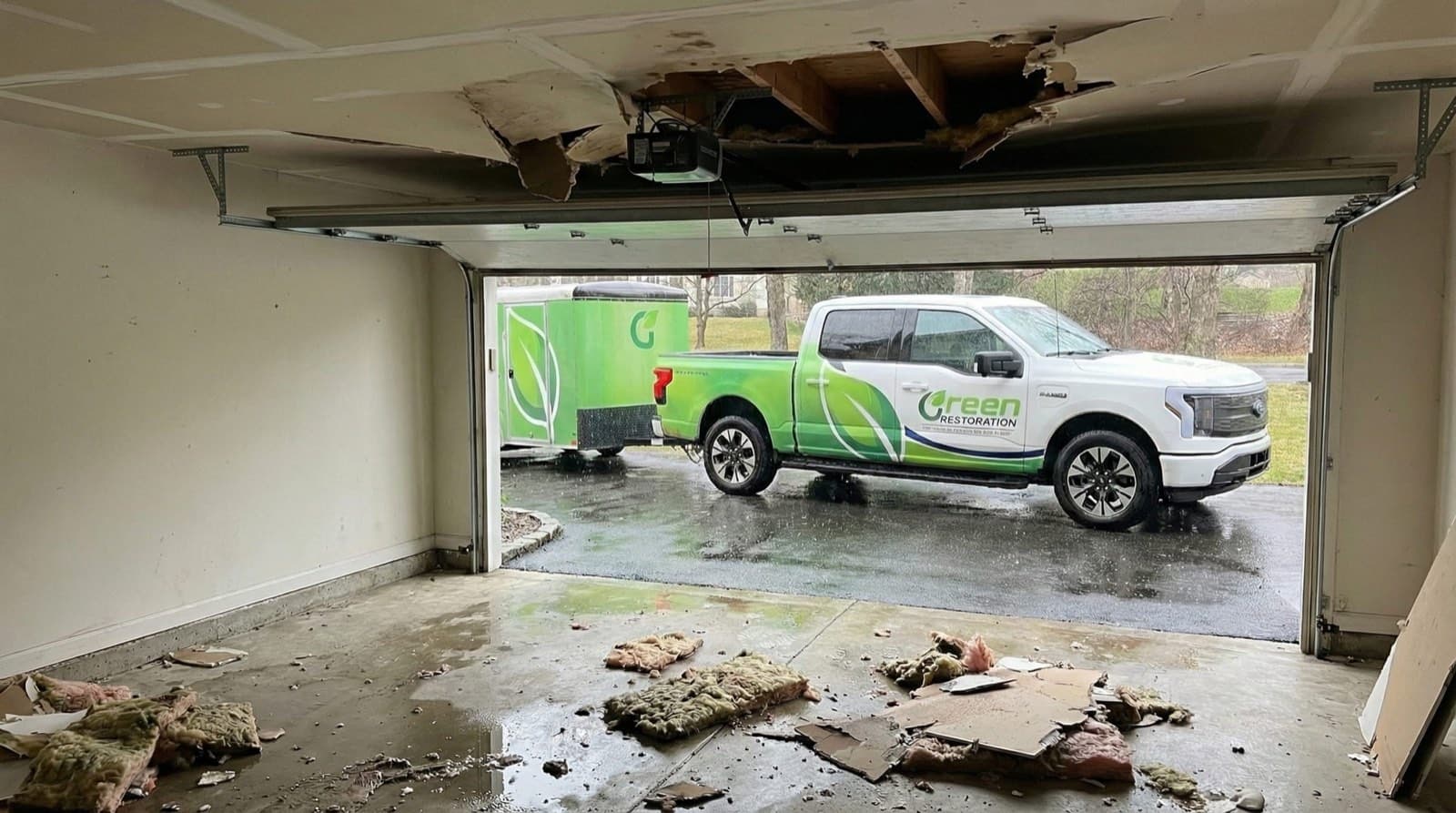
Wallingford is served by
Green Restoration of Hamden
Available 24 / 7 for emergency response