Attic Insulation Tear Out and Joist Cleaning Across 650 Square Feet in West Hartford
 1 / 8
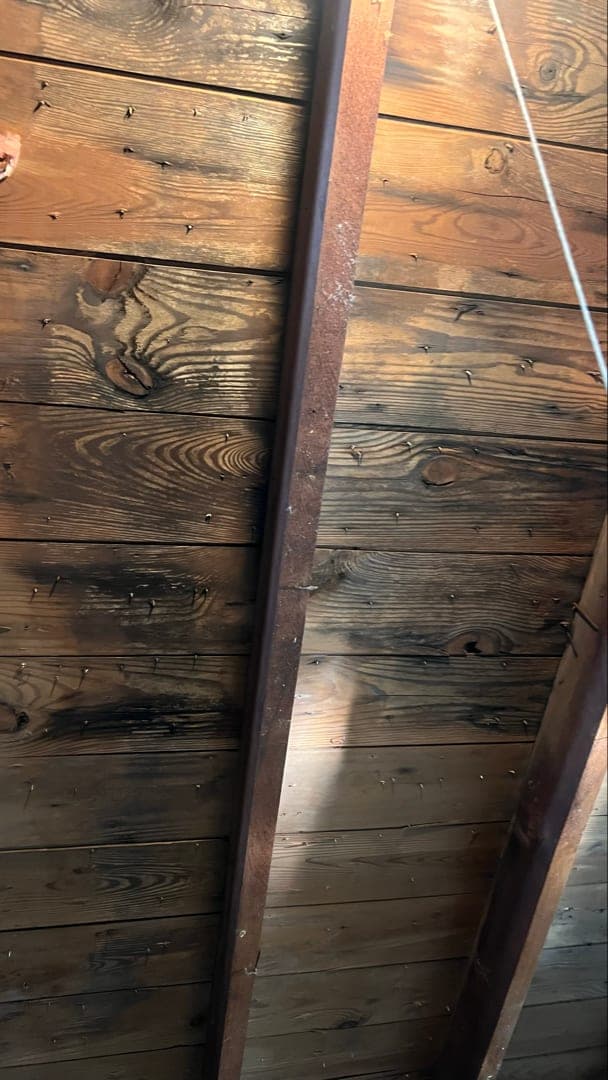
1 / 8The underside of the roof boards before cleaning. Wide plank decking that has gone grey and blotchy in the bays, which is what decades of winter condensation looks like in a pre war attic.
See How the Work Was Done
Real photos from this West Hartford attic: the grey roof boards, the chimney chase where it was worst, the protected route down through the house, and the attic cleared and cleaned two days later.
What Happened
This is the attic of an older West Hartford home, and it looked its age. The roof is decked in wide plank boards rather than sheet material, and across the underside of those boards the wood had gone grey and blotchy, darkest in the bays and around the brick chimney chase where the mortar had weathered open. Old insulation sat loose over the plank attic floor, broken up and shedding, with debris scattered across the boards. Attics in this part of West Hartford get here the same way.
The pre war housing stock was framed before anyone was thinking about air sealing, warm damp air from the living space works its way up through gaps around the chimney chase and the attic hatch, and in a plank decked attic with limited ventilation that moisture condenses on the cold underside of the roof boards through a Hartford County winter. Do that for a few decades and the boards record it. What the homeowner bought was a clean out, and the order of operations is what makes that work.
Nothing was touched in the attic until the route out of it was protected, because every bag of old insulation has to travel down through the middle of the house. Canvas floor protection went down the attic stairs and along the hallway. Poly containment was set at 130 square feet, taped floor to ceiling, with an airlock and a decontamination chamber so the crew and the debris had one controlled way in and out, and the stairwell itself was sheeted off at the top.
Three negative air scrubbers ran on site across three 24 hour periods, keeping the attic under negative pressure so air moved into the work zone and through a HEPA filter rather than out into the bedrooms below. The crew worked the job in full protective equipment. With that in place, 650 square feet of insulation was torn out and bagged in the attic rather than carried loose, and then the surfaces it had been covering were cleaned. The joist and roof board system was heavy cleaned across the same 650 square feet, and visible mold growth was cleaned off the wood with a peroxide based cleaner formulated for remediation work.
That distinction matters. This was physical removal and physical cleaning of the wood, not a coating sprayed over it. All of it, insulation and debris together, left the property in a single 12 yard dumpster. It is worth being just as clear about where this scope stopped. No new insulation was installed. The attic was handed back clean and bare, which is the correct condition to reinsulate from but is not the same thing as being reinsulated, and that decision now sits with the homeowner.
No air sealing was performed, no antimicrobial or encapsulant coating was applied, and no mold testing, air sampling or clearance testing was part of this job. Nothing was done to the roof, the chimney or the attic ventilation, so the moisture path that stained those boards in the first place is still there. Old fabric wrapped ductwork runs through this attic and was left undisturbed. Wrap of that age can contain asbestos, Green Restoration is not licensed for asbestos work and does not disturb it, and anything involving that ductwork would be coordinated with a licensed abatement contractor as a separate scope.
Scope of Damage
Roof Board Underside
SevereGrey and blotchy staining across the underside of the wide plank roof boards and the rafters, heaviest in the bays. 650 square feet of the joist and roof board system was heavy cleaned and visible mold growth was cleaned off the wood.
Chimney Chase
ModerateThe boards where the roof meets the brick chimney chase carried the darkest staining, with the chimney mortar weathered open at the attic level. No masonry, flashing or chimney repair was part of this scope.
Attic Floor Insulation
SevereOld insulation laid loose over the plank attic floor, broken up and shedding, with debris across the boards. All 650 square feet was torn out and bagged in place.
Wrapped Ductwork
LightOld fabric wrapped ductwork runs through the attic with the wrap deteriorated and frayed at the joints. It was left undisturbed. Material of that age can contain asbestos and is a licensed abatement scope, not ours.
How We Solved It
- 1
Protect the Route Out
Canvas floor protection was laid down the attic stairs and along the hallway before anything was moved, because every bag of old insulation travels down through the middle of the house.
- 2
Containment and Decontamination Chamber
130 square feet of poly containment was set and taped floor to ceiling with an airlock and a decontamination chamber, and the attic stairwell was sheeted off at the top, so the crew and the debris had one controlled way in and out.
- 3
Negative Air
Three negative air scrubbers ran across three 24 hour periods, holding the attic under negative pressure so air moved into the work zone and out through a HEPA filter instead of into the rooms below.
- 4
Protective Equipment
The crew worked the full job in personal protective equipment for hazardous cleanup, which is the standard when insulation that has been sitting in a stained attic is being pulled apart.
- 5
Insulation Tear Out and Bagging
650 square feet of old insulation was torn out and bagged in the attic as it came out, rather than carried loose through the containment.
- 6
Heavy Cleaning of the Joist and Roof Board System
With the insulation gone, 650 square feet of the joist and roof board system was heavy cleaned, which is the step that actually reaches the wood the insulation had been covering.
- 7
Cleaning Visible Mold Growth
Visible mold growth on the wood was cleaned off using a peroxide based cleaner formulated for mold remediation and water damage work. Physical cleaning of the surface, not a coating applied over it.
- 8
Disposal
A 12 yard dumpster took the full job. All bagged insulation and debris left the property in one documented load, with delivery, haul off and Connecticut disposal covered.
Tools & Equipment Used
Questions Homeowners Ask
Why does the wood in an older West Hartford attic go dark?
Moisture, over years. Pre war homes were framed before air sealing was a consideration, so warm damp air from the living space leaks up through gaps around the chimney chase and the attic hatch. In an attic decked with plank boards and vented poorly, that moisture condenses on the cold underside of the roof through a Hartford County winter. Repeat it for a few decades and the boards keep the record.
Does the old insulation have to come out, or can new insulation go on top?
When the attic underneath it is stained and the material itself is broken down, it comes out. Laying new insulation over failed material seals whatever is in the old batts against the deck, and it makes the wood underneath permanently unreachable. Removing first is what allowed 650 square feet of the joist and roof board system on this job to actually be cleaned.
Why is containment needed for an attic clean out?
Because the debris has to come down through the house. Pulling apart old insulation in a stained attic puts a lot of material into the air in a space that connects directly to the bedrooms below through the hatch. On this job 130 square feet of poly containment with an airlock and a decontamination chamber, plus three negative air scrubbers, kept that air moving through a HEPA filter instead of down the stairs.
Was the attic reinsulated on this project?
No. This scope was removal and cleaning only. The attic was handed back clean and bare, which is the right condition to reinsulate from, but no new insulation was installed and no air sealing was performed. Reinsulating to the R-49 to R-60 depth recommended for this climate zone is a separate scope and a separate decision for the homeowner.
Was anything tested for mold before or after the work?
No. No mold testing, air sampling or clearance testing was part of this job. Visible mold growth on the wood was cleaned as part of the scope, and the work was performed under containment with negative air, but nothing here is a test result and nothing here is a clearance. Testing is a separate service and is deliberately never sold on the same quote as remediation.
What about the old wrapped ductwork in the attic?
It was left completely undisturbed. Fabric wrapped duct insulation of that age can contain asbestos. Green Restoration is not licensed for asbestos work and does not disturb, cut or remove suspect material. If a homeowner needs that ductwork addressed, the right sequence is testing by an independent party and then a licensed abatement contractor, which we coordinate rather than perform.
Does cleaning the attic stop the staining from coming back?
On its own, no, and it would be misleading to suggest otherwise. This job removed the insulation, cleaned the wood and hauled everything away. It did not change the roof, the chimney, or the attic ventilation, and it did not air seal the ceiling below. Until the moisture getting into the attic is addressed, the conditions that caused the staining are unchanged.
How long does an attic clean out like this take?
This one ran two days on site with the crew working roughly nine to four each day. The variables are square footage, how much material is up there, how tight the access is, and how much containment the route through the house needs. Setting containment and protection is not overhead on a job like this, it is a real share of the first day.
West Hartford is served by
Green Restoration of Hartford
Available 24 / 7 for emergency response