Mold on Block Walls and a Loose Plywood Floor in a West Haven Garage
 1 / 4
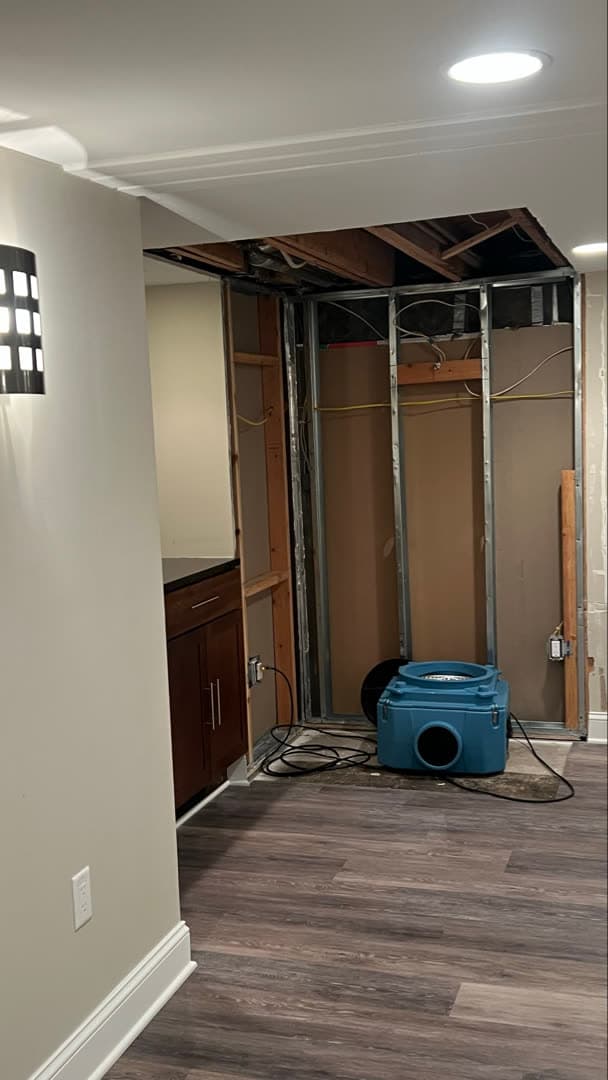
1 / 4What the homeowner saw: paint lifting off the block beside the side door, with growth underneath it.
See How the Work Was Done
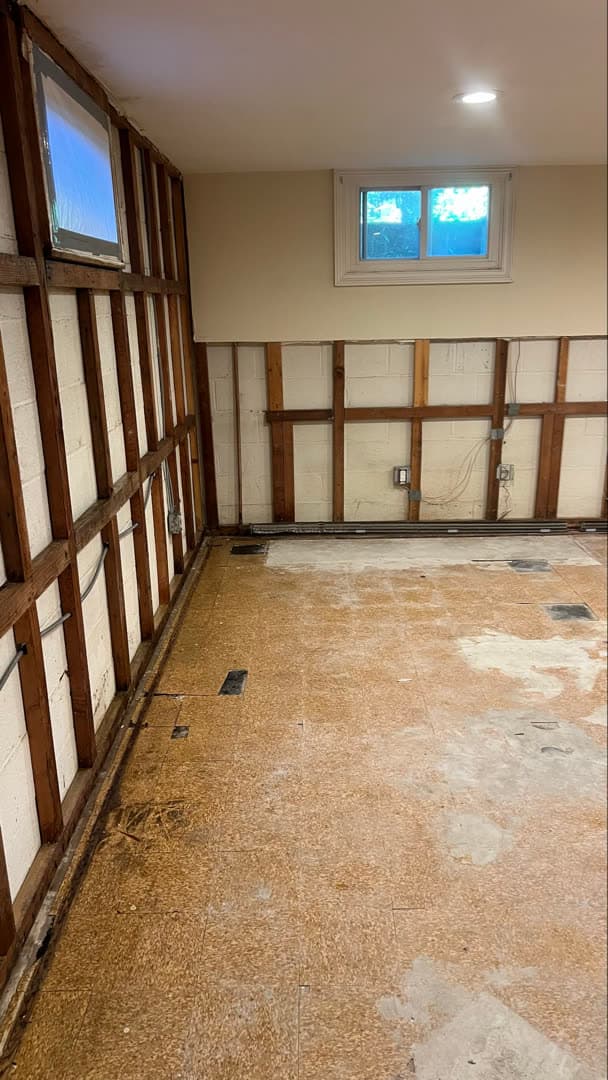
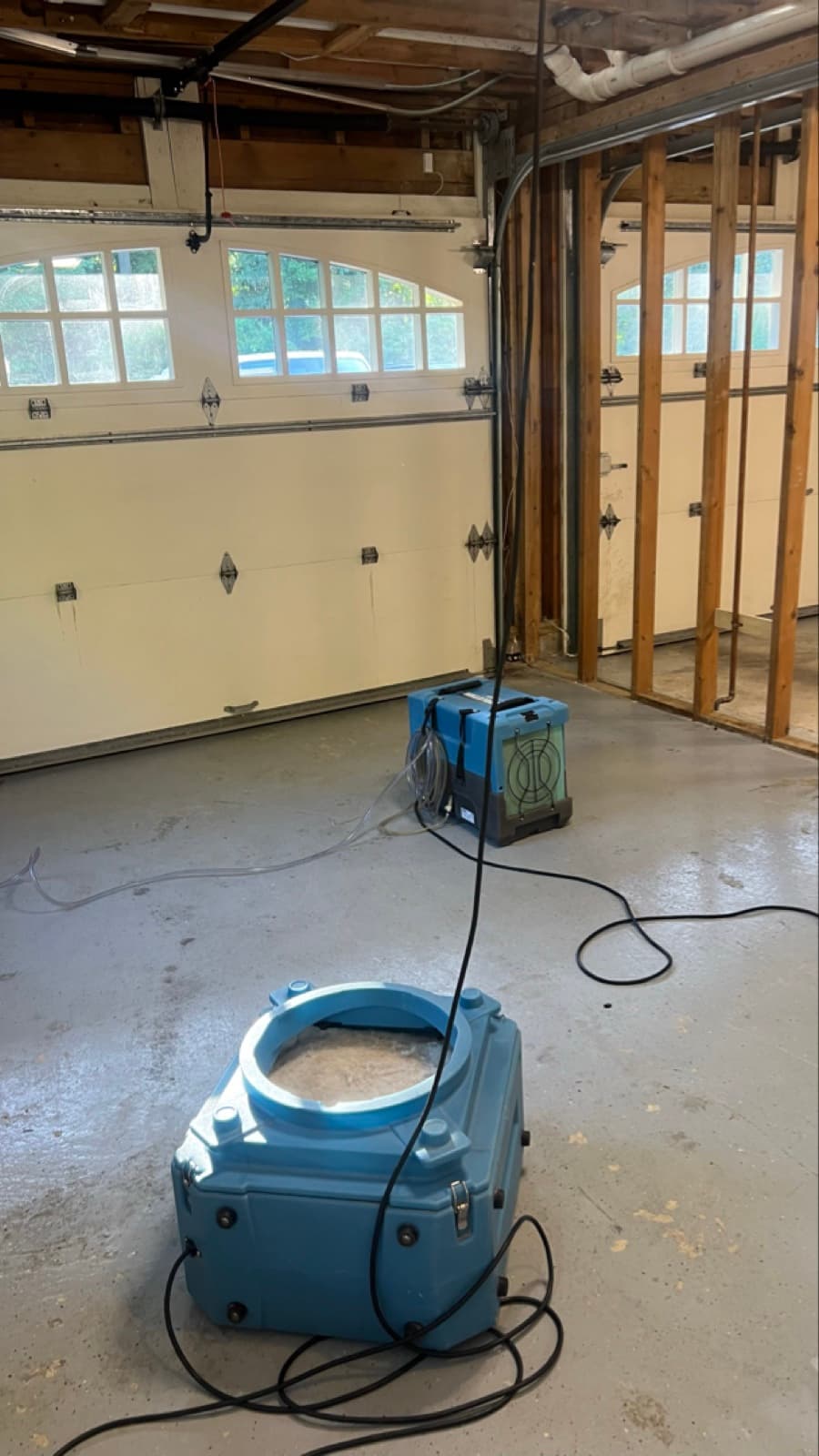
West Haven garage mold remediation in 20 seconds: the paint lifting off the block beside the side door, the dark band along the base of the walls, the plywood floor laid loose on the slab, the ceiling section cut out, and two days of negative air.
What Happened
What the homeowner could see was the corner above the garage side door, where the paint had lifted off the block and the drywall above it had gone dark. What the assessment found was three surfaces holding the same problem. The back wall and the exterior side wall carried growth and loose paint on the cinderblock up to about three feet off the floor, Condition 3 under IICRC S520, meaning actual growth rather than settled spores. A section of ceiling drywall roughly two feet by two feet was affected, along with the door trim and a strip of drywall running up to four feet beside the door.
Under all of it, a three quarter inch plywood subfloor had been laid loose on the concrete slab with nothing between the wood and the concrete, so it took on moisture from below and held it there. The floor is what kept the block wet, so the floor came out first.
Scope of Damage
Back Wall and Exterior Side Wall
Moderate85 square feet of cinderblock carrying growth and loose paint up to three feet off the floor, Condition 3 under IICRC S520. Wire brushed back to sound block, HEPA vacuumed, then treated with an EPA registered biocide.
Plywood Subfloor and Slab
SevereA three quarter inch plywood subfloor laid loose on the concrete with no barrier between the two, holding moisture against 185 square feet of slab. All of it removed and bagged, and the slab underneath cleaned and heavily treated.
Ceiling Drywall and Door Trim
ModerateA section of ceiling drywall about two feet by two feet affected at the corner above the side door. Cut out and bagged, with the door trim and the adjacent strip of drywall up to four feet beside the door taken out with it.
How We Solved It
- 1
Floor Out First
The 185 square feet of three quarter inch plywood came off the slab and left in bags before anything was done to the walls. Wood laid loose on concrete has no way to dry from underneath, so cleaning the block while that floor stayed would have put the walls back to wet.
- 2
Abrasive Cleaning on the Block
The back wall and the exterior side wall wire brushed up to three feet to take the growth and the loose paint off the cinderblock together, then HEPA vacuumed and treated with an EPA registered biocide across 85 square feet.
- 3
Ceiling Cutout and Trim Removal
The affected ceiling drywall section, about two feet by two feet, cut out and bagged, and the door trim plus the strip of drywall up to four feet beside the door removed so nothing colonized was left behind the finish.
- 4
Slab Treatment, Negative Air and Haul Off
The exposed slab cleaned and given a heavy EPA registered biocide treatment across 185 square feet. A HEPA negative air scrubber ran for two days, equipment was decontaminated before it left the work area, and all bagged debris was hauled off and disposed.
Tools & Equipment Used
Questions Homeowners Ask
Why did the plywood floor have to come out?
Because it was laid loose on the slab with nothing between the wood and the concrete. The slab passes moisture up, the wood holds it, and the underside never dries. 185 square feet came out and left in bags. Cleaning the walls while that floor stayed would have put the block back to wet.
Can mold be cleaned off a painted cinderblock wall?
Not by wiping it. On painted block the growth is in and under the paint layer, so the paint has to come off with it. Here the back wall and the exterior side wall were wire brushed up to three feet, HEPA vacuumed, and then treated with an EPA registered biocide across 85 square feet.
Why was part of the ceiling cut out instead of cleaned?
Drywall is porous, and once the paper facing is colonized surface cleaning does not reach it. The affected section, about two feet by two feet at the corner above the side door, was cut out and bagged, along with the door trim and the strip of drywall up to four feet beside the door.
How long does a garage like this take?
One working day on site with two technicians, 8:30 to 3:00. Removal, cleaning and treatment all happened inside that day. The HEPA negative air scrubber stayed and ran for two days, because brushing block and cutting drywall puts particles in the air that stay up long after the tools are down.
Does this include a new floor or new drywall?
No. This scope was removal, cleaning and treatment. No new subfloor, drywall, trim or paint was installed, and the ceiling section was left open. Putting fresh plywood straight back on the slab would rebuild the same trap, so the slab is better left bare or given a barrier before anything goes back down.
Is a garage worth remediating when nobody lives in it?
A garage that shares a wall or a door with the house also shares air with it, and stored belongings sit in that air. EPA notes mold exposure is associated with respiratory symptoms in sensitive individuals. It is also cheaper to deal with 85 square feet of block wall than to wait for the same moisture to reach finished space.
Was the mold tested?
No testing, air sampling or clearance testing was performed on this job. The visible growth, the condition of the paint on the block and the state of the floor defined the scope. Where a homeowner wants air sampling before or after the work, we arrange it in Connecticut through an independent lab.
West Haven is served by
Green Restoration of Orange
Available 24 / 7 for emergency response