Mold Behind a Store Wall on Main Street in Westport
 1 / 7
The containment on the sales floor, with a zipper door in. Shoppers stayed on the outside of the poly while the work went on inside.
See How the Work Was Done
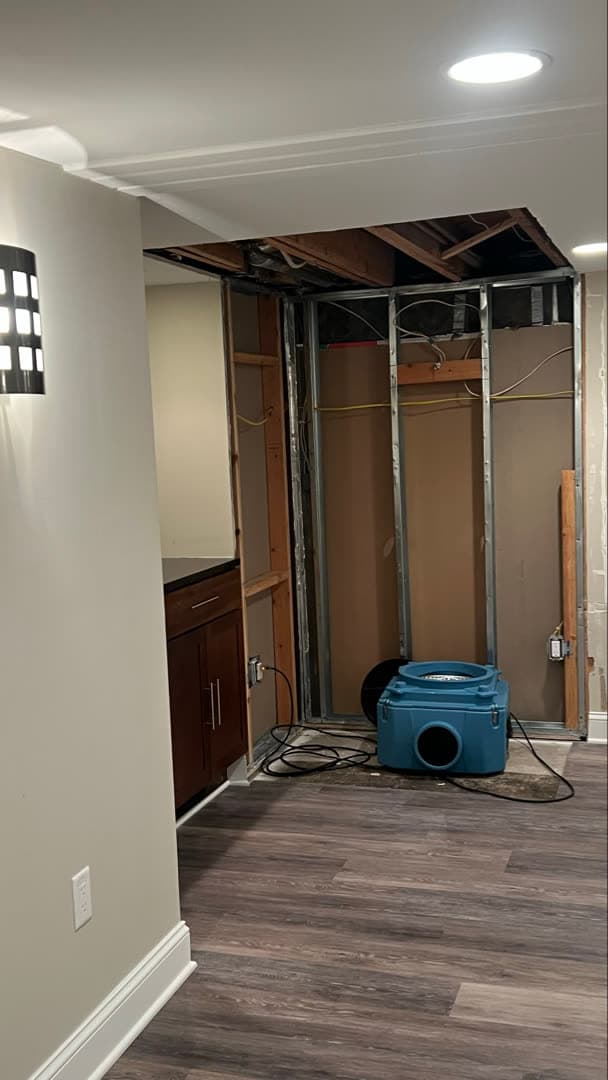
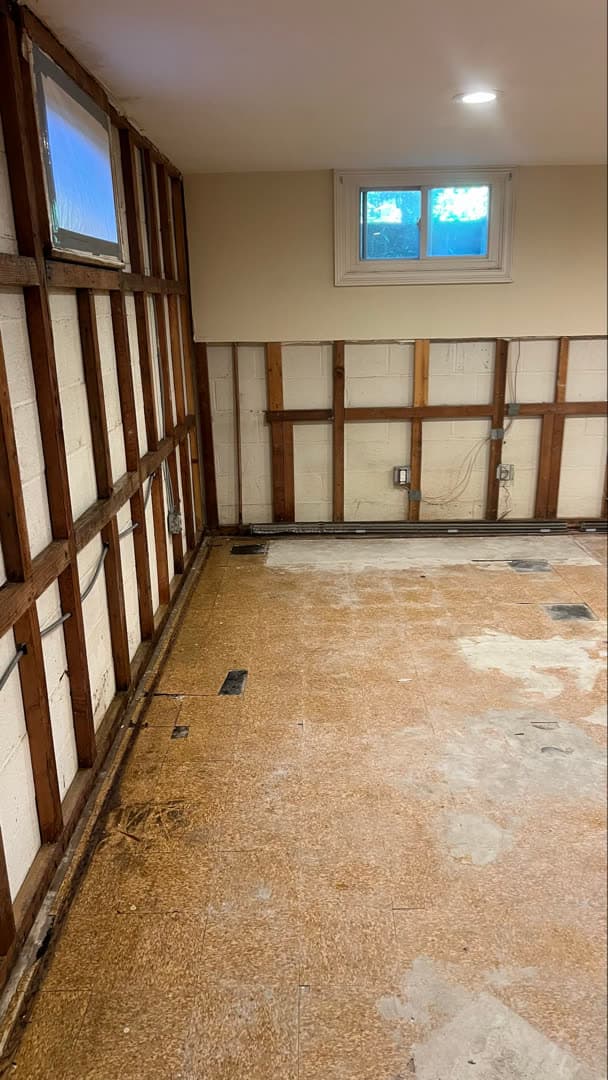
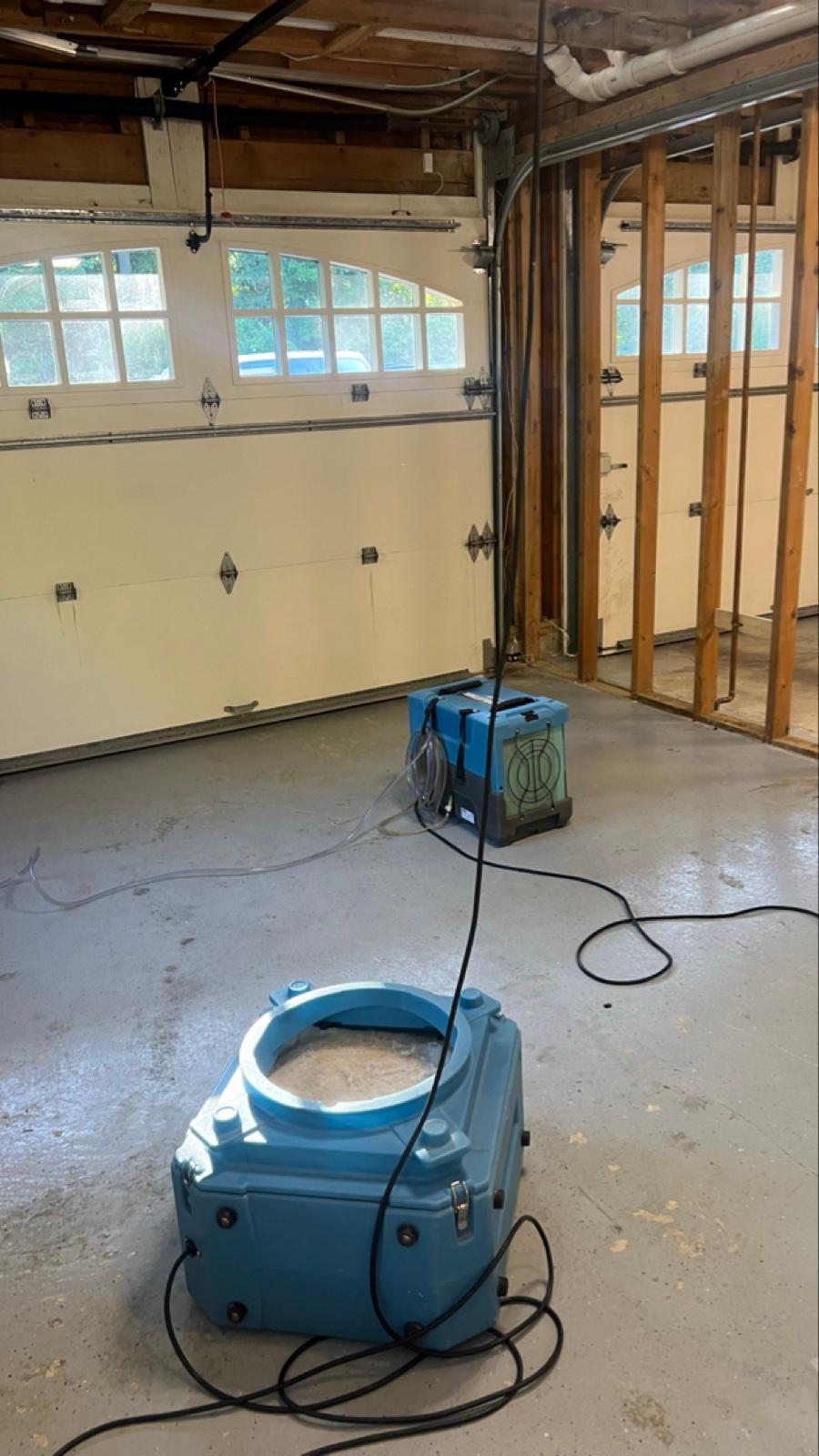
Real photos from this Westport store: the containment on the sales floor, the growth on the back of the board, the wall opened to the studs, and the opening sealed for the rebuild.
What Happened
The wall looked like any other wall on the sales floor. The moisture meter said otherwise: at the affected section it read near the top of its scale, and on the walls around it it read in single figures. That gap is what set the scope before anything was opened. The store needed to keep trading through the work, so the job was built around containment first.
A poly enclosure went up around the wall area with a decontamination chamber and a zipper door, 100 square feet of the wood floor was protected, and a HEPA air scrubber held the enclosure under negative air for two days, so air moved into the work area and not out onto the sales floor. Inside, the drywall came off an 8 foot section of the wall. The lower half had a second layer of board, and both layers came out. The back face of the removed board showed what the room side had hidden: heavy growth across the paper, dark spotting and green colonies spread over most of the piece.
With the board gone, the cavity was down to the steel studs and the panel behind them. The crew HEPA vacuumed 64 square feet of the opened wall, gave the stud wall a heavy clean, and on day two finished the cleaning and applied an antimicrobial coating to the cleaned studs, in line with ANSI/IICRC S520 practice. Debris was bagged inside the containment and hauled off, and the equipment was decontaminated before it left. The opening was then sealed with poly and handed back to the store, ready for its own contractor to rebuild the wall. Green Restoration did not do the rebuild.
Scope of Damage
Sales Floor Wall
SevereHeavy growth on the hidden back face of the drywall across an 8 foot section, with the room side showing little. Moisture read near the top of the meter scale here and in single figures on the walls around it.
Second Layer of Board
ModerateThe lower half of the wall carried a second layer of board. Both layers came off so the framing behind could be reached.
Steel Stud Framing
LightThe exposed steel studs were kept, HEPA vacuumed, heavy cleaned and coated with an antimicrobial across 64 square feet rather than removed.
How We Solved It
- 1
Measure Before Opening
Moisture readings across the affected wall and the walls around it, so the removal followed the readings and stayed inside the wet section.
- 2
Containment With a Decon Chamber
A poly enclosure around the wall area with a decontamination chamber and a zipper door, plus 100 square feet of floor protection over the store floor.
- 3
Two Days of Negative Air
A HEPA air scrubber held the enclosure under negative pressure for two days while the store stayed open on the other side of the poly.
- 4
Remove the Affected Board
Drywall removed from an 8 foot section of wall down to the studs, including the second layer on the lower half, bagged inside the containment.
- 5
Clean and Coat the Framing
64 square feet HEPA vacuumed and heavy cleaned, then the cleaned studs coated with an antimicrobial on day two.
- 6
Seal and Hand Back
Debris hauled off, equipment decontaminated, and the opening sealed with poly for the store’s own contractor to rebuild.
Tools & Equipment Used
Questions Homeowners Ask
Can a store stay open during mold remediation?
Often, yes. On this Westport job the store traded through both days. The wall sat inside a sealed poly containment with a decon chamber and a zipper door, and a HEPA air scrubber kept the enclosure under negative pressure, so air moved into the work area and not out onto the sales floor.
Why remove the drywall instead of cleaning the surface?
Drywall is porous, and here the growth was on the hidden back face of the board, not the room side. Cleaning the visible surface would have left it in place. Removing the affected board exposed the studs so they could be HEPA vacuumed, cleaned and coated directly.
How do you decide how much wall to open?
Moisture readings first. At the affected section the meter read near the top of its scale, and on the surrounding walls it read in single figures. The removal followed that boundary, an 8 foot section of wall, rather than a whole run of the store.
What happens to steel studs behind moldy drywall?
Steel framing is not porous, so it is usually kept. On this job the studs were HEPA vacuumed, given a heavy clean across 64 square feet and then coated with an antimicrobial, following ANSI/IICRC S520 practice.
Does Green Restoration rebuild the wall afterwards?
It can be a separate scope, but it was not part of this job. The store used its own contractor, so the opening was sealed with poly and handed back cleaned and ready for the rebuild.
How long does commercial mold remediation on one wall take?
This one took two days: containment, negative air and removal on day one, and the final cleaning and antimicrobial coating on day two. Larger areas, more layers of material or hard to reach cavities add time.
Westport is served by
Green Restoration of Westport
Available 24 / 7 for emergency response