
 Step One
Rodent And Contamination Cleanup
Droppings, nesting, and bat guano removed under HEPA containment, then the deck is sanitized and deodorized before any new insulation goes down.
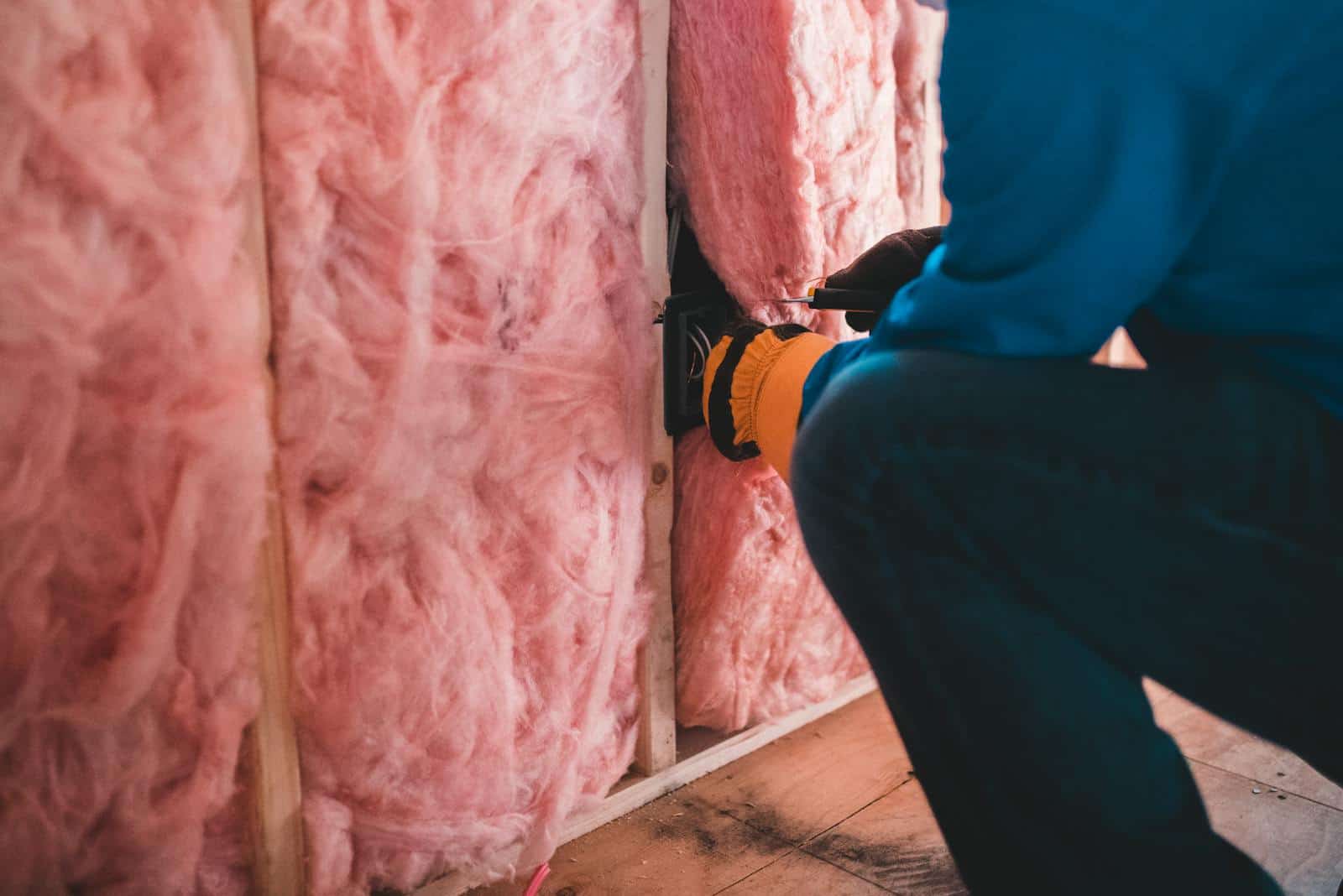
Venting Corrected, Old Insulation Out, New Blown-In HEPA Containment • R-49 To R-60 • Mass Save Rebates
 IICRC Certified
 Eco-Friendly Solutions For Healthier Spaces
Reviewed by David Megeneishvili·Fully Insured·IICRC AMRT + WRT
Before any new material goes down in an East Longmeadow attic, we follow every duct to its end. A bath fan or a range hood that stops short and discharges into the cavity will wet the sheathing all winter and quietly ruin whatever gets installed above it. Trace the ducts, terminate them outdoors, reopen the soffit to ridge path, then clean out, seal, and reinsulate.
Mouse droppings, urine, nesting material, and bat guano removed under HEPA containment. Affected surfaces sanitized and deodorized with EPA-registered products before any new insulation is installed, protecting indoor air quality and the crew.
HEPA containment · Sanitized deck
Contaminated, water-damaged, flattened, or undersized insulation removed by commercial insulation vacuum or bagged and hauled out. The attic deck is left clean and ready, with no contaminated material left to off-gas into the home.
Vacuum or bagged · Hauled away
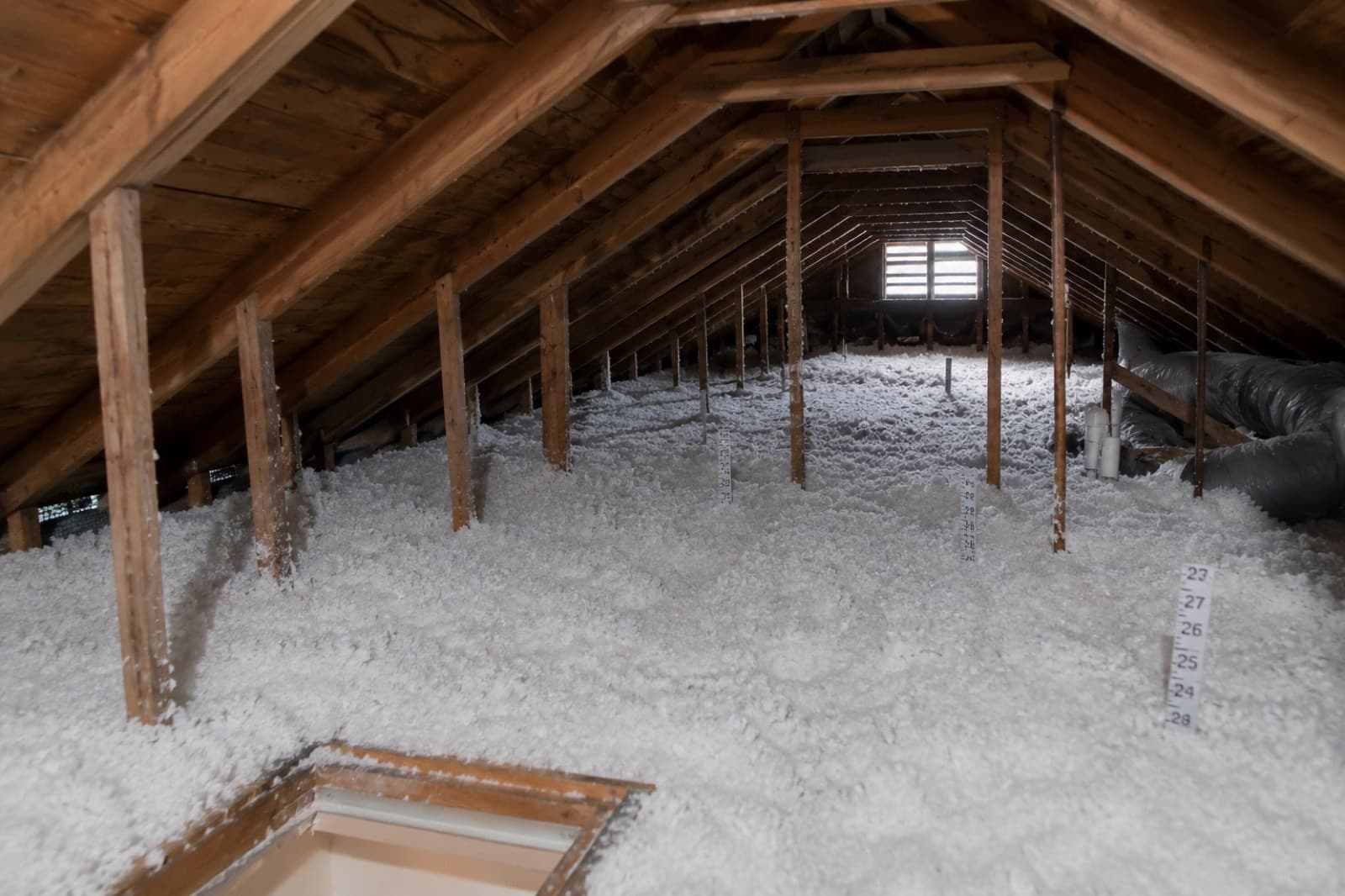
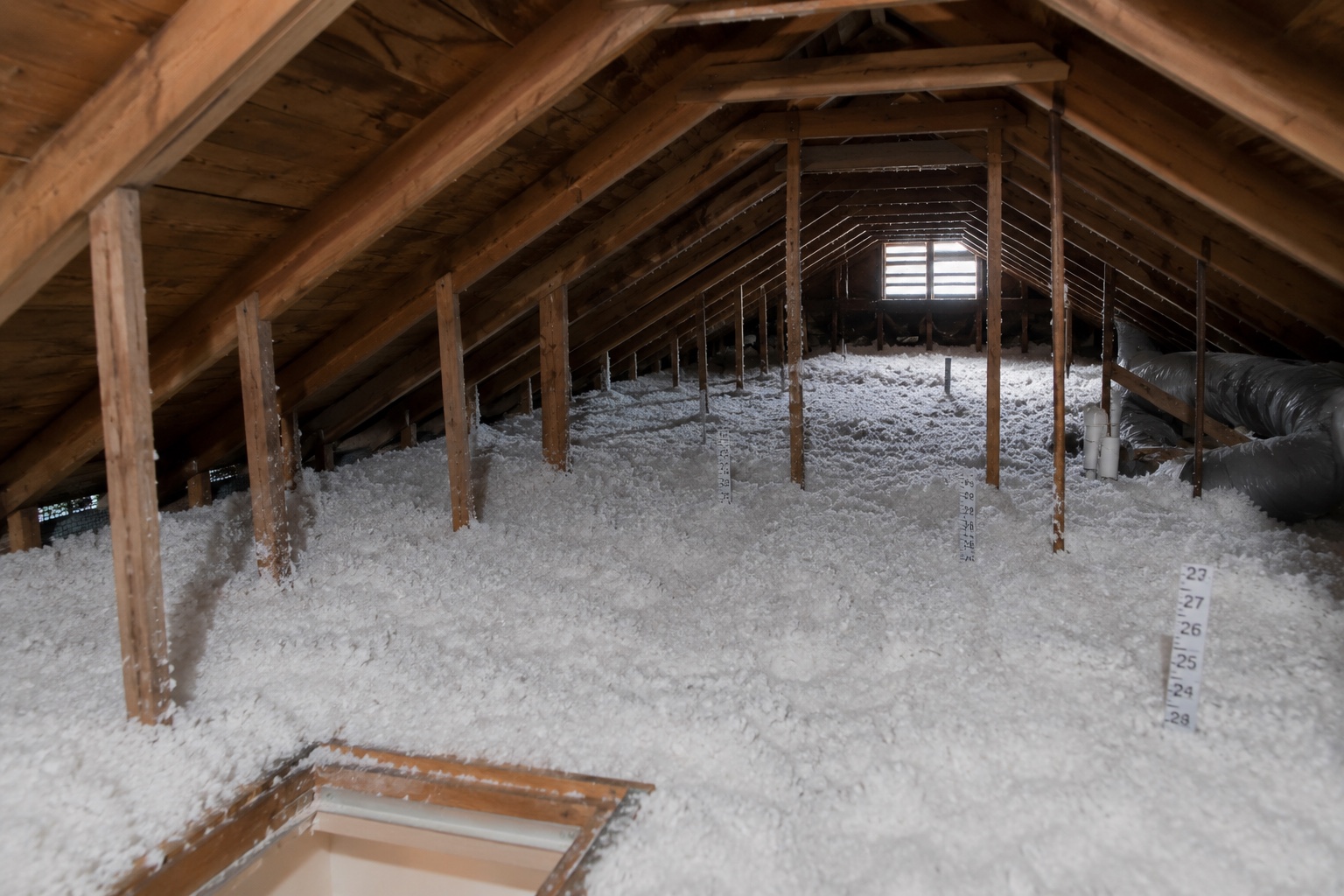
Blown-in cellulose or fiberglass installed to a uniform depth that meets the Climate Zone 5 to 6 attic target of R-49 to R-60. Depth markers set and photographed so coverage is verifiable across the entire attic floor.
Code R-value · Depth verified
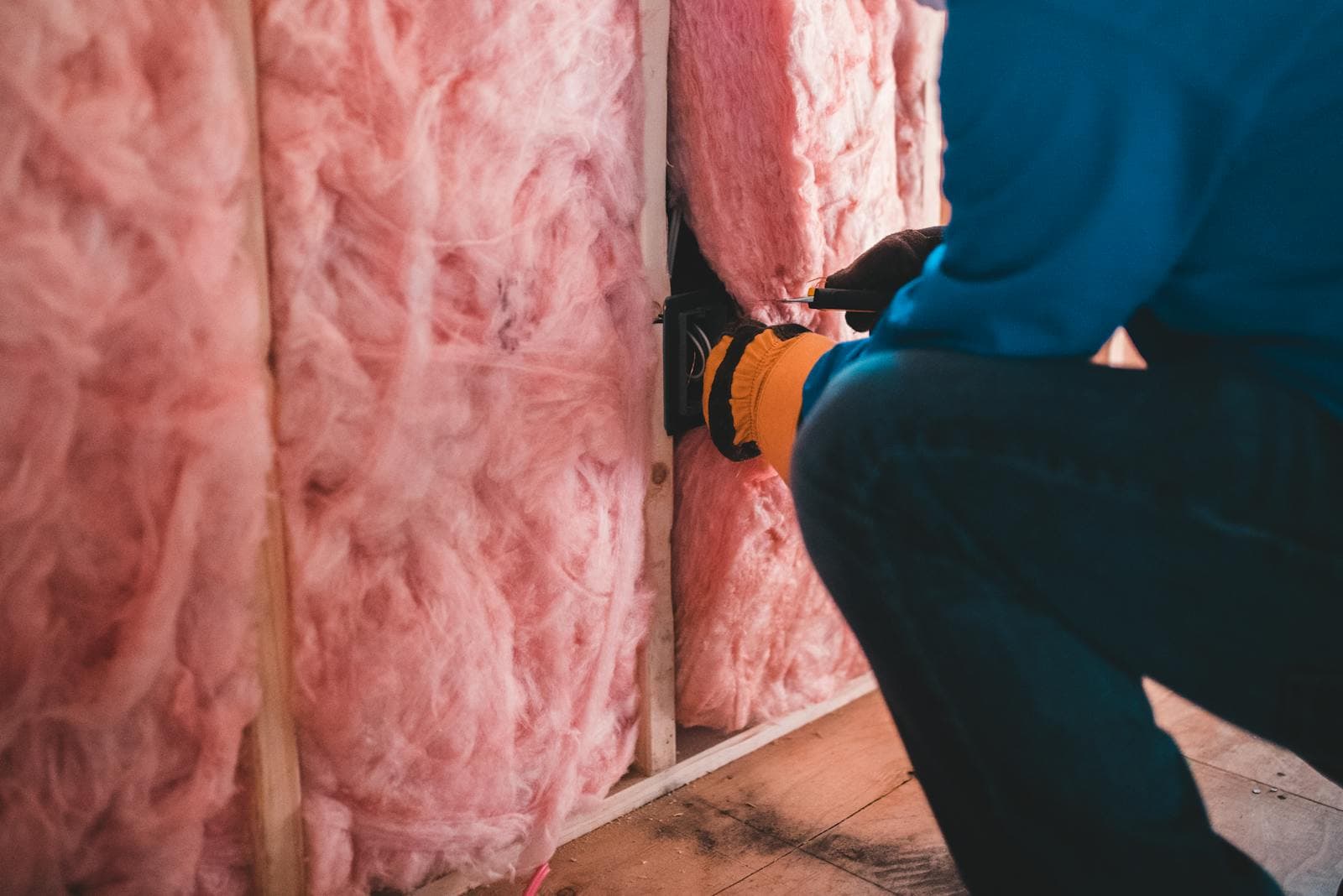
Top plates, wire and pipe penetrations, recessed lights, chases, and the attic hatch sealed before insulation goes down. Air sealing stops the stack-effect leakage that wastes energy and lets warm, moist air into the attic.
Entry points sealed with copper mesh, hardware cloth, and sealant so the cleaned and reinsulated attic stays pest free. Coordinated with a licensed pest operator when an active infestation is present before the attic is closed.
Roof leaks, bath fan ducts venting into the attic, and condensation on the deck identified and corrected as part of the scope. Surface mold on sheathing treated so the new insulation is installed over a dry, sound deck.
Reinsulate Your East Longmeadow Attic The Right Way. Clean It Out First.
Attic decontamination, insulation removal, air sealing, and new blown-in insulation to code R-value across East Longmeadow and Hampden County.
Local housing stock, attic construction, and rodent pressure shape every cleanup and reinsulation scope.
Free On-Site Assessment
We establish the scope on site, before anything is quoted.
(833) 970-2121East Longmeadow is unusual for the Pioneer Valley in that no river runs through it. The town grew instead around its red sandstone and brownstone quarries and around the center rotary, where an unusual number of roads converge on a single point, and the residential build-out that followed happened largely after the war. That history shapes what is above the ceiling. Older quarry-era homes near the center carry sandstone and brownstone masonry below and plaster on lath above, with attic framing that was never designed as an insulated assembly.
The much larger post-war layer through Heritage Park, Birchland Park, Pinewood, and the Maple Street and Prospect Street corridors gave the town ranches, capes, and split levels with hatch access and a batt layer that has been settling ever since. What ties the two together is mechanical rather than structural. Kitchen and bath exhaust in this town very often terminates inside the attic instead of outdoors, sometimes because a flexible duct came loose from its cap and sometimes because it was never routed to one.
That warm wet air condenses on the cold underside of the sheathing, the insulation below it takes on the moisture, and by spring there is staining, matted material, and frequently mold growth on the deck.
The ventilation half of the problem is just as common. Soffit intake gets buried when someone blows insulation into the overhang, baffles are missing or crushed, and a ridge or gable outlet has nothing feeding it. Air then stalls in the attic instead of moving through it, so any moisture that gets in stays in. Correcting the intake and the outlet is part of the work rather than an upsell, because insulation installed over a stalled attic performs like insulation that is permanently damp.
Hampden County sits in IECC Climate Zone 5, where R-49 to R-60 is the recommended level, and Mass Save incentives apply to the qualifying insulation and air sealing portion of the project.
Two limits worth stating plainly. Green Restoration does no roofing, so where a ridge vent or a roof-mounted termination has to be cut or replaced, that goes to a roofer and we coordinate around it. Green Restoration also does no electrical work. Knob-and-tube wiring still appears in the older stock near the center, and where we find it the runs are photographed and written into the scope while the insulation stage waits for a licensed Massachusetts electrician to evaluate the circuit.
Free On-Site Attic Assessment Across East Longmeadow And Hampden County
Thousands of attics and homes cleaned, decontaminated, and reinsulated across Connecticut, New York, and Massachusetts, from single rodent cleanups to full removal and reinsulation to a code R-value.
Most attic cleanup and reinsulation projects finish in one to two days, with depth markers set and photographed so the finished R-value is verifiable.
Itemized scope, R-value details, and timestamped photos formatted for Mass Save Home Energy Assessment and insulation rebate applications.
Top rated by the Better Business Bureau with verified five-star Google reviews across Western Massachusetts.
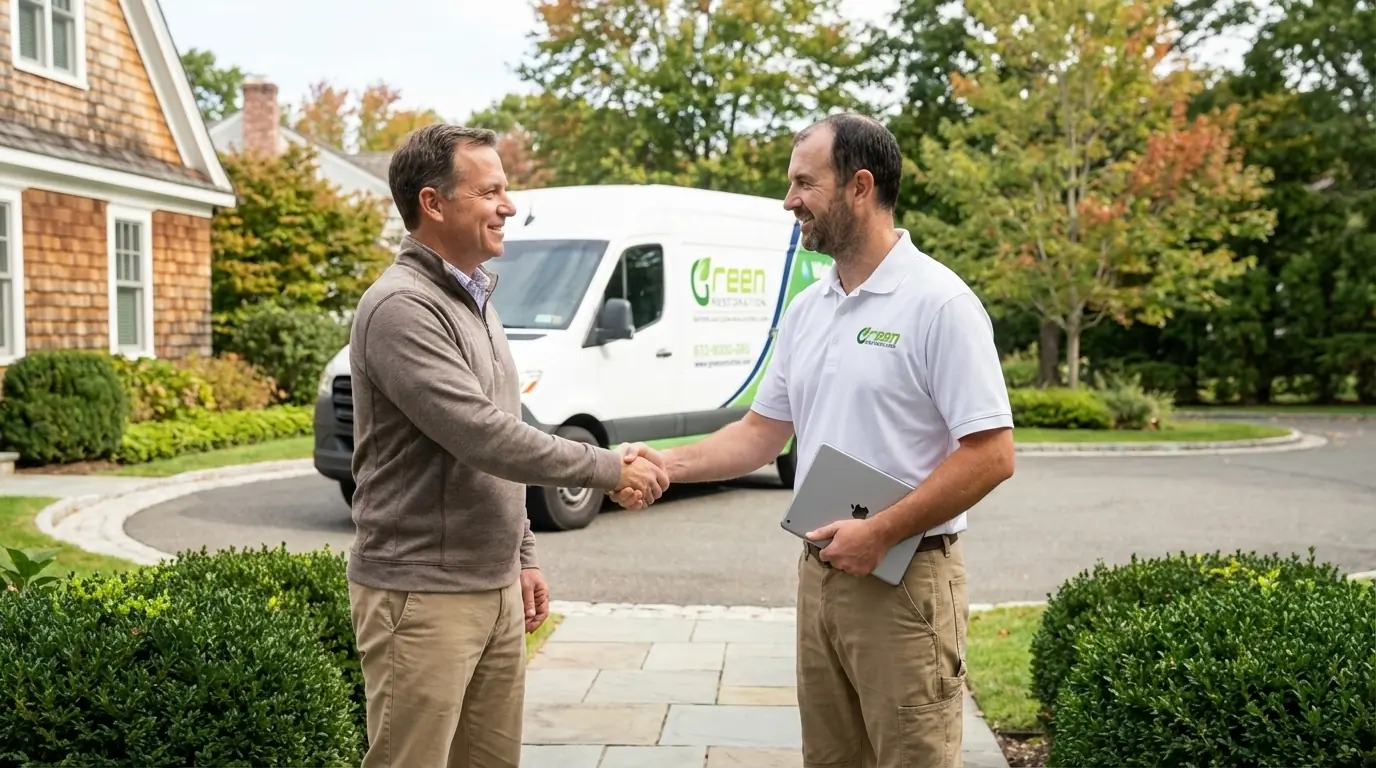
Your East Longmeadow Attic Cleanup And Insulation Specialists Since 2014
Green Restoration handles attic cleanout, contamination and moisture removal, air sealing, ventilation correction, and new blown-in insulation for homes across East Longmeadow and Hampden County. The assessment starts with the mechanical side because that is where this town fails most often: every bath fan, range hood, and dryer path gets traced to its termination and any duct ending inside the attic is documented. From there the sequence holds.
Failed material comes out under HEPA containment, the deck is cleaned, sanitized, and deodorized, mold growth on the sheathing is treated or coordinated with the restoration side, the ceiling plane is sealed at top plates, chases, fixtures, and the hatch, baffles are set so the soffit intake reaches the ridge, and new insulation is installed toward the R-49 to R-60 target with depth markers set and photographed. Everything is documented for the owner and formatted so the qualifying insulation and air sealing can be submitted for Mass Save incentives.

“The first thing I do in an East Longmeadow attic is find every duct and follow it. Half the time one of them just ends in open framing, and that single defect explains the wet sheathing, the flattened insulation, and the mold the homeowner has been smelling. There is no point blowing new material over that. Terminate the duct outdoors, get the soffit breathing again, seal the ceiling, and then the insulation depth we install is actually worth what you paid for it.”
Massachusetts homeowners can apply Mass Save rebates to new attic insulation and air sealing. We document eligible work so you can apply confidently.
Mass Save · Eversource, National Grid, Berkshire Gas, Unitil
Statewide utility incentive that covers attic insulation and air sealing identified during a no-cost Home Energy Assessment. Rebates run up to 75 percent of approved insulation and air sealing cost, and income-eligible residents qualify for a substantially deeper share. How much is covered, and who qualifies, is set by the program. A 0 percent HEAT Loan up to $25,000 can finance larger scopes.
A note on accuracy: the federal Energy Efficient Home Improvement Credit (IRS Section 25C) for insulation ended December 31, 2025 and does not apply to projects completed in 2026. The programs above are state and utility incentives that cover newly installed attic insulation and air sealing. They do not cover removal, cleanup, or decontamination of old or contaminated insulation, which is billed separately. Always confirm current eligibility and caps on the official program page before work begins.
Itemized scope, R-value details, and timestamped photos formatted for Mass Save program applications. Verify current eligibility and caps before work begins.
The same restoration-grade sequence on every East Longmeadow attic: clean it out, remove the old material, air seal, and reinsulate to R-49 to R-60.
Step OneDroppings, nesting, and bat guano removed under HEPA containment, then the deck is sanitized and deodorized before any new insulation goes down.
 Step Two
Contaminated, wet, or flattened insulation is vacuumed or bagged and hauled out, leaving a clean deck down to the joists with nothing left to off-gas.
 Step Three
Cellulose or fiberglass blown to a uniform, verified depth across the whole attic floor, with depth markers set and photographed.
The ResultTop plates, penetrations, and the attic hatch sealed first, then a full depth of new insulation for even room-to-room comfort and lower bills.
Attic decontamination, old insulation removal, air sealing, and new blown-in insulation to a code R-value for East Longmeadow homes. One crew, one project, with a free on-site assessment.
Green Restoration serves East Longmeadow, MA for attic cleanout, insulation removal, ventilation correction, and new blown-in insulation, covering the Town Center and the rotary ring, the quarry district, Heritage Park, Birchland Park, Pinewood, and the Maple Street, North Main Street, Prospect Street, Shaker Road, and Somers Road corridors. Crews carry HEPA containment, commercial insulation vacuums, duct and termination materials, and new insulation on the same truck, so the correction and the reinsulation happen on one schedule.
Knowing the town narrows the search. In a post-war ranch off Prospect Street or Birchland Park we expect a bath fan duct lying loose in the joist bays and a soffit packed solid with old fill. In a quarry-era home near the center we expect plaster, tight framing, and a kitchen exhaust that was added long after the house was built and routed wherever it fit. In both, the crew corrects the terminations, restores the intake and the outlet, removes whatever the moisture ruined, seals the plane, and reinsulates to a depth marked and photographed for the homeowner to check.
Call for a free on-site attic assessment. We measure your R-value and deliver a written, fixed quote before any work begins.
(833) 970-2121IICRC Certified · Fully Insured · State Rebate Documentation
All Towns Served By Green Restoration Of Hampden County, Based In Chicopee, For Attic Cleanup, Insulation Removal & Replacement.
Green Restoration of Western Mass. We submit our scope of work and supporting documentation directly to your insurer. We are not licensed public adjusters and do not negotiate claims on your behalf.
Clear, honest answers about rodent cleanup, insulation removal and replacement, R-value, and Massachusetts rebates for East Longmeadow attic projects.
Bad enough that we treat it as the first repair rather than an add-on. A bath fan moves warm, humid air out of the room, and if the duct ends in the attic instead of outdoors, that moisture lands on the coldest surface available, which is the underside of the roof sheathing. Every cold month it condenses there, drips into the insulation below, and keeps the deck damp long enough for mold to establish. Insulation installed over that condition absorbs the moisture and stops performing.
Correcting the run so it terminates outdoors through a proper cap is part of the air sealing and ventilation stage of the project, and it is documented with photographs before and after.
Because insulation controls heat and ventilation controls moisture, and neither one covers for the other. A properly sealed ceiling keeps house air out of the attic, and a working soffit to ridge path carries away whatever moisture still gets in. In East Longmeadow the intake is usually the broken link: someone blew insulation right into the overhang years ago and buried the vents, or the baffles were never installed. Air then stalls in the attic. We reopen the intake, set baffles at every rafter bay so new material cannot slump back into the soffit, and confirm the outlet has something feeding it before the insulation goes down.
General market guidance puts removal of old material at roughly $1 to $2 per square foot and new blown-in insulation at roughly $1.50 to $4.50 per square foot installed depending on the depth being reached. A complete project covering cleanout, removal, air sealing, and new insulation commonly lands between $3,500 and $11,000. What moves the number in this town is usually how much duct and ventilation work is attached and whether moisture damage has to be addressed first. A straightforward Heritage Park or Pinewood ranch with clean material sits toward the lower end. Quotes are itemized before anything starts, and Mass Save incentives reduce the qualifying insulation and air sealing portion.
Yes, and in this town it is usually a symptom rather than the disease. Growth on the underside of the deck means moisture has been arriving faster than the attic could carry it away, and the source is almost always a duct discharging into the cavity, a blocked soffit path, or air leaking up through the ceiling. We remove the affected insulation under containment, treat the sheathing or coordinate that work with the restoration side of the business, and then fix the source. Treating the deck without correcting what wet it means the growth comes back, which is why the moisture path is written into the scope alongside the treatment.
Hampden County falls in IECC Climate Zone 5, where R-49 to R-60 is the recommended attic level. Most of the post-war attics we open in this town measure well below it once the batting has settled and been compressed under storage. We take depth readings across the whole floor rather than one spot near the hatch, install to a uniform depth aimed at the target, and set and photograph markers so the finished condition can be inspected instead of assumed. Real performance here rests on the sealing and the ventilation below the material, so we set expectations honestly and typically avoid committing to one fixed figure.
Mass Save is the statewide efficiency program funded through the sponsoring Massachusetts utilities, and it offers incentives on attic insulation and air sealing for eligible households. The required starting point is a no-cost Home Energy Assessment, and income-eligible households can qualify for enhanced support. Incentives apply to the qualifying insulation and air sealing rather than to cleanout, removal, or duct correction. Terms and amounts change over time, so confirm the current offer at masssave.com before scheduling. Our itemized scope, depth readings, and timestamped photographs are formatted to support the application.
Most run one to two days. An open ranch or split-level attic with easy hatch access, clean material, and one duct to reroute frequently finishes inside a single day. Add several terminations to correct, a soffit line that has to be dug back out, and moisture damage on the deck to treat, and two days is the realistic figure. Where a roofer has to cut a new roof termination, that visit is scheduled separately and the insulation stage waits for it. The expected timeline is stated in the written scope before any material comes off the truck.
The same local Green Restoration team covers all of these across East Longmeadow. One number for every emergency and every cleanup.

