
 Step One
Rodent And Contamination Cleanup
Droppings, nesting, and bat guano removed under HEPA containment, then the deck is sanitized and deodorized before any new insulation goes down.
Ice Dam Cleanup, Old Insulation Out And New Blown-In HEPA Containment • R-49 To R-60 • Mass Save Rebates
 IICRC Certified
 Eco-Friendly Solutions For Healthier Spaces
Reviewed by David Megeneishvili·Fully Insured·IICRC AMRT + WRT
Most of the Longmeadow attics we open have the same story written on the sheathing at the eaves. Warm air escaped the ceiling all winter, the roof edge froze, and the meltwater backed up into the assembly. We dry it out, pull the material that failed, close the plane that caused it, and blow new insulation to a depth that gets marked and photographed.
Mouse droppings, urine, nesting material, and bat guano removed under HEPA containment. Affected surfaces sanitized and deodorized with EPA-registered products before any new insulation is installed, protecting indoor air quality and the crew.
HEPA containment · Sanitized deck
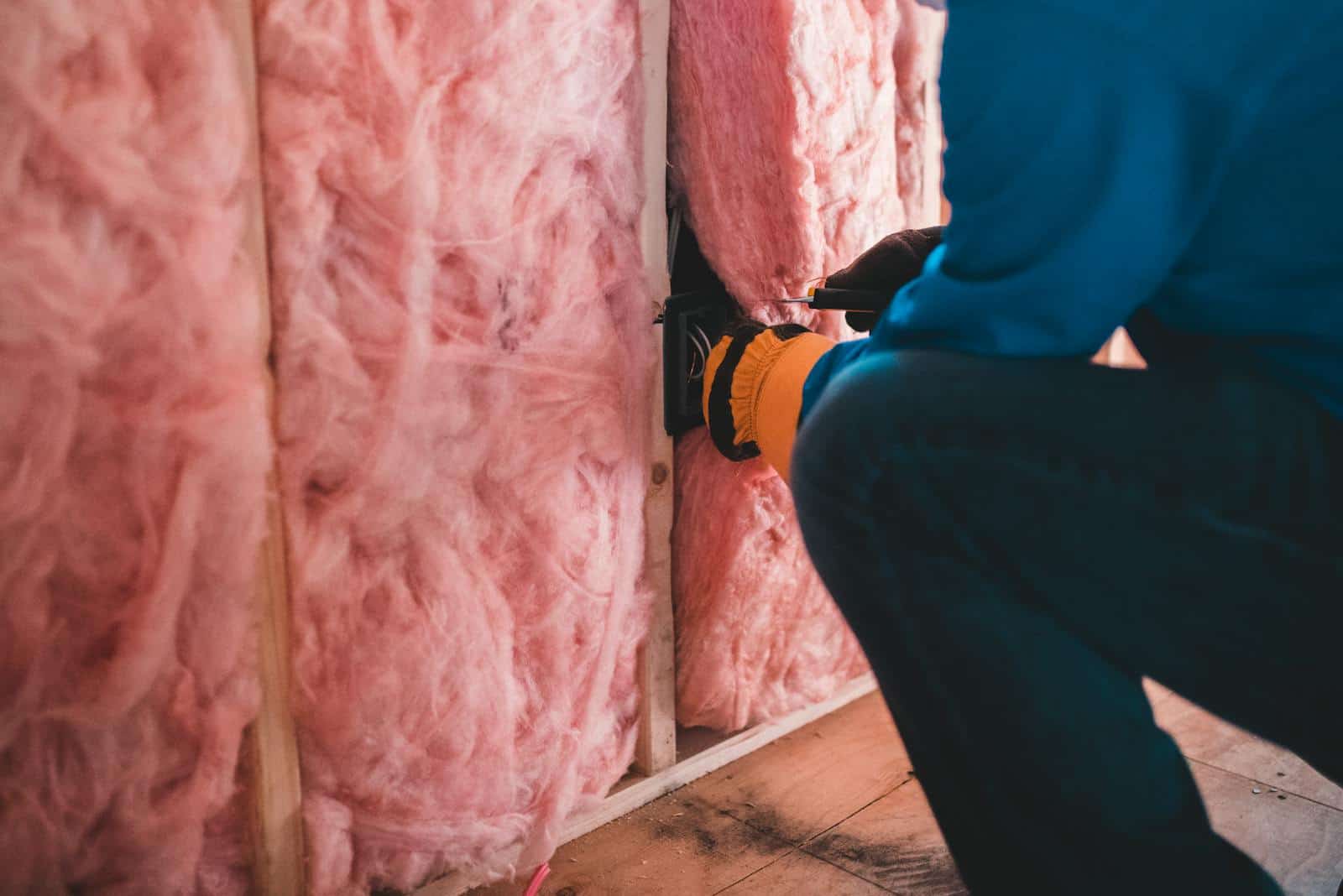
Contaminated, water-damaged, flattened, or undersized insulation removed by commercial insulation vacuum or bagged and hauled out. The attic deck is left clean and ready, with no contaminated material left to off-gas into the home.
Vacuum or bagged · Hauled away
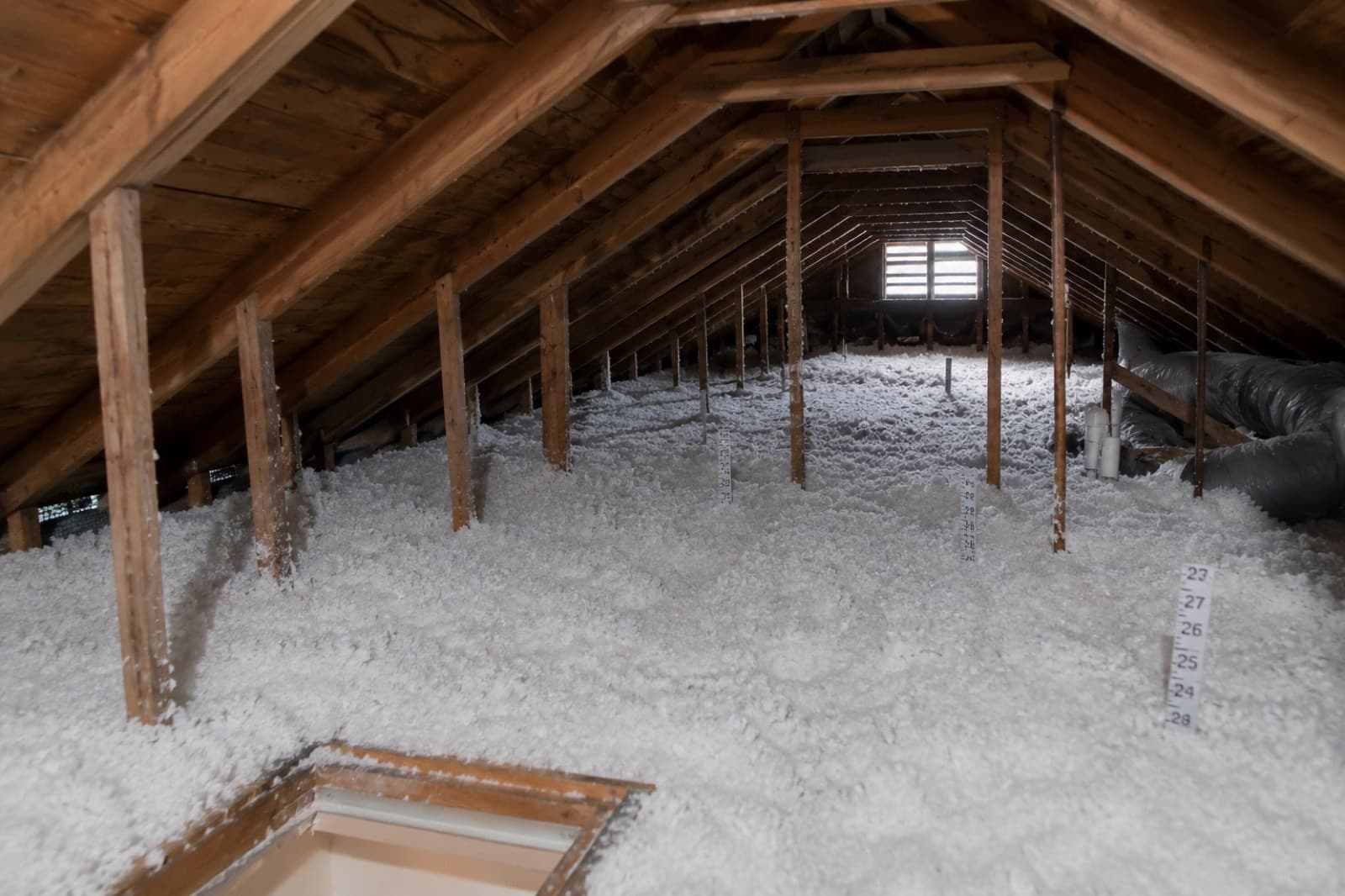
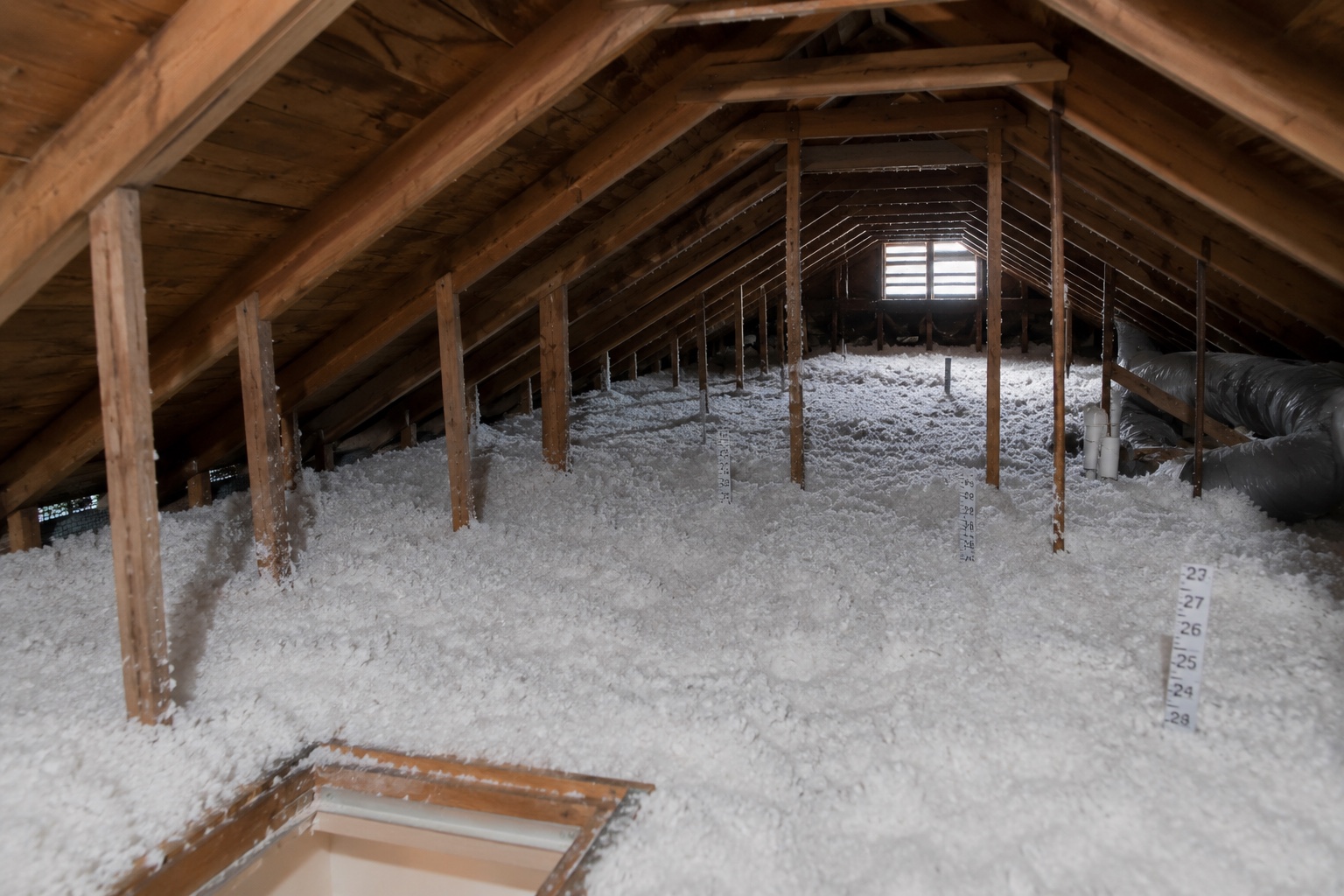
Blown-in cellulose or fiberglass installed to a uniform depth that meets the Climate Zone 5 to 6 attic target of R-49 to R-60. Depth markers set and photographed so coverage is verifiable across the entire attic floor.
Code R-value · Depth verified
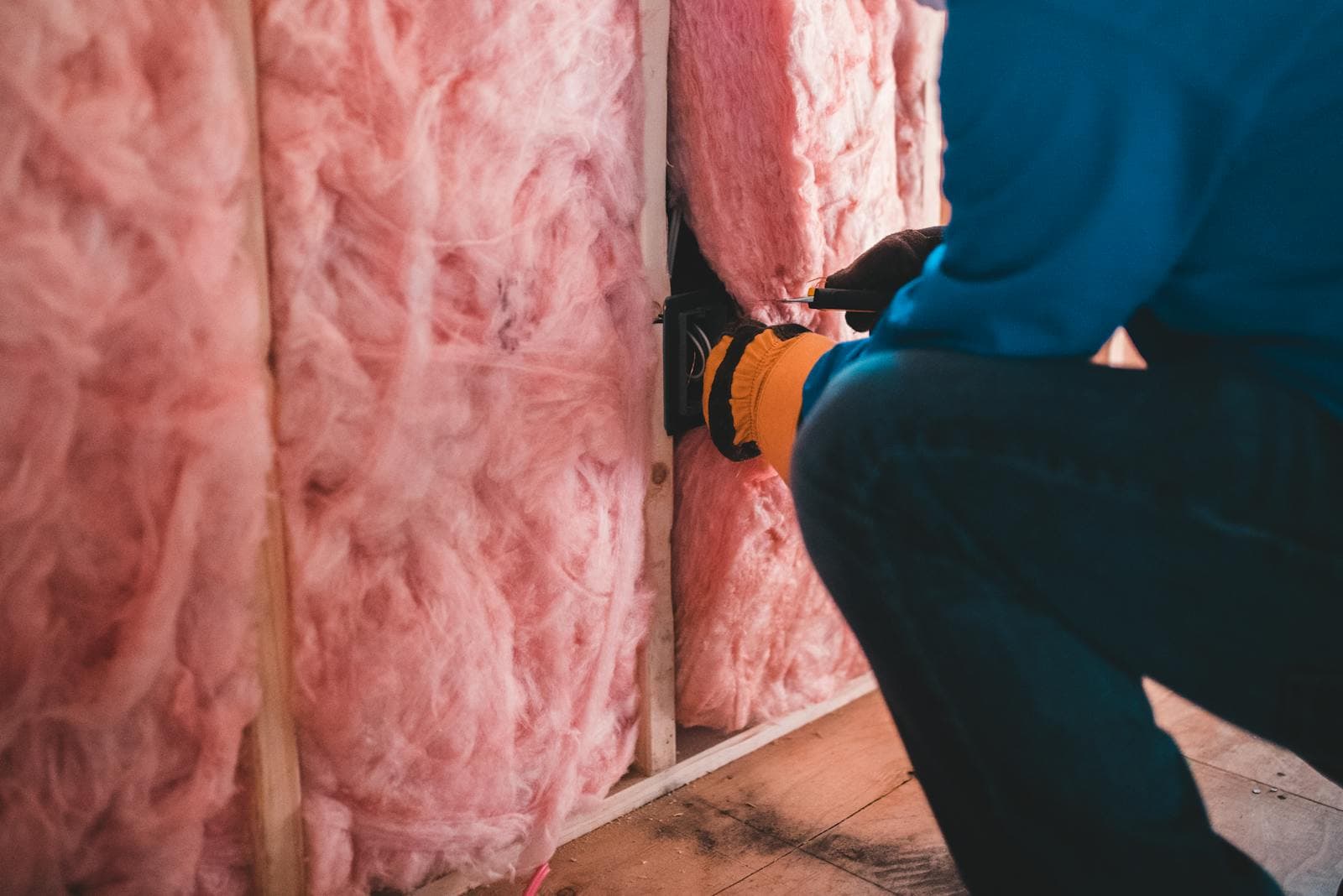
Top plates, wire and pipe penetrations, recessed lights, chases, and the attic hatch sealed before insulation goes down. Air sealing stops the stack-effect leakage that wastes energy and lets warm, moist air into the attic.
Entry points sealed with copper mesh, hardware cloth, and sealant so the cleaned and reinsulated attic stays pest free. Coordinated with a licensed pest operator when an active infestation is present before the attic is closed.
Roof leaks, bath fan ducts venting into the attic, and condensation on the deck identified and corrected as part of the scope. Surface mold on sheathing treated so the new insulation is installed over a dry, sound deck.
Reinsulate Your Longmeadow Attic The Right Way. Clean It Out First.
Attic decontamination, insulation removal, air sealing, and new blown-in insulation to code R-value across Longmeadow and Hampden County.
Local housing stock, attic construction, and rodent pressure shape every cleanup and reinsulation scope.
Free On-Site Assessment
We establish the scope on site, before anything is quoted.
(833) 970-2121Longmeadow sits on a plateau above the Connecticut River meadows, cut on its inland side by the ravines of Cooley Brook, Longmeadow Brook, and Wheelmeadow Brook. The housing divides cleanly. Along the Longmeadow Street historic corridor and around the Green, the oldest stock holds half-story and steep-roofed attics where insulation stops at a knee wall and the space behind it was never treated as part of the building envelope.
Everywhere else, through Wolf Swamp, Blueberry Hill, Converse Street, Bliss Road, and Forest Glen, the town filled in after the war with capes, ranches, and split levels whose attics are reached by a hatch and whose original batting has flattened out over decades. Both patterns produce the same winter result. Warm house air leaks up through top plates, chases, and an uninsulated hatch, the snow above it melts, the water reaches the cold overhang and refreezes, and the ice dam that forms there pushes meltwater back under the shingles and into the attic assembly. What we find afterward is wet sheathing, matted insulation over the wall plate, and staining that runs down into the ceiling below.
Hampden County is IECC Climate Zone 5, where R-49 to R-60 is the recommended attic level. In Longmeadow the depth number is only half the answer. An attic can carry a respectable average depth and still build ice dams every February if the plane underneath it leaks and the eaves are choked. Sealing first, ventilating the soffit and ridge path second, and blowing to a uniform depth third is the order that actually changes the outcome. Mass Save incentives apply to the qualifying insulation and air sealing portion of the work.
Green Restoration does no roofing and no electrical work. Where an ice dam has already driven water past the roof edge, we handle the attic side, the wet insulation, the sheathing, and the drying, and the roof itself goes to a roofer. Where legacy knob-and-tube wiring turns up in an older attic run near the Green or along Longmeadow Street, we photograph it, write it into the scope, and hold the insulation stage until a licensed Massachusetts electrician has evaluated the circuit. That sequence does not bend for a schedule.
Free On-Site Attic Assessment Across Longmeadow And Hampden County
Thousands of attics and homes cleaned, decontaminated, and reinsulated across Connecticut, New York, and Massachusetts, from single rodent cleanups to full removal and reinsulation to a code R-value.
Most attic cleanup and reinsulation projects finish in one to two days, with depth markers set and photographed so the finished R-value is verifiable.
Itemized scope, R-value details, and timestamped photos formatted for Mass Save Home Energy Assessment and insulation rebate applications.
Top rated by the Better Business Bureau with verified five-star Google reviews across Western Massachusetts.
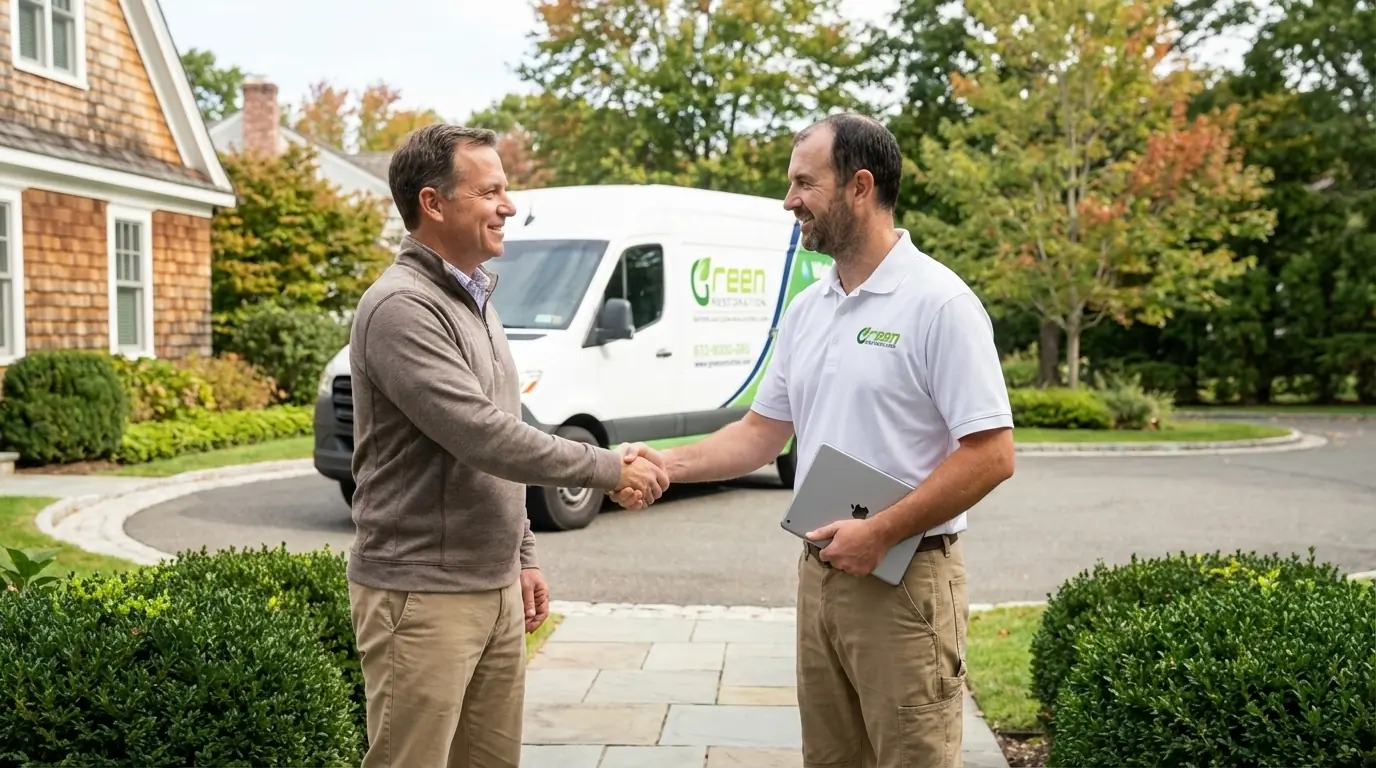
Your Longmeadow Attic Cleanup And Insulation Specialists Since 2014
Green Restoration handles attic cleanout, insulation removal, air sealing, and new blown-in insulation for homes throughout Longmeadow and Hampden County. A large share of the calls here follow an ice dam, so the first stage is often drying rather than installing. Wet or matted material comes out under HEPA containment, the deck is cleaned and assessed, and any mold growth on the sheathing is treated or coordinated with the restoration side before anything new goes in.
Then the plane gets sealed at the top plates, chases, recessed fixtures, and the hatch, exhaust ducts are routed to a proper exterior termination, baffles are set so the soffit intake stays open to the ridge, and new insulation is installed toward the R-49 to R-60 target with depth markers set and photographed. Every stage is documented for the owner and formatted so the qualifying insulation and air sealing can be submitted for Mass Save incentives.

“In Longmeadow I go straight to the eaves. That is where the story is. If the sheathing is stained above the wall plate and the insulation there is packed flat and damp, you do not have an insulation problem, you have an air leak that turned into an ice dam. Adding depth over that changes nothing. We take the wet material out, seal the plane, open the soffit path back up, and then blow to a depth I mark and photograph so you can go up and check my work.”
Massachusetts homeowners can apply Mass Save rebates to new attic insulation and air sealing. We document eligible work so you can apply confidently.
Mass Save · Eversource, National Grid, Berkshire Gas, Unitil
Statewide utility incentive that covers attic insulation and air sealing identified during a no-cost Home Energy Assessment. Rebates run up to 75 percent of approved insulation and air sealing cost, and income-eligible residents qualify for a substantially deeper share. How much is covered, and who qualifies, is set by the program. A 0 percent HEAT Loan up to $25,000 can finance larger scopes.
A note on accuracy: the federal Energy Efficient Home Improvement Credit (IRS Section 25C) for insulation ended December 31, 2025 and does not apply to projects completed in 2026. The programs above are state and utility incentives that cover newly installed attic insulation and air sealing. They do not cover removal, cleanup, or decontamination of old or contaminated insulation, which is billed separately. Always confirm current eligibility and caps on the official program page before work begins.
Itemized scope, R-value details, and timestamped photos formatted for Mass Save program applications. Verify current eligibility and caps before work begins.
The same restoration-grade sequence on every Longmeadow attic: clean it out, remove the old material, air seal, and reinsulate to R-49 to R-60.
Step OneDroppings, nesting, and bat guano removed under HEPA containment, then the deck is sanitized and deodorized before any new insulation goes down.
 Step Two
Contaminated, wet, or flattened insulation is vacuumed or bagged and hauled out, leaving a clean deck down to the joists with nothing left to off-gas.
 Step Three
Cellulose or fiberglass blown to a uniform, verified depth across the whole attic floor, with depth markers set and photographed.
The ResultTop plates, penetrations, and the attic hatch sealed first, then a full depth of new insulation for even room-to-room comfort and lower bills.
Attic decontamination, old insulation removal, air sealing, and new blown-in insulation to a code R-value for Longmeadow homes. One crew, one project, with a free on-site assessment.
Green Restoration covers Longmeadow, MA for attic cleanout, insulation removal, and new blown-in insulation, reaching Longmeadow Center, the Green, the Longmeadow Street corridor, Blueberry Hill, Wolf Swamp, Bay Path, Converse Street, Williams Street, Bliss Road, and Forest Glen. Crews arrive with HEPA containment, commercial insulation vacuums, drying equipment, and new material already aboard, so an ice dam cleanout and the reinsulation that follows do not turn into three separate appointments.
Familiarity with this town shortens the diagnosis. On a half-story near the Green we expect the knee wall to be the weak point and the sloped run above it to be thin. On a Wolf Swamp or Blueberry Hill cape we expect a flattened batt layer and a hatch nobody ever weatherstripped. On a Forest Glen split level we expect the transition between the two roof planes to leak. In every case the crew pulls what failed, closes the air paths, restores the soffit to ridge route, and reinsulates to a marked depth the homeowner can verify from photographs rather than from a promise.
Call for a free on-site attic assessment. We measure your R-value and deliver a written, fixed quote before any work begins.
(833) 970-2121IICRC Certified · Fully Insured · State Rebate Documentation
All Towns Served By Green Restoration Of Hampden County, Based In Chicopee, For Attic Cleanup, Insulation Removal & Replacement.
Green Restoration of Western Mass. We submit our scope of work and supporting documentation directly to your insurer. We are not licensed public adjusters and do not negotiate claims on your behalf.
Clear, honest answers about rodent cleanup, insulation removal and replacement, R-value, and Massachusetts rebates for Longmeadow attic projects.
Because the attic is warm when it should be cold. Heat leaking out of the living space through top plates, wiring and plumbing penetrations, a recessed light housing, or an unsealed hatch warms the underside of the roof deck, melts the snow lying on it, and sends the water down to the overhang where there is no heat underneath. It refreezes at the cold edge, the ridge of ice grows, and the water pooling behind it works back under the shingles and into the assembly. More insulation alone rarely solves this.
Air sealing the ceiling plane and restoring the ventilation path from soffit to ridge is what makes the deck cold enough to stop the cycle, and the insulation depth then holds that condition.
It comes out where it got wet. Fiberglass and cellulose that has taken on meltwater compresses, loses most of its performance, and stays damp long enough for mold to establish on the sheathing and framing above it. We remove the affected material under containment, dry the deck, assess the sheathing, and treat or coordinate any growth we find before reinsulating. Dry, clean, uncontaminated material outside the wet zone can often stay. What we will not do is blow new insulation over a wet layer, because it seals the moisture in and the problem returns through the ceiling in a few months.
As general market guidance, removing old material runs roughly $1 to $2 per square foot, and new blown-in insulation runs roughly $1.50 to $4.50 per square foot installed depending on the depth being reached. A complete project covering cleanout, removal, air sealing, and new insulation commonly lands between $3,500 and $11,000. In Longmeadow the two things that push a job upward are ice dam damage that has to be dried and assessed first, and a half-story near the Green where the knee walls and sloped sections have to be treated as their own assemblies rather than as open attic floor. Quotes are itemized before work begins, and Mass Save incentives reduce the qualifying insulation and air sealing portion.
They need to be treated as part of the building envelope, which they usually are not. A typical knee wall has insulation stuffed against the back face with nothing holding it in place, an access panel that is a bare piece of plywood, and open joist bays running from the crawl space behind the wall straight into the floor of the room below. Air moves through all of that freely. The fix is to seal and block those bays, air seal and insulate the panel itself, and continue the thermal boundary up the sloped run so it stays continuous. Where the framing depth does not allow a proper assembly, we say so in writing rather than filling the cavity and calling it done.
Hampden County falls in IECC Climate Zone 5, where R-49 to R-60 is the recommended attic level. Very few of the attics we open here start close to it, and the average matters less than the worst spot. Insulation piled deep in the center of the floor and thin over the wall plate at the eaves typically performs like the thin part, and the eaves are exactly where ice dams begin. We take readings across the whole attic before quoting, install to a consistent depth aimed at the target, and set and photograph markers so the finished condition can be inspected. What the depth actually delivers rests on the sealing underneath it, so we typically describe an expected range rather than promising a fixed figure.
Mass Save is the statewide efficiency program funded through the sponsoring Massachusetts utilities, and it offers incentives on attic insulation and air sealing for eligible households. A no-cost Home Energy Assessment is the required starting point, and income-eligible households can qualify for enhanced support. Incentives apply to the qualifying new insulation and air sealing rather than to cleanout, drying, or removal. Program terms and amounts change, so confirm the current offer at masssave.com before scheduling. Our scope, depth readings, and timestamped photographs are formatted so the application side is straightforward.
One to two days covers most of them. An open cape or ranch attic in Wolf Swamp or off Bliss Road with clean material and easy hatch access frequently finishes inside a day. A half-story near the Green with knee walls, sloped sections, and a long air sealing list is realistically two. An attic that has taken ice dam water needs drying time before anything new is installed, which adds days rather than hours and is stated in the written scope before the first bag comes off the truck.
The same local Green Restoration team covers all of these across Longmeadow. One number for every emergency and every cleanup.

