If you are reading this after a death in the family, we are sorry. This page is written to answer the practical questions quickly, because those are usually the ones nobody around you can answer.
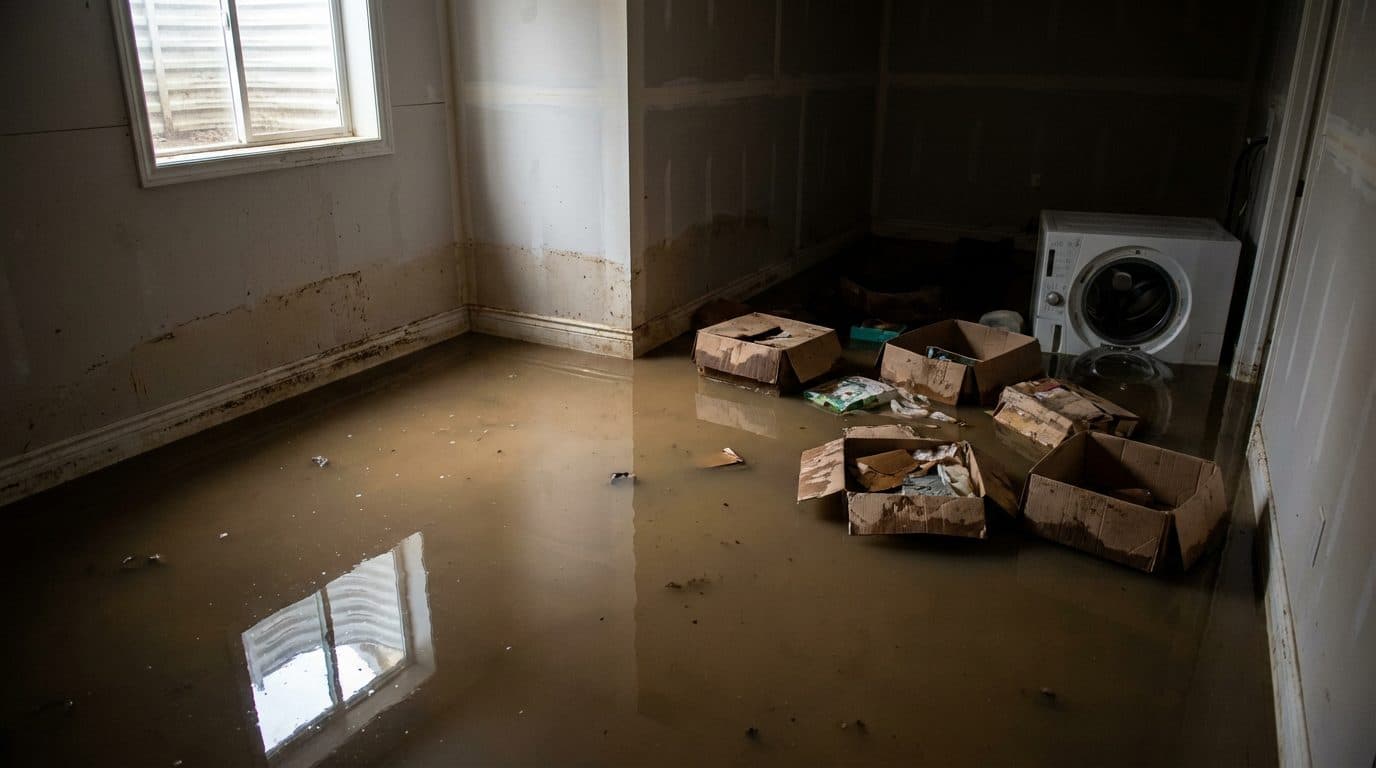
Biohazard cleanup covers a few different situations: an unattended death, a trauma scene, a sewage backup, or a property with heavy animal or human waste contamination. They are handled with the same discipline, because the underlying issue is the same. Material that can carry infection has soaked into a building, and it has to be removed rather than wiped.
Here is what the work involves, who is allowed to do it, what it costs, and what insurance usually covers.
First, The Things People Need To Know Immediately
Four answers that tend to come before anything else.
You Do Not Have To Be There
Nobody expects a family member to be present. Most people are not, and there is nothing unusual about that. Arrangements can be made through a relative, an executor, a property manager, or a funeral director, and access can be handled with a key or a lockbox.
If you do want to be on site, that is fine too, though we would usually suggest waiting until the affected area is contained.
You Do Not Need To Clean Anything First
Please do not. It is a natural impulse and it is the wrong one, for two reasons.
The first is safety. Bloodborne pathogens and the bacteria involved in decomposition or sewage are exactly what the protective equipment is for. The second is that early cleaning attempts usually spread contamination into more materials than it had reached on its own, which makes the job larger rather than smaller.
Authorities Come First, Not Us
In a death or a trauma, the scene belongs to the responding authorities until they release it. A medical examiner or police department controls that timing, not a cleaning company.
We are not investigators and we have no role in that stage. Cleanup begins once the property has been released. Anyone offering to start before that is telling you something you should listen to.
The Smell Is Not Something You Have To Live With
Odor after a decomposition or sewage event is not a surface problem. It comes from material that has soaked into porous building components, so masking it does nothing and time alone rarely solves it.
Removing the affected material is what removes the odor. Anything else is temporary.
What The Work Actually Involves
It is closer to a small demolition project than to cleaning.
Containment, Then Removal
The affected area is sealed off first, usually with poly barriers and negative air pressure, so that nothing migrates into the rest of the property while work is going on. HVAC serving that space gets shut down for the same reason.
Then porous material comes out. Carpet and pad, sections of subfloor, drywall, insulation, and upholstered furniture are removed rather than treated, because liquids travel into them and cannot be reliably extracted.
Cleaning, Then Verification
What remains is hard, non-porous structure. That is cleaned, then treated with an EPA-registered disinfectant appropriate to the contaminant, with the dwell time the label specifies. Dwell time is the part that gets skipped by people who do not do this for a living, and it is what makes the difference between a treated surface and a wet one.
Waste is bagged and handled as regulated medical waste where the material and the state require it, with disposal documentation you should expect to receive.
Then The Building Gets Put Back
Cleanup and reconstruction are two different phases with two different budgets. Removing contaminated subfloor leaves a hole in a floor. Somebody still has to close it.
We mention this because it is the single most common surprise on these projects. Ask any contractor whether their number includes putting the room back, and get the answer in writing.
What It Costs
Real numbers from our published pricing, for Connecticut, Massachusetts and New York work.
The Ranges
Biohazard work runs roughly $7 to $16 per square foot of affected area.
A minor job typically runs $1,500 to $5,000. That covers a contained single-room incident with limited porous material involved. A moderate job runs $5,000 to $10,000. A severe job, meaning extensive contamination, multiple rooms, or material that has reached the subfloor and structure, runs $10,000 to $25,000.
What Drives The Number
How long the situation went undiscovered matters more than almost anything else, because time is what moves liquid deeper into materials.
After that: how porous the affected surfaces were, whether the contamination reached subfloor or wall cavities, whether HVAC distributed anything, and how much regulated waste has to be transported. A tiled bathroom and a carpeted bedroom of identical size are not comparable jobs.
Insurance
More often covered than people expect, but it depends on the cause.
What Is Usually Covered
Homeowners policies commonly cover cleanup after an unattended death or a trauma incident, often under the property damage portion rather than as a named service.
Sewage backup is different: it is frequently excluded from a base policy and covered only if a water backup endorsement was added. That endorsement is inexpensive and many people have it without remembering. Check the declarations page before assuming either way.
How We Handle The Claim Side
We submit our scope of work and supporting documentation directly to your insurer, including photographs, materials removed, and disposal records.
We are not licensed public adjusters and do not negotiate claims on your behalf. What we can do is make sure the adjuster receives a properly documented file, which is usually what determines how smoothly a claim of this type goes.
Who Is Allowed To Do This Work
Worth understanding, because this field attracts operators who should not be in it.
The Standards That Apply
Work involving blood and other potentially infectious material falls under the federal bloodborne pathogens standard, which governs training, protective equipment, exposure control and waste handling for the crew doing it.
Regulated medical waste has its own transport and disposal rules, administered at state level in Connecticut, Massachusetts and New York. Waste from these jobs does not go in a dumpster.
Four Questions To Ask
Ask whether the crew is trained under the bloodborne pathogens standard, and who provides that training.
Ask how the waste is disposed of, and ask to receive the documentation.
Ask whether the quote includes reconstruction or stops at removal.
Ask for proof of insurance. Then, separately, notice how the person on the phone speaks to you. Competence and decency tend to travel together in this work, and you are entitled to both.
Questions People Ask
The ones that come up most, answered plainly.
How Quickly Does This Need To Happen?
Sooner is better, because contamination continues to move into materials until it is removed, and the cost tends to follow. But there is no reason to make a decision in the first hour.
Once authorities have released the property, a day or two spent arranging things properly does not usually change the scope. Take the time you need.
Will The Neighbors Know?
Vehicles can be unmarked on request and equipment can be brought in without announcing what the work is. It is a reasonable thing to ask for and you should not feel awkward asking.
We do not discuss any specific job with anyone outside the household or the people you authorise.
Can Anything Be Saved?
Hard, non-porous items usually can. Metal, glazed ceramic, sealed hard surfaces and many sealed hardwoods clean successfully.
Porous items generally cannot, and that includes some things people care about. If there are specific belongings that matter, say so at the start rather than at the end. Sometimes there is a route to saving them, and it always requires knowing before the work begins.
Is Sewage Really A Biohazard?
Yes. Category 3 water under the IICRC water damage standard is grossly contaminated, and sewage backup is the textbook case.
That means porous materials it touched come out, the same as any other biohazard job. A sewage backup cleaned like an ordinary water loss is the most common version of this work we get called to redo.