Most articles answering this question give you a list of symptoms. This one will not, and the reason is worth thirty seconds of your time. Whether mold is affecting your health is a question for your physician, and EPA is careful to say that mold exposure is associated with respiratory symptoms in sensitive individuals rather than that it causes specific conditions. What we can tell you, because we open walls for a living, is what a building does when it has a mold problem.
That turns out to be the more useful question anyway. A building gives you four kinds of evidence: something you smell, something you see, something you measure, and a pattern in when it happens. Any one of them can be nothing. Two together are usually worth a look.
Below is what each one actually means, what it looks like when it is a real problem versus a cosmetic one, and the four situations where the honest answer is that you do not need a remediation company at all.
The Four Kinds of Evidence
In the order you are likely to encounter them, not in order of importance.
The Smell, And Why It Arrives Before The Stain
A persistent earthy or musty smell in one part of a house is the single most common reason we get called, and it is a genuinely good signal. Microbial growth produces volatile compounds as it metabolises, and those move through air long before growth becomes visible on a surface you can see.
The detail that matters is location and persistence. A smell that is strongest in one room, at floor level, near an exterior wall, or when the HVAC first kicks on, is pointing at something. A whole-house mustiness that clears when you open windows for an hour is usually humidity, not growth. And a smell that appeared after a specific event, a washing machine hose, a roof leak, a frozen pipe, is the one to take seriously, because you already know where the water came from.
What You Can See, And What It Is Easy To Misread
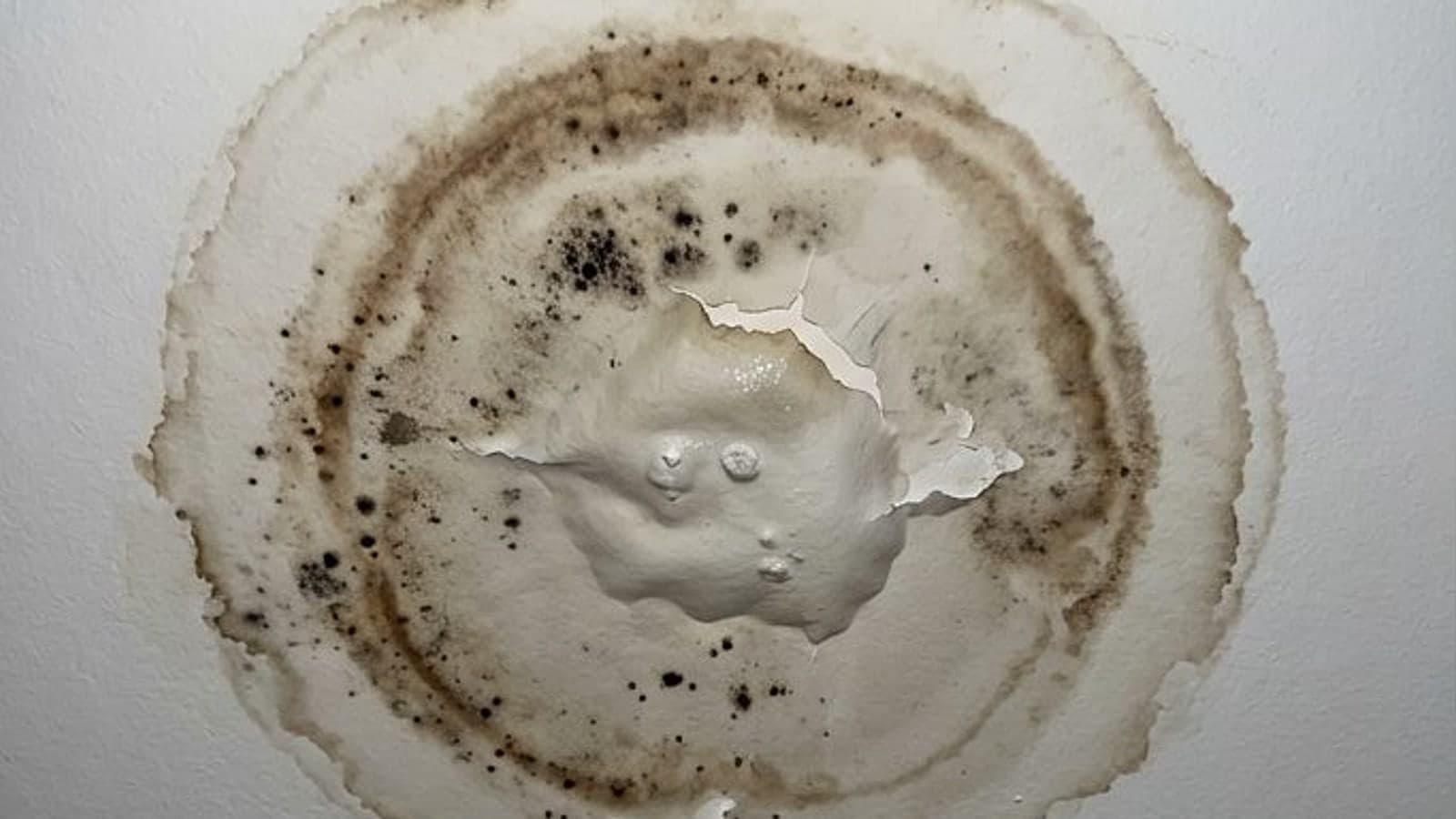
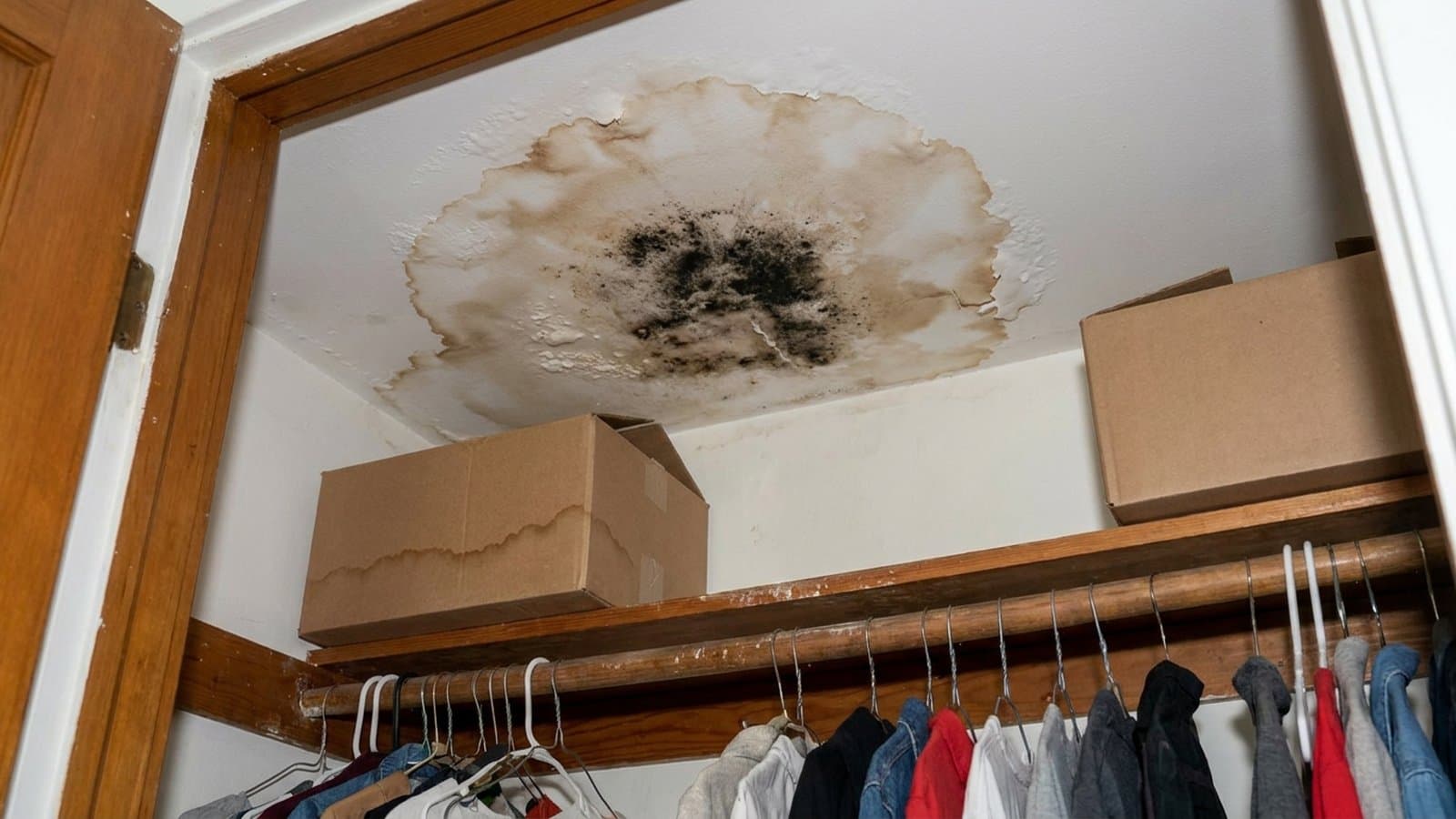
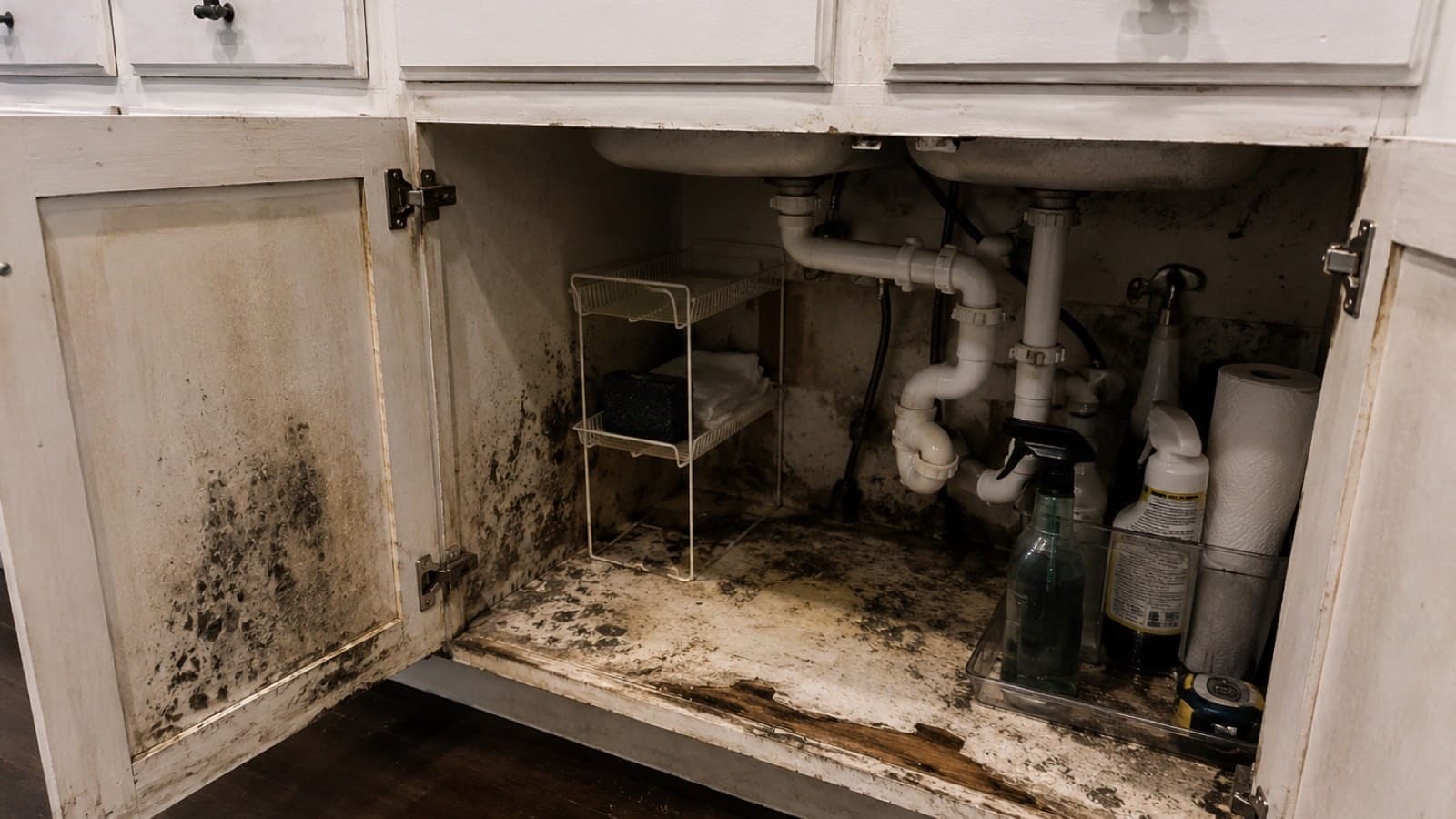
Visible growth is obvious when it is obvious: black or dark green speckling on drywall, fuzzy white or grey patches on framing, dark staining spreading from a corner. Less obvious, and more common in the houses we work in, are the secondary signs. Paint that has started to bubble or flake in one patch. A ceiling stain with a defined tide line. Baseboard or trim that has cupped away from the wall. Efflorescence, the chalky white deposit on masonry, which is not mold but is proof that water is moving through that wall.
Two things are routinely misread. Surface mildew on bathroom grout and window frames is a cleaning job, not a remediation project. And the dark staining on the north side of attic sheathing in older Connecticut and Massachusetts houses is often historic, from a ventilation problem that was corrected years ago. Whether growth is active matters more than whether it is present, and that is a judgement made on site, not from a photograph.
What Can Be Measured, Which Is The Part People Skip
Mold is a moisture problem wearing a costume. Growth needs a sustained moisture source, so the reliable question is not "is there mold" but "is anything wet, and for how long has it been". A moisture meter reading on drywall, framing, or subfloor answers that in seconds, and thermal imaging finds the wet area behind a finish without opening it.
This is why we lead with moisture mapping rather than sampling. If nothing reads wet and there has been no event, a musty smell is far more likely to be humidity or a drain trap than a growth problem inside an assembly. If something does read wet, you have found the actual job, which is the water, and the mold is a consequence to be dealt with on the way.
The Seasonal Pattern, Which Tells You The Cause
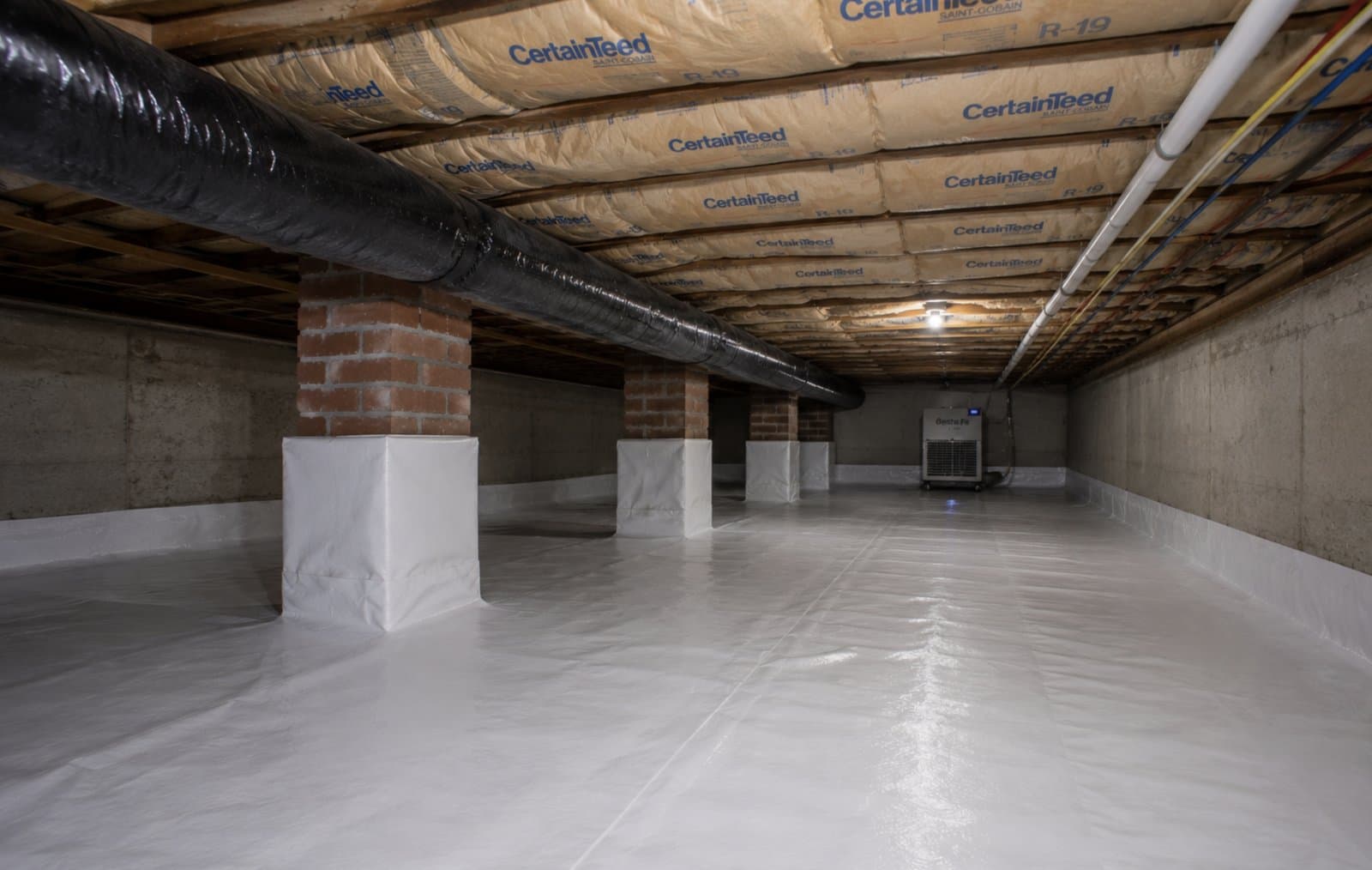
When a problem appears is often more diagnostic than what it looks like. A smell that shows up every summer and disappears in winter points at humidity and dew point, usually in a basement or crawl space, and the fix is dehumidification and air sealing rather than remediation. A problem that appears in winter points at condensation, typically warm interior air meeting a cold surface: an uninsulated rim joist, a poorly ventilated attic, a window reveal.
A problem that appeared once and has not gone away points at a discrete event with a water source that was never fully dried. That last one is the case where a small amount of work now genuinely prevents a large amount of work later, and it is the pattern behind a good share of the remediation we do.
"Mold is a moisture problem wearing a costume. If nothing reads wet, a musty smell is usually humidity, not growth."
When You Do Not Need Us
Four situations where calling a remediation company is the wrong next step, said plainly because they come up constantly.
Surface Mildew In A Bathroom
Growth on tile grout, silicone, a window frame, or a painted bathroom ceiling is a surface issue on a non-porous or sealed material. It cleans off, and it comes back if the room keeps staying wet. The real fix is the extraction fan running long enough after a shower, on a timer if nobody remembers. That is a hardware-store afternoon, not a remediation project.
A Patch Smaller Than Ten Square Feet, With A Source You Have Already Fixed
EPA guidance puts the do-it-yourself threshold at roughly ten square feet of growth on hard surfaces, and that is a sensible line. Under it, with the water source genuinely resolved and the material non-porous, careful cleaning and drying is a reasonable homeowner job. What makes a small patch not a small job is porous material, drywall, insulation, carpet pad, or a source you have not actually found.
Historic Attic Staining With No Active Moisture
Dark sheathing in an attic with dry readings, adequate ventilation, and no active leak is a record of an old problem. It is common in the housing stock we work in and it is frequently flagged during a home sale. Encapsulation is sometimes worth doing for appearance or for a transaction, but it is a cosmetic decision, and it should be priced and described as one.
A Summer Basement Smell With A Dry Meter
If the meter is dry and the smell is seasonal, you have a humidity problem. A correctly sized dehumidifier holding the space below the 55 percent relative humidity threshold in ASHRAE 160 solves it, and costs a fraction of any remediation. We will tell you that on the phone rather than schedule a visit.
What Happens If It Is Real
The sequence, the standard it follows, and where testing does and does not belong.
Assessment First, Which Is Free And In Person
The first visit is moisture mapping, thermal imaging where it helps, and a written scope. It costs nothing and it produces the two facts that drive everything after: where the water is coming from, and how much material it has affected. If the answer is that you do not have a remediation project, that is the answer you get, and it is the answer roughly as often as not.
Testing Is Sometimes Useful And Often Not
Air and surface sampling costs about 300 to 800 dollars with lab analysis running 40 to 100 dollars per sample, and it is genuinely valuable in three cases: a pre-purchase decision, a dispute where a documented baseline matters, and post-remediation verification that the work met its standard. It is much less useful as a first step when growth is already visible, because you are paying a lab to confirm what you can see, and the sample does not tell you where the water is.
In New York this is not our call to make. Under Article 32, assessment and remediation must be performed by different licensed parties, so we coordinate with an independently licensed assessor and perform remediation only. In Connecticut and Massachusetts we can do both, and we still separate clearance testing from our own work when a third-party result is what you actually need.
The Work Itself, And What It Costs
Remediation follows IICRC S520: containment with negative air pressure so nothing migrates to rooms that were fine, HEPA filtration, removal of affected porous material to a defined cut line, treatment of remaining surfaces, drying to a documented standard, then verification.
The published ranges are 1,500 to 4,500 dollars for a single contained area, 3,000 to 8,000 dollars for a basement wall, crawl space section, or single room, and 8,000 to 25,000 dollars and up for multi-room or structural work with HVAC involvement. Those are the Connecticut and Massachusetts numbers, and they are the same ones on every one of our town pages. New York runs higher, 1,500 to 5,500, 3,500 to 11,000, and 11,000 to 32,000 dollars and up, because Article 32 requires a separate licensed assessor and the labour market is different. Our full breakdown of what moves a job inside those ranges is in our mold remediation cost article.
If You Are Going To Involve Insurance
Coverage usually turns on the origin rather than the mold itself. Mold that follows a sudden and accidental water event, a burst supply line or a failed appliance, is frequently covered as part of that loss. Mold from a long-running leak, chronic humidity, or seepage generally is not, and many policies carry a separate mold sublimit regardless.
What you control is the quality of the record your carrier decides from. We document to IICRC S520 standard, including moisture readings and time-stamped photographs from the first visit, and submit directly to your insurer. We are not licensed public adjusters and do not negotiate claims on your behalf.
The Short Answers
The specific questions that most often bring people to this page.
How Do I Know If I Have Mold In My House?
Look for four things: a persistent musty smell localised to one area, visible growth or secondary signs like bubbling paint and defined ceiling stains, a moisture meter reading wet on drywall, framing or subfloor, and a pattern in when it appears. One alone is often nothing. A smell plus a wet reading is a real finding. A free on-site assessment with a meter settles it in under an hour.
Does A Musty Smell Always Mean Mold?
No. A seasonal, whole-basement mustiness with dry meter readings is usually humidity, and a dehumidifier holding below 55 percent relative humidity fixes it. A dry trap in an unused floor drain or bathroom produces a similar smell. The smell becomes a strong signal when it is localised, persistent, and paired with a moisture reading or a known water event.
Can I Just Clean It Myself?
Often yes. EPA guidance puts the do-it-yourself line at roughly ten square feet on hard surfaces, and bathroom grout or window-frame mildew is squarely a cleaning job. The threshold that matters is not really area, it is material and source: porous material such as drywall, insulation or carpet pad, or a water source you have not found, is what turns a cleaning job into a remediation project.
Should I Get A Mold Test Before Calling Anyone?
Usually not, if growth is already visible. Testing runs about 300 to 800 dollars plus 40 to 100 dollars per sample and tells you what is in the air, not where the water is. It earns its cost for a pre-purchase decision, a documented dispute, or post-remediation clearance. Start with a free moisture assessment, which finds the cause rather than confirming the symptom.
Is Black Mold Different?
Not from a remediation standpoint. Stachybotrys is one of many species that grow on wet cellulose, and IICRC S520 containment, removal and verification are the same regardless of species and color. Color is not a reliable identifier by eye in any case. What changes scope is how much material is affected and whether the HVAC system moved spores elsewhere, not the name of the organism.