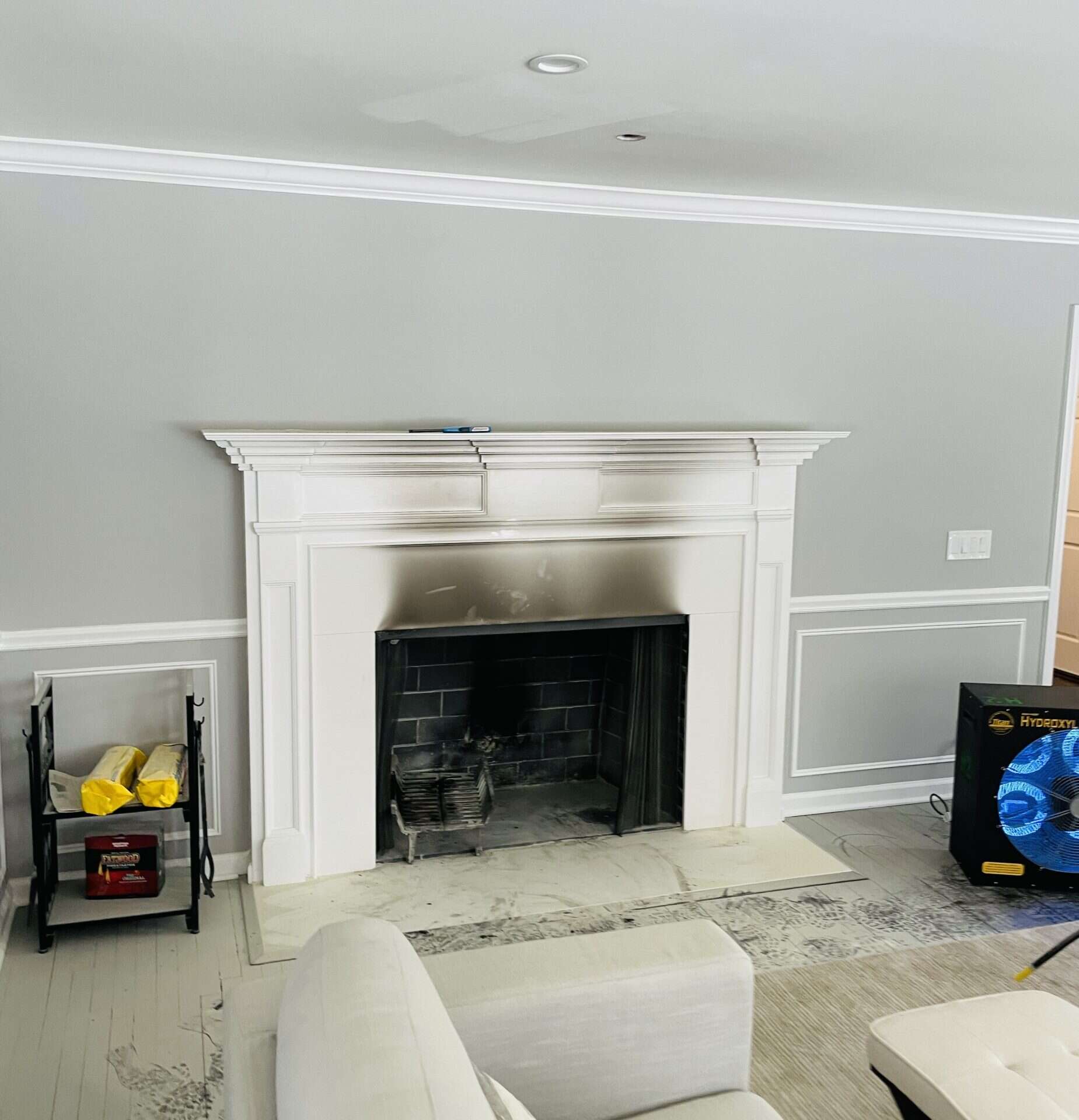
Most people meet the word puffback about an hour after it happens to them. The heating system made a noise, or it did not, and now there is a fine black film on the ceiling and a gray fan pattern spreading out from every supply register. Nothing burned. Nothing looks like a fire. And the house smells like an oil burner.
What happened is a misfire. Fuel that should have ignited on schedule accumulated in the combustion chamber as vapor, and when it finally lit it lit all at once, producing a pressure event that pushed soot backward out of the appliance and, in a forced air system, into the ducts that serve every room. It takes seconds. The cleanup takes days.
The most useful thing to know is that puffback soot is not smoke residue from a fire. It is atomized heating fuel: oily, acidic, and electrostatically charged, so it clings to vertical surfaces and to anything with a static field, which is why it goes for televisions and light fixtures first. Cleaning it the way you clean dust turns a recoverable event into repainting.
What Causes A Puff Back?
Every puffback is a delayed ignition. The variations are about what caused the delay, and they are nearly all maintenance items.
The Mechanism
An oil burner ignites a fine mist of fuel at the nozzle. When ignition is delayed by seconds, unburned mist fills the chamber, so a steady flame becomes vaporized fuel meeting a spark. That event expands back through the appliance and, in a forced air system, into the ducts. A boiler has no ducts, so its soot stays close.
The Usual Causes
A clogged fuel nozzle giving an uneven spray. Worn electrodes that spark late. A degraded ignition transformer. A restricted flue that prevents draft. Air in the fuel line after a delivery or a low tank. Oil equipment is far more prone than gas, so puffbacks are common in older Connecticut and Massachusetts housing. A puffback is almost always a missed annual service.
How Do You Know You Have Had A Puff Back?
The signature is a fine, greasy, evenly distributed black or gray film that appears everywhere at once.
Four black films that look similar on a wall, and how to tell which one you are looking at.
Puffback soot
- Appearance
- Fine, greasy, black to gray film with a distinct oil burner odor
- Distribution
- Everywhere at once, plumes at supply registers, ghosting along framing lines
- Behavior when touched
- Smears and spreads. Wiping drives it into the surface rather than lifting it.
Candle or lamp soot
- Appearance
- Dry, matte black, often with a waxy component
- Distribution
- Localized above and around the source, strongest on the nearest wall or ceiling
- Behavior when touched
- Lifts partially with dry sponging, smears if wiped wet
Cooking grease and protein residue
- Appearance
- Nearly invisible, amber or clear, sticky to the touch, very strong odor
- Distribution
- Concentrated in the kitchen and along the airflow path out of it
- Behavior when touched
- Feels tacky rather than powdery. Odor persists after the surface looks clean.
Ordinary household dust
- Appearance
- Light gray, dry, no odor
- Distribution
- Horizontal surfaces first, accumulates gradually over months
- Behavior when touched
- Lifts cleanly with a dry cloth and does not reappear within days
| Residue | Appearance | Distribution | Behavior when touched |
|---|---|---|---|
| Puffback soot | Fine, greasy, black to gray film with a distinct oil burner odor | Everywhere at once, plumes at supply registers, ghosting along framing lines | Smears and spreads. Wiping drives it into the surface rather than lifting it. |
| Candle or lamp soot | Dry, matte black, often with a waxy component | Localized above and around the source, strongest on the nearest wall or ceiling | Lifts partially with dry sponging, smears if wiped wet |
| Cooking grease and protein residue | Nearly invisible, amber or clear, sticky to the touch, very strong odor | Concentrated in the kitchen and along the airflow path out of it | Feels tacky rather than powdery. Odor persists after the surface looks clean. |
| Ordinary household dust | Light gray, dry, no odor | Horizontal surfaces first, accumulates gradually over months | Lifts cleanly with a dry cloth and does not reappear within days |
What It Looks Like
Soot fanning out from supply registers in visible plumes on the ceiling. A gray or black film on walls that smears rather than lifting when touched. A greasy film on lampshades and television screens, which attract charged particles. The most diagnostic sign is ghosting: dark lines that follow the framing behind the drywall, because charged soot deposits on the cooler surfaces above the studs.
What It Smells Like
Sharp, oily, and unmistakably like a burner rather than woodsmoke. The odor is strongest near the appliance and near supply registers, and it intensifies when the heat runs, because the system is moving air across surfaces that still hold residue. A smell that returns weeks after the visible soot was cleaned means residue is still in the ductwork.
Is Puff Back Soot Dangerous?
It is a building contaminant with documented material effects, and it should be treated as one rather than as dirt.
What It Does To The House
Puffback residue is acidic, and left in place it corrodes and etches progressively. Metal fixtures discolor and pit. Plastics yellow permanently, which is why electronics housings and switch plates often cannot be recovered. Grout and porous stone absorb the oil and hold the stain. A puffback cleaned in the first week is a cleaning project. Left a month, it is a replacement project.
The Air Quality Question, Stated Carefully
Combustion soot is fine particulate, and fine particulate is a recognized indoor air quality concern. We will not tell you what it is doing to anyone in the household, because that is a medical question and it belongs with a physician. Practical guidance: reduce exposure. Do not run the heating system, ventilate if outdoor conditions allow, and keep people out of the worst rooms.
Why You Should Not Clean Puff Back Soot Yourself
This is the one place in restoration where the DIY attempt reliably makes the bill larger, and the reason is chemistry, not skill.
What A Wet Cloth Actually Does
Puffback residue is oil. Wiping oil on a porous surface with a wet cloth and a household cleaner pushes it into the pores of the paint, the grout, and the drywall paper. The surface looks better briefly, then dries with the soot inside the material rather than on it. At that point cleaning cannot recover it and the wall gets sealed and repainted.
The Correct Order
Professional cleanup runs dry before wet. Dry chemical sponges, vulcanized rubber blocks that lift oily particulate by adhesion without solvent, go over the surface first. Only after that phase has removed what it can does wet cleaning with a degreasing agent begin. Reversing the order is the entire failure mode, which is why our first instruction on the phone is to stop touching the walls.
What To Do Before Anyone Arrives
Shut the heating system off at the thermostat and, if you can do so safely, at the emergency switch, so the blower stops moving residue. Do not point a fan at a sooted surface. Cover upholstered furniture and mattresses. Photograph everything before anything is touched, including the registers and the appliance. Then leave the walls, ceilings, and electronics alone.
"The rooms nobody touched clean up. The rooms somebody scrubbed on the first night get primed and repainted. That is the single most consistent pattern in this work, and it costs homeowners thousands of dollars a year in this state."
What Does Professional Puff Back Cleanup Involve?
Under the IICRC S700 standard the work is sequenced, and the sequence is what determines whether the odor comes back.
What separates a small puffback from a large one, using our published Connecticut fire scope tiers.
Contained, one area
- Typical situation
- Boiler puffback in a hydronic system, soot held to the basement and stairwell, no duct network involved
- Published range
- Lower end of $1,500 to $8,500
- What drives it
- Limited surface area, no duct system to carry residue, contents mostly unaffected
Whole house, forced air
- Typical situation
- Furnace puffback that pushed oily residue through the supply ducts into every room
- Published range
- Upper end of $1,500 to $8,500
- What drives it
- Every surface holds residue, ductwork requires mechanical cleaning, contents need treatment
Whole house plus sealing and repaint
- Typical situation
- Residue left in place for weeks, or surfaces wiped early so the oil went into the paint
- Published range
- Top of $1,500 to $8,500, and beyond it where reconstruction is added
- What drives it
- Cleaning can no longer recover finishes, so sealing and repainting are added to the scope
Puffback with an actual fire
- Typical situation
- Delayed ignition that went on to ignite surrounding material rather than staying in the chamber
- Published range
- $8,500 to $45,000, our contained fire tier
- What drives it
- Demolition of burned material plus the full smoke scope layered on top
| Scope | Typical situation | Published range | What drives it |
|---|---|---|---|
| Contained, one area | Boiler puffback in a hydronic system, soot held to the basement and stairwell, no duct network involved | Lower end of $1,500 to $8,500 | Limited surface area, no duct system to carry residue, contents mostly unaffected |
| Whole house, forced air | Furnace puffback that pushed oily residue through the supply ducts into every room | Upper end of $1,500 to $8,500 | Every surface holds residue, ductwork requires mechanical cleaning, contents need treatment |
| Whole house plus sealing and repaint | Residue left in place for weeks, or surfaces wiped early so the oil went into the paint | Top of $1,500 to $8,500, and beyond it where reconstruction is added | Cleaning can no longer recover finishes, so sealing and repainting are added to the scope |
| Puffback with an actual fire | Delayed ignition that went on to ignite surrounding material rather than staying in the chamber | $8,500 to $45,000, our contained fire tier | Demolition of burned material plus the full smoke scope layered on top |
The Sequence
First, containment: the heating system stays off, HEPA air scrubbers pull particulate from the air, and contents come out for off site cleaning. Second, dry removal: HEPA vacuuming, then chemical sponging of walls, ceilings, and hard contents. Third, wet cleaning with degreasing agents, top down. Fourth, the ductwork, the step most often skipped and why odor returns, covered by our air duct cleaning service and never optional on a forced air puffback. Fifth, odor, treated to match the material and sealed before repainting where residue penetrated, per our odor removal guide.
What It Costs
Puffback cleanup sits in the first of our three fire scope tiers, where nothing structural burned. That tier runs 1,500 to 8,500 dollars in Connecticut. Line items: fire and smoke odor control at 0.89 dollars per square foot, odor blocking sealer in the fire formulation at 2.05 dollars per square foot, a hydroxyl generator at 175 dollars per unit per day, and duct cleaning at 1,590 dollars per unit. Context is in our fire damage restoration cost guide, and service detail is on our puff back cleanup page.
Does Insurance Cover A Puff Back?
Frequently yes, and more often than homeowners expect, because of how carriers classify the event.
Why It Usually Qualifies
A puffback happens in seconds and is not something the homeowner did. That is the sudden and accidental language standard policies use for covered events, and it is one of the more commonly approved smoke claims. Coverage typically extends to structure and contents cleaning, odor treatment, and duct cleaning. Coverage depends on your policy and carrier, and a documented history of deferred maintenance can complicate it.
What Helps The Claim
Photographs taken before anything is cleaned, including the registers and the appliance. The service history of the heating system if you have it. And a written scope from a restoration contractor. We document the loss and submit an IICRC-standard scope covering cleaning, duct work, odor treatment, and sealing directly to your insurer. We are not licensed public adjusters and do not negotiate claims on your behalf. If something actually burned, that moves into fire damage restoration, not smoke cleanup.
Need Restoration Services?
60-minute response across CT, NY & MA. Licensed, insured, free inspections.
How Do You Prevent A Puff Back?
Annual service, and one habit that costs nothing.
The Maintenance That Actually Prevents It
Have the oil burner serviced every year by a licensed heating technician. That visit replaces the nozzle and fuel filter, cleans the electrodes, checks the ignition transformer, inspects the flue, and tunes combustion with a meter. Those five items are what fail into a puffback. The free habit: do not let the oil tank run near empty, because that pulls sediment and air into the fuel line.
The Warning Signs Before It Happens
A burner that rumbles, coughs, or thumps on startup rather than lighting cleanly. Soot accumulating around the appliance between services. An oil smell in the basement that comes and goes with the heating cycle. Any of those means the burner is not igniting cleanly, and a burner that is not igniting cleanly is a puffback that has not happened yet.
Questions Homeowners Ask
What is a puff back?+
A puffback is a misfire in an oil or gas heating system. Fuel that should have ignited accumulates in the combustion chamber, and when it ignites it goes all at once, pushing soot back out of the appliance and, in a forced air system, into every room. The residue is atomized heating fuel, oily and acidic, not dry ash.
What causes a furnace puff back?+
Delayed ignition. The causes are almost all maintenance items: a clogged fuel nozzle giving an uneven spray, worn electrodes sparking late, a degraded ignition transformer, a restricted flue preventing draft, or air in the fuel line after a delivery or a low tank. A puffback is usually a missed annual burner service.
How do I know if I had a puff back?+
The signature is a fine greasy black or gray film that appears everywhere at once, with plumes fanning out from supply registers onto the ceiling. Look for ghosting, dark lines tracing the framing behind the drywall, because charged soot deposits on cooler surfaces. There is a sharp oil burner smell that gets stronger when the heat runs.
Is puff back soot dangerous?+
Puffback residue is acidic and its damage is progressive: metal fixtures discolor and pit, plastics yellow permanently, and porous stone absorbs the oil and stains. Combustion soot is fine particulate, a recognized indoor air quality concern, but what it means for a person is a medical question for a physician. Keep the heating system off meanwhile.
Can I clean puff back soot myself?+
This is the one job where the DIY attempt reliably increases the cost. Puffback residue is oil, and wiping it on a porous surface with a damp cloth drives it into the pores of the paint and drywall paper. It dries with the soot inside, and that wall needs sealing and repainting. Professional cleanup runs dry first, with chemical sponges.
Does homeowners insurance cover puff back cleanup?+
Frequently yes. A puffback happens in seconds and is not caused by the homeowner, placing it in the sudden and accidental language standard policies use for covered events. Coverage typically extends to structure and contents cleaning, odor treatment, and duct cleaning. We are not licensed public adjusters and do not negotiate claims on your behalf.
How much does puff back cleanup cost?+
Puffback cleanup falls in our first Connecticut fire scope tier, for events where nothing structural burned, which runs 1,500 to 8,500 dollars. A boiler puffback confined to a basement and stairwell sits near the bottom. A forced air furnace puffback that pushed residue through the ducts into every room sits at the top.
Do the air ducts have to be cleaned after a puff back?+
In a forced air system, yes, and skipping it is the most common reason odor returns weeks later. The ducts are the pathway the event traveled, so residue coats every interior surface. Running the system before cleaning puts that residue back onto surfaces you just paid to clean. A hydronic boiler has no ducts, so the step does not apply.