Mold Remediation Bloomfield, CT
Green Restoration, Hartford County, mold remediation in Bloomfield, call (860) 222-9498 IICRC S520 Certified • Licensed & Insured • 24/7
 IICRC Certified
 Eco-Friendly Solutions For Healthier Spaces
Reviewed by David Megeneishvili·Licensed & Insured In CT·IICRC AMRT + WRT
What Is IICRC S520 Mold Remediation?
Mold remediation is the IICRC S520-2024 documented process of source-cause moisture diagnosis, HEPA-filtered negative-air containment construction, condition-1 vs condition-2 vs condition-3 substrate triage, controlled removal of porous Condition 3 materials, antimicrobial application of EPA-registered formulations, HEPA post-cleaning, and ACAC-certified independent third-party clearance verification before any reconstruction.
In Bloomfield, CT, remediation is sequenced strictly: identify and stop the moisture source, build containment with negative-air HEPA AFD machines and 6-mil poly barriers, remove visibly contaminated porous materials, decontaminate semi-porous surfaces per S520 § 12.2, antimicrobial mist treat, HEPA vacuum the work area, and only release containment after independent third-party air and surface sample clearance falls inside the Condition 1 envelope.
- IICRC S520-2024 aligned
- HEPA negative-air containment
- ACAC independent clearance
- EPA-registered antimicrobials
Why Bloomfield Mold Jobs Run IICRC S520
Connecticut has no mandatory mold licensing regime, but IICRC S520-2024 is the de facto industry standard. CT § 20-427 still requires HIC registration for any remediation work over $200, with documented scope, antimicrobial application records, and clearance testing.
Green Restoration runs IICRC S520-2024 protocol with HEPA negative-air containment, ACAC-certified independent third-party clearance, and full chain-of-custody microbial documentation on every remediation.
Complete Mold Remediation In Bloomfield, CT
Every Bloomfield scope is contained, removed, and documented by IICRC S520 crews dispatched across Hartford County.
Black Mold (Stachybotrys) Remediation
Stachybotrys turns up in Bloomfield where a finished lower level meets Park River North Branch groundwater and stays damp between storms. IICRC S520 double-layer containment, HEPA negative air, and staged physical removal run before any clearance decision. Slab-edge and rim-joist assemblies are opened to sound substrate and verified with a Tramex meter at the 16% moisture-content threshold before close-up.
Post-Remediation Clearance Testing
Independent ACAC-certified sampling reads the remediated zone against the outdoor control for the same day before anyone re-occupies. In Cottage Grove and Bloomfield Center lower levels the groundwater vapor load skews an indoor baseline, so the outdoor pairing matters. Crawl space and living space are cleared separately when both were in scope, and every laboratory result is delivered in writing.
Same-Day Mold Inspection And Air Sampling
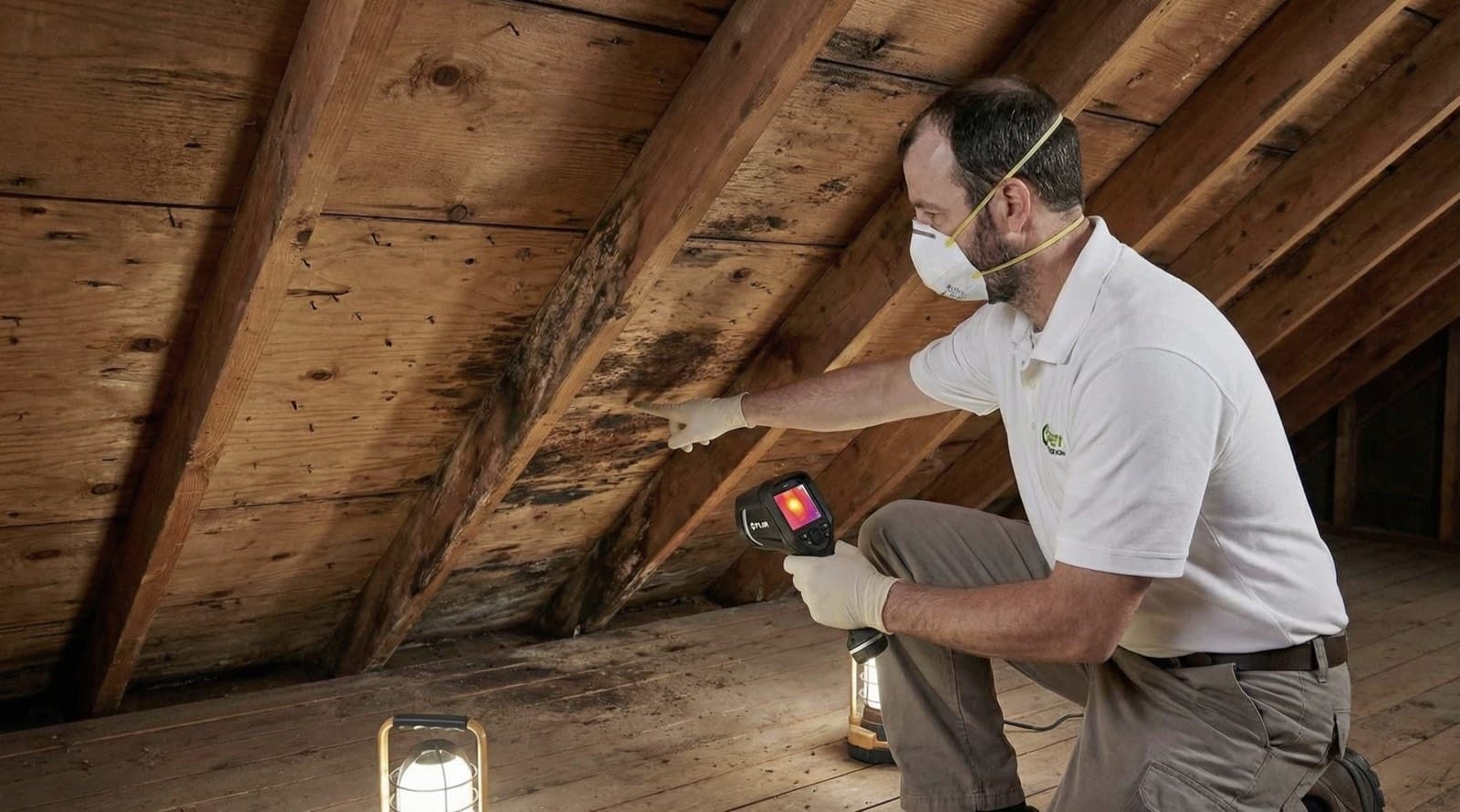
Thermal imaging, a Tramex moisture meter, and air-sampling pumps deploy the same day across Wintonbury capes, Blue Hills ranches, and Tariffville Road properties. The 16% moisture-content threshold decides whether an assembly dries in place or comes out, and that call is written into the inspection report along with the specific Bloomfield grade and drainage conditions feeding the wall.
Additional Mold Remediation Services In Bloomfield
Full Mold Remediation And Removal
Containment, physical tear-out, antimicrobial treatment, and source correction run in IICRC S520 sequence. A Scotland Road colonial with plaster cavities, a slab ranch with a wet bottom plate, and a Stone Road crawl each need a different removal order. Green Restoration corrects the grade, gutter, or groundwater path driving the moisture before the wall is closed, because unsolved sources reseed the same cavity.
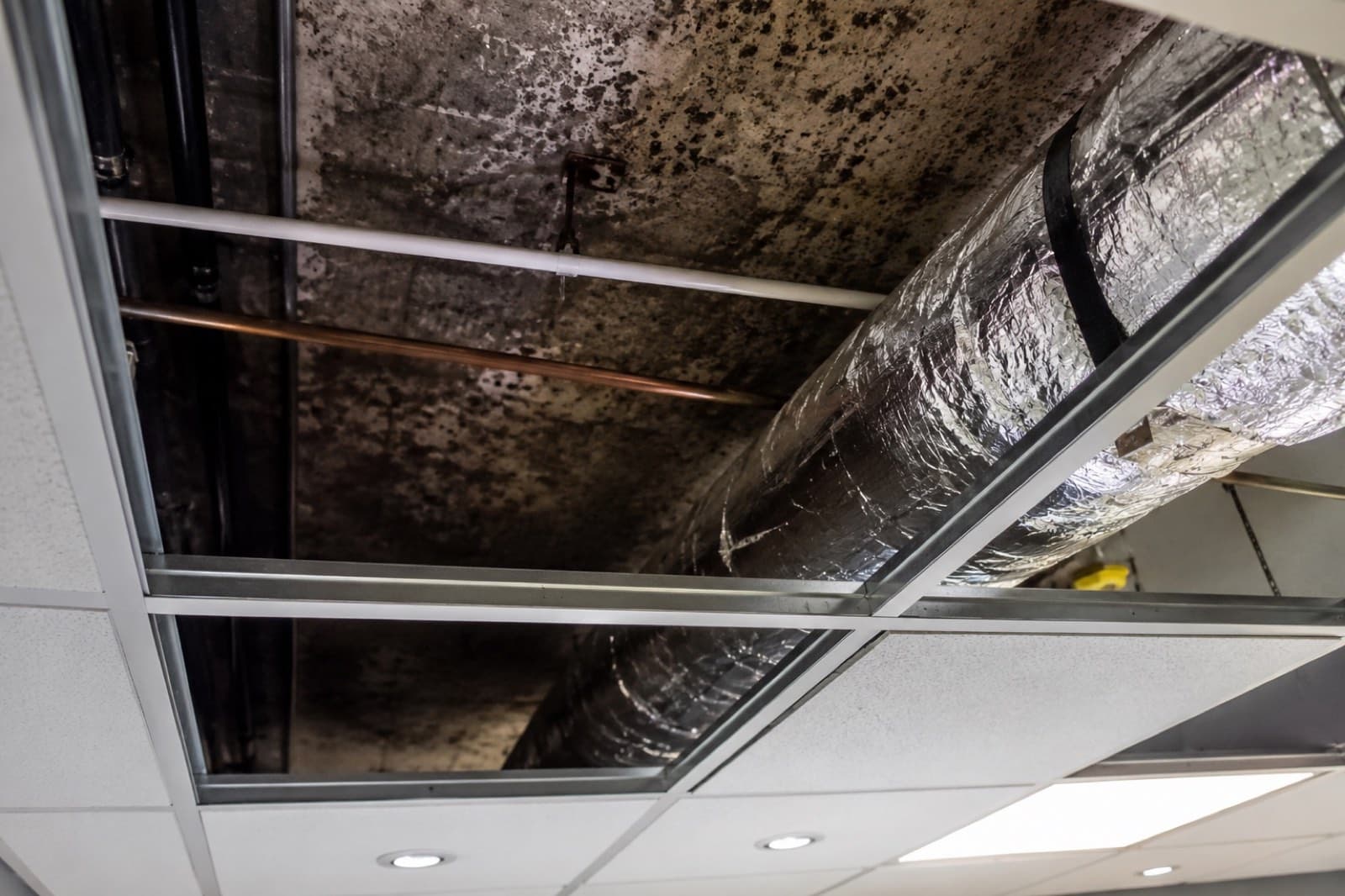
HVAC And Duct Mold Cleaning
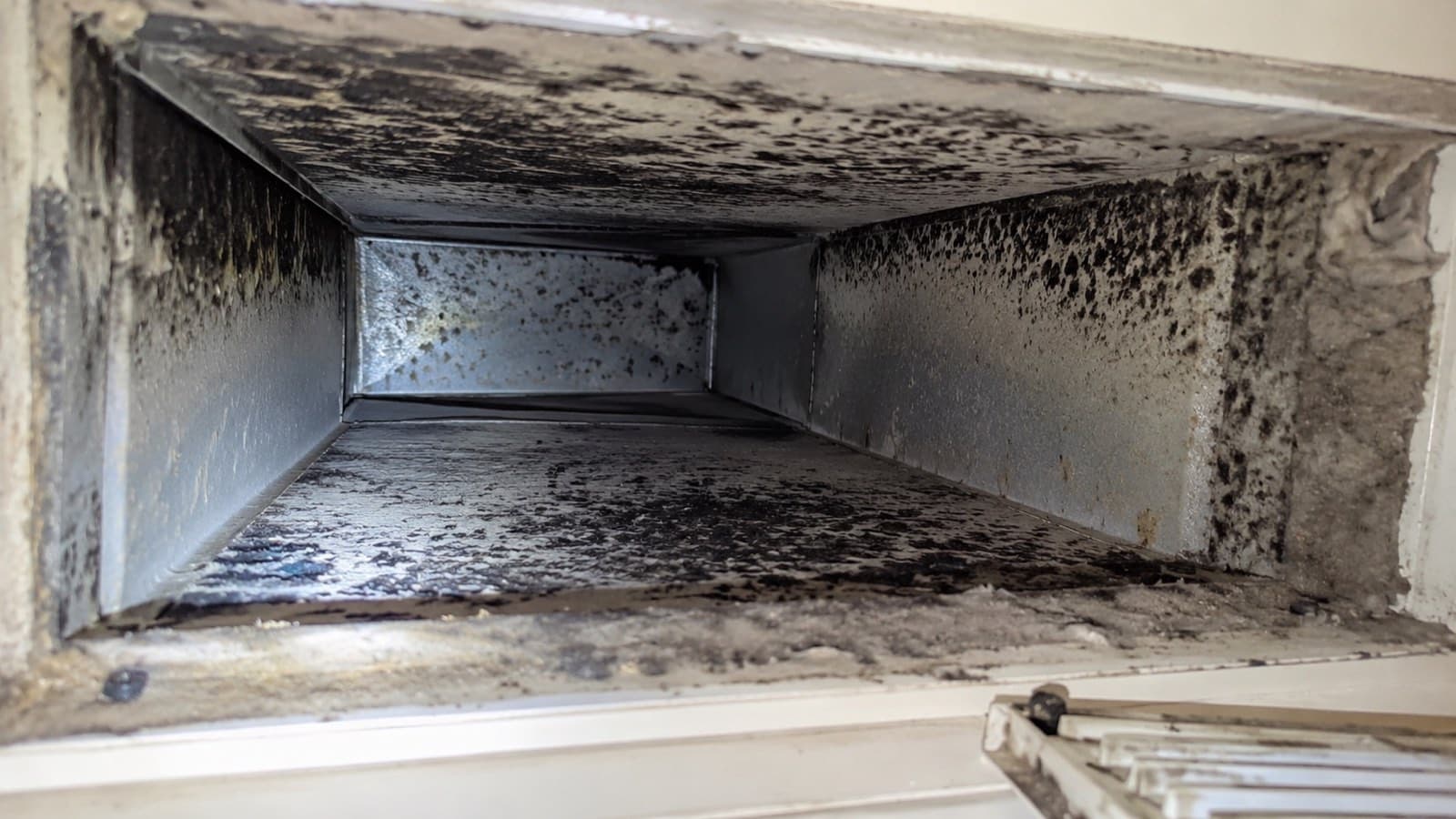
Duct and air-handler cleaning follows the NADCA ACR approach on Bloomfield single-zone ranch systems and on Tobacco Valley commercial equipment. Summer dew points push condensate into evaporator coils and trunk lines, and one neglected pan turns a mechanical problem into a building-wide air quality problem. Coils, plenum, boots, and returns are cleaned and HEPA-vacuumed before the system is put back in service.
Attic Mold Cleanup
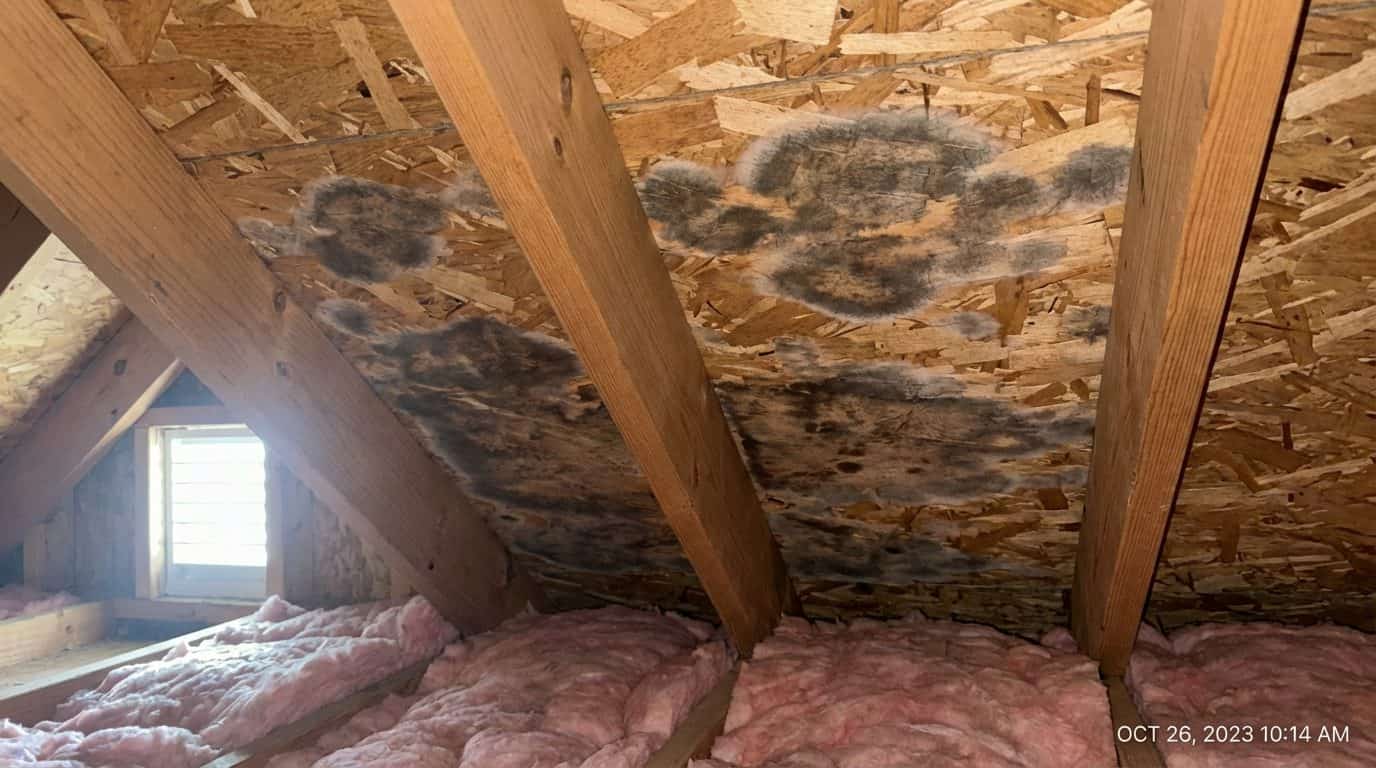
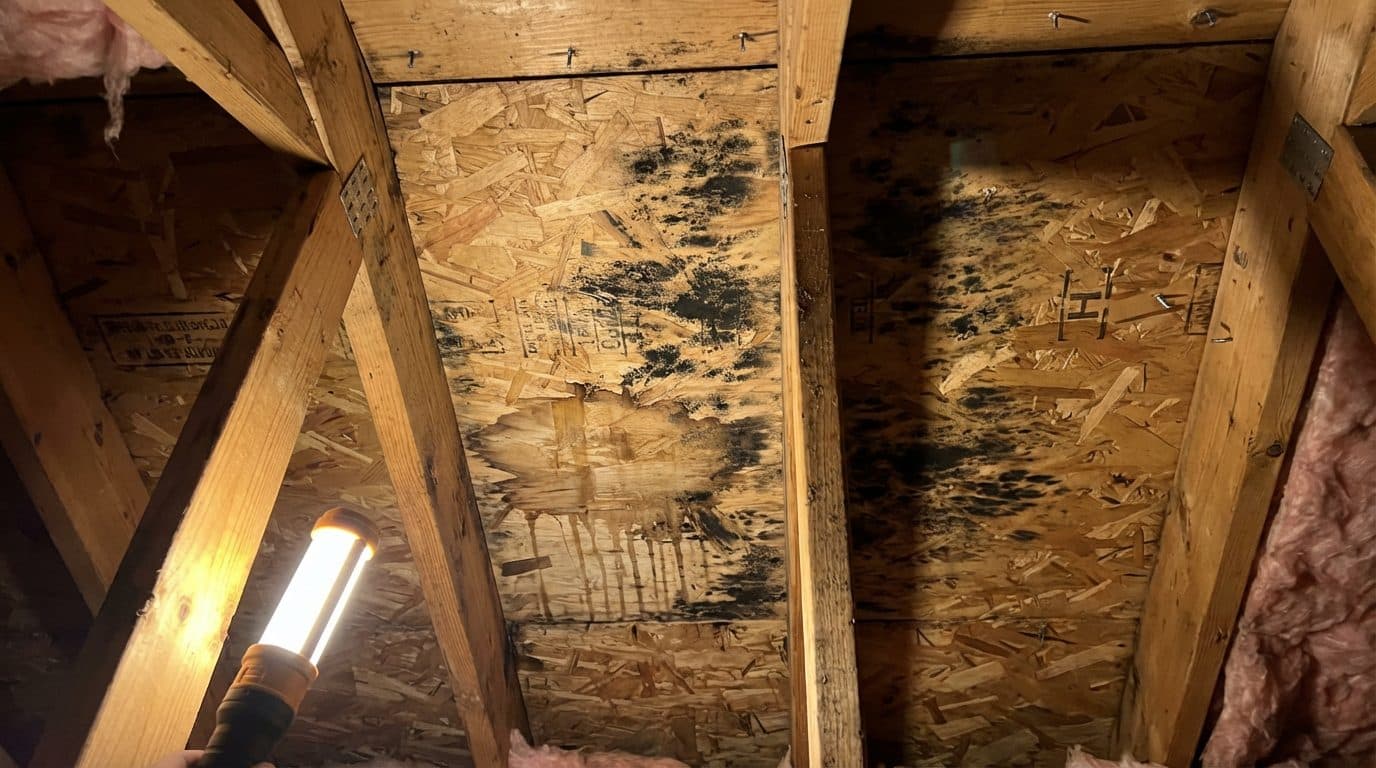
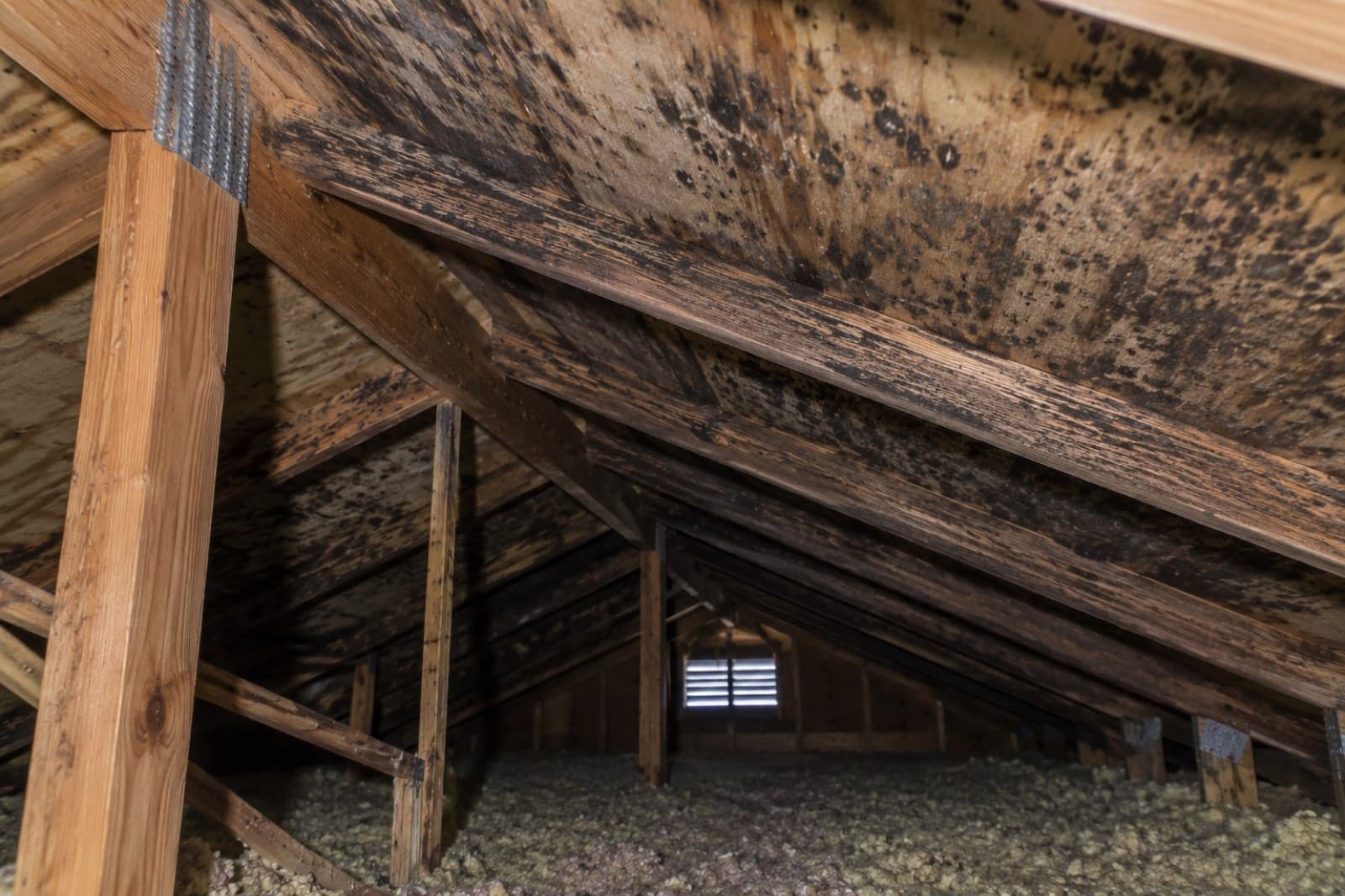
Bloomfield attic growth tracks bath fans that terminate under the roof rather than through it, plus the low-pitch ranch decks that hold moist air against cold sheathing. Rafter bays and sheathing get HEPA scrubbing, media cleaning where the growth is set into the wood, and a ventilation correction at intake and ridge. Without the vent fix an attic in Wintonbury recolonizes within a season.
Basement Mold Cleanup
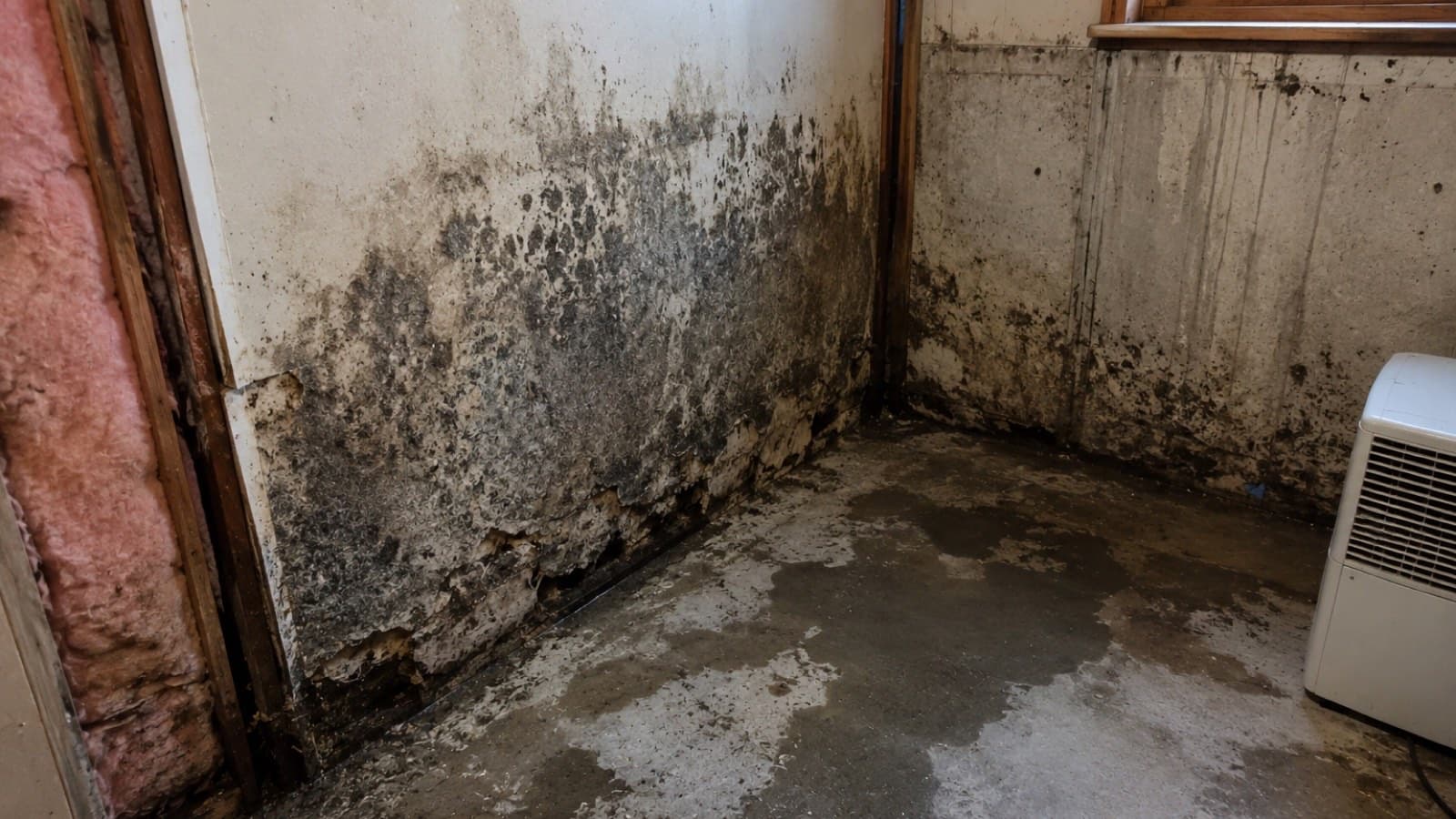
Finished lower levels carry the heaviest scope in town, particularly around Bloomfield Center and Cottage Grove where the Park River North Branch keeps the surrounding soil loaded. IICRC S520 containment, tear-out to sound framing, antimicrobial treatment on the studs and sill, and controlled drawdown to the 16% moisture-content threshold. Perimeter drainage or exterior grade correction is sequenced before any reconstruction.
Bathroom And Kitchen Mold Removal
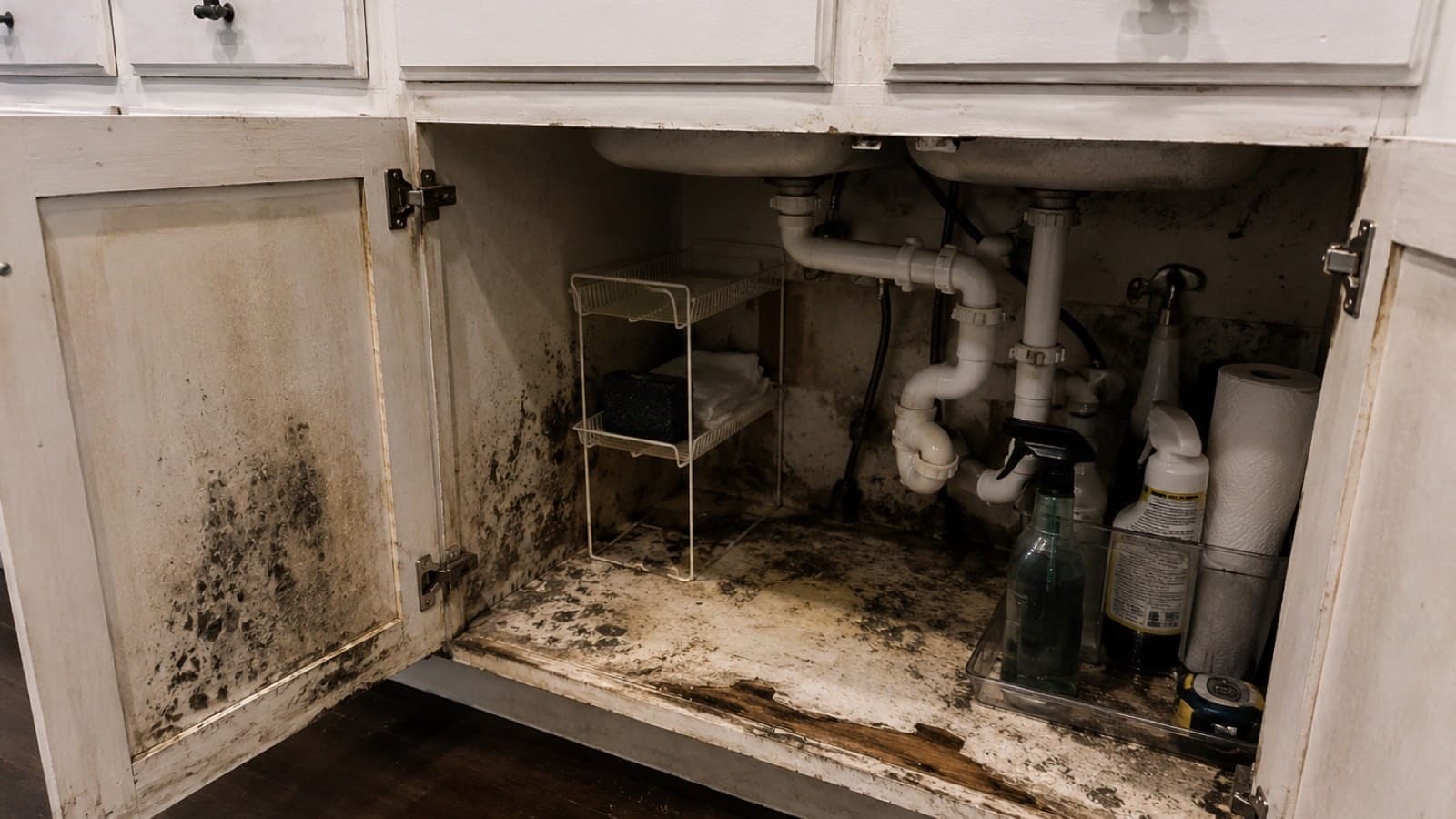
Midcentury Bloomfield baths hide growth behind mud-set tile, around tub flanges, and under a vanity that has been leaking slowly for years. Kitchens hide it in the sink base and behind the dishwasher. Containment goes up, tile and substrate come out, framing is metered and treated, and the plumbing defect is repaired before anything is reframed or refinished.
Crawlspace Mold Remediation
Shallow crawls under Blue Hills and Tariffville Road ranches colonize on joists and subfloor within days of any standing water, and the Tumbledown Brook side of town floods those crawls first. HEPA scrubbing, suited removal of contaminated insulation, IICRC S520 antimicrobial treatment on framing, then a sealed vapor barrier with mechanical dehumidification to hold the space dry.

Mold Does Not Wait For The Next Storm. Same-Day Inspection.
IICRC S520 Crews On Site The Same Day Across Bloomfield And Hartford County, With Sealed Containment And Independent Laboratory Clearance.
Green Restoration, Hartford County in Bloomfield
Green Restoration, Hartford County handles mold remediation in Bloomfield, CT, where groundwater along the Park River North Branch pushes against lower level walls in Bloomfield Center and Cottage Grove until the framing behind the finish stays wet. Owner-led crews set HEPA containment and remove affected porous materials to IICRC S520 standards, under IICRC Certified Firm #70236106. Call (860) 222-9498.
More Green Restoration Services in Bloomfield
The same local Green Restoration team covers all of these across Bloomfield. One number for every emergency and every cleanup.
Proof of Work
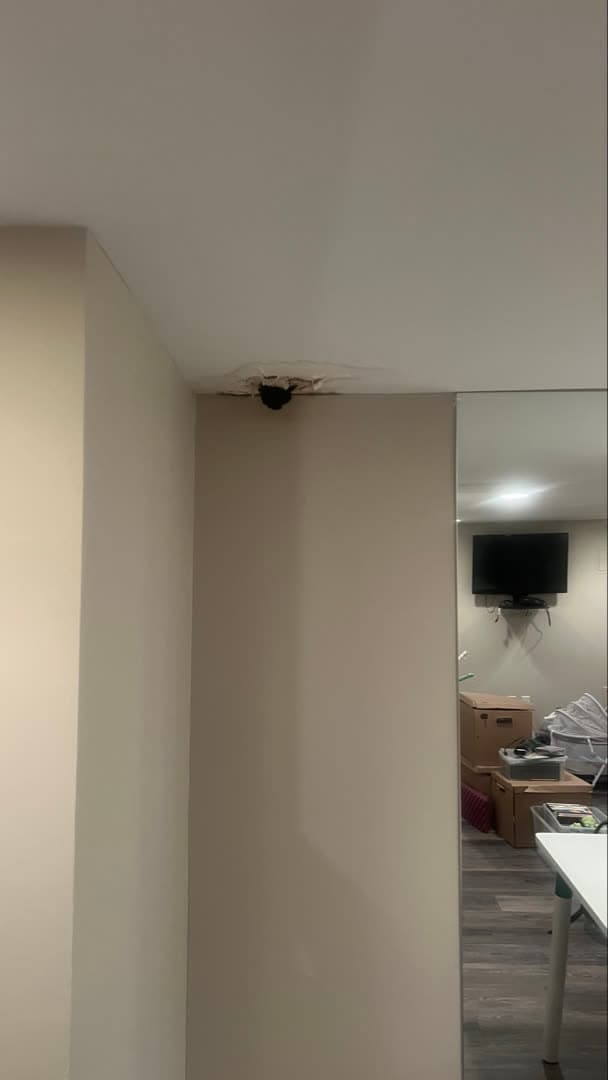
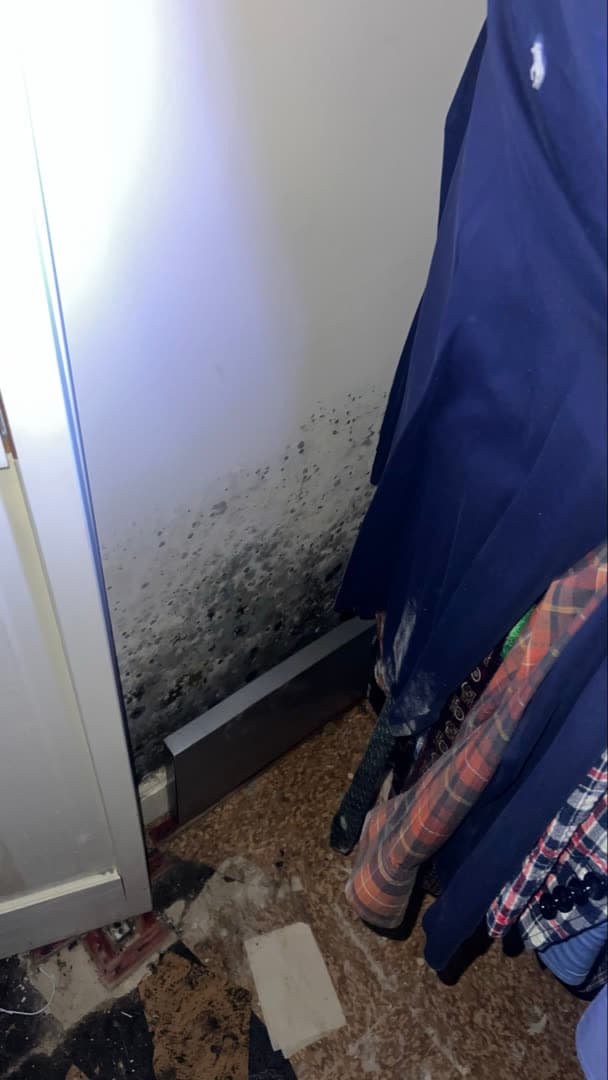
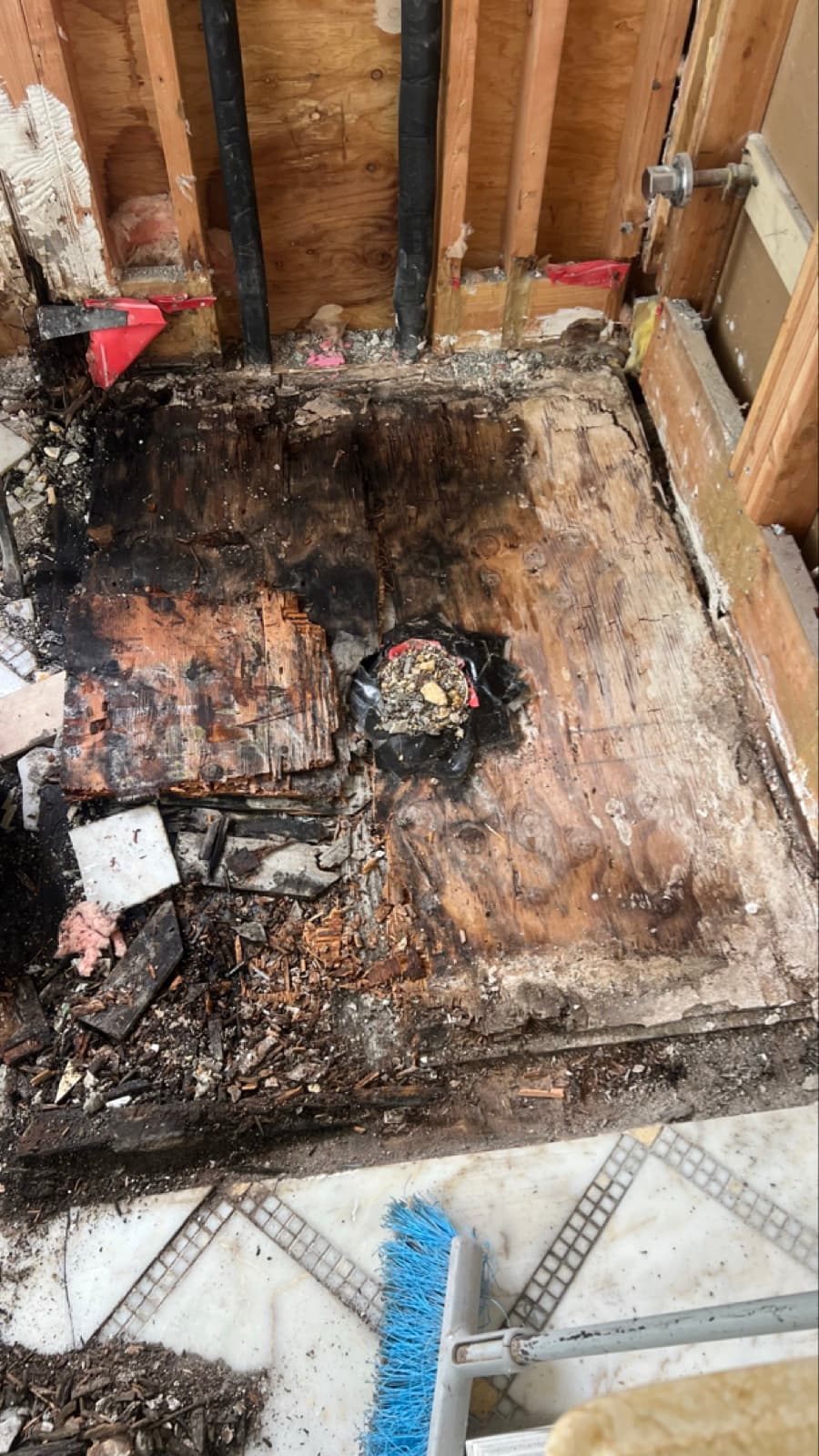
Recent Mold Remediation Projects
Documented Connecticut mold projects, from first containment through independent clearance.
Why Choose Us In Bloomfield
Owner-led mold remediation with same-day inspection, sealed containment, and independent laboratory clearance across Bloomfield and Hartford County.
Same-Day Mold Inspection
An IICRC S520 inspector reaches Bloomfield the day you call, carrying thermal imaging, a Tramex moisture meter, and ACAC air sampling equipment.
Slab And Lower-Level Containment
Sheeted barriers, negative air pressure, and HEPA scrubbers isolate slab-edge and rim-joist work in midcentury ranches so spores never reach the rest of the floor.
Benefect And Concrobium Antimicrobials
EPA-registered Benefect Decon-30 botanical disinfectant and Concrobium Mold Control treat framing after physical removal, with no harsh fumes left in the house.
Licensed, Insured, And Documented
Work is performed under CT HIC.0668405 and closed with independent air sampling read against the outdoor baseline before you re-occupy.
What Untreated Mold Costs Your Bloomfield Home
Bloomfield carries the Park River North Branch through its low ground and takes trap-rock runoff off the Talcott Mountain and Penwood ridge on its western edge, and most of the housing that sits between the two is midcentury ranch stock built tight to grade. According to Green Restoration, that combination puts wet soil against finished assemblies for weeks at a time, which is why local scopes usually start at the floor line.
Park River North Branch Groundwater Load
Bloomfield Center And Cottage Grove Exposed
The Park River North Branch collects the low ground through the middle of Bloomfield, and after a long rain the water table rises against foundation walls in Bloomfield Center and Cottage Grove faster than it drains away. Finished lower levels built tight to that grade hold the moisture behind the wall board, and colonization starts in the framing days before a stain appears in the room.
Tumbledown Brook Side-Yard Saturation
Slab Edges Stay Wet Between Storms
Tumbledown Brook feeds the Park River North Branch and keeps the soil on the properties around it saturated well past the storm that filled it. On a slab-on-grade house the wet soil sits against the slab edge and the bottom plate, and water moves through the concrete by capillary action into the base of the drywall, which is why the growth in these homes starts at the floor line and works upward.
Talcott Mountain Runoff Against West-Side Foundations
Penwood Ridge Sheds Rather Than Absorbs
The Talcott Mountain and Penwood ridge along the western edge of Bloomfield is trap rock, which sheds rain instead of taking it in. The volume arrives downslope in a concentrated push, and houses on the receiving grade take repeated surges against one elevation of the foundation. The result is a single wet wall that dries slowly and colonizes on the interior face while the other three walls read normal.
Midcentury Ranch Slab And Crawl Assemblies
Finished Surface Sits Tight To Grade
Bloomfield built heavily in the midcentury ranch pattern, which puts living space on a slab or over a shallow crawl with very little separation from exterior grade. Bottom plates, subfloor edges, and the paper face of the wall board sit inside the wet zone. That assembly hides growth behind finished surfaces, and it is the reason a Bloomfield mold scope is usually wider at the floor than the visible staining suggests.
Tobacco Valley Barn And Outbuilding Humidity
Unconditioned Structures Never Dry Out
The shade-tobacco land use that gives Tobacco Valley its name left Bloomfield with large unheated barns, sheds, and converted outbuildings that run unconditioned through the humid months. Without mechanical drying the interior surfaces hold moisture for weeks at a time, and any converted or partly finished section of such a building becomes a reservoir that reseeds the conditioned space attached to it.
Connecticut Disclosure Duty On Resale
State Law Protects The Buyer
Connecticut residential property disclosure law requires a seller to report known mold history. Documented remediation with independent laboratory clearance results is what keeps that disclosure from becoming a price negotiation on a Bloomfield listing, whether the property is a Blue Hills ranch, a Scotland Road colonial, or a Stone Road property being marketed after a lower-level finish.
Why Bloomfield Properties Need Professional Mold Remediation
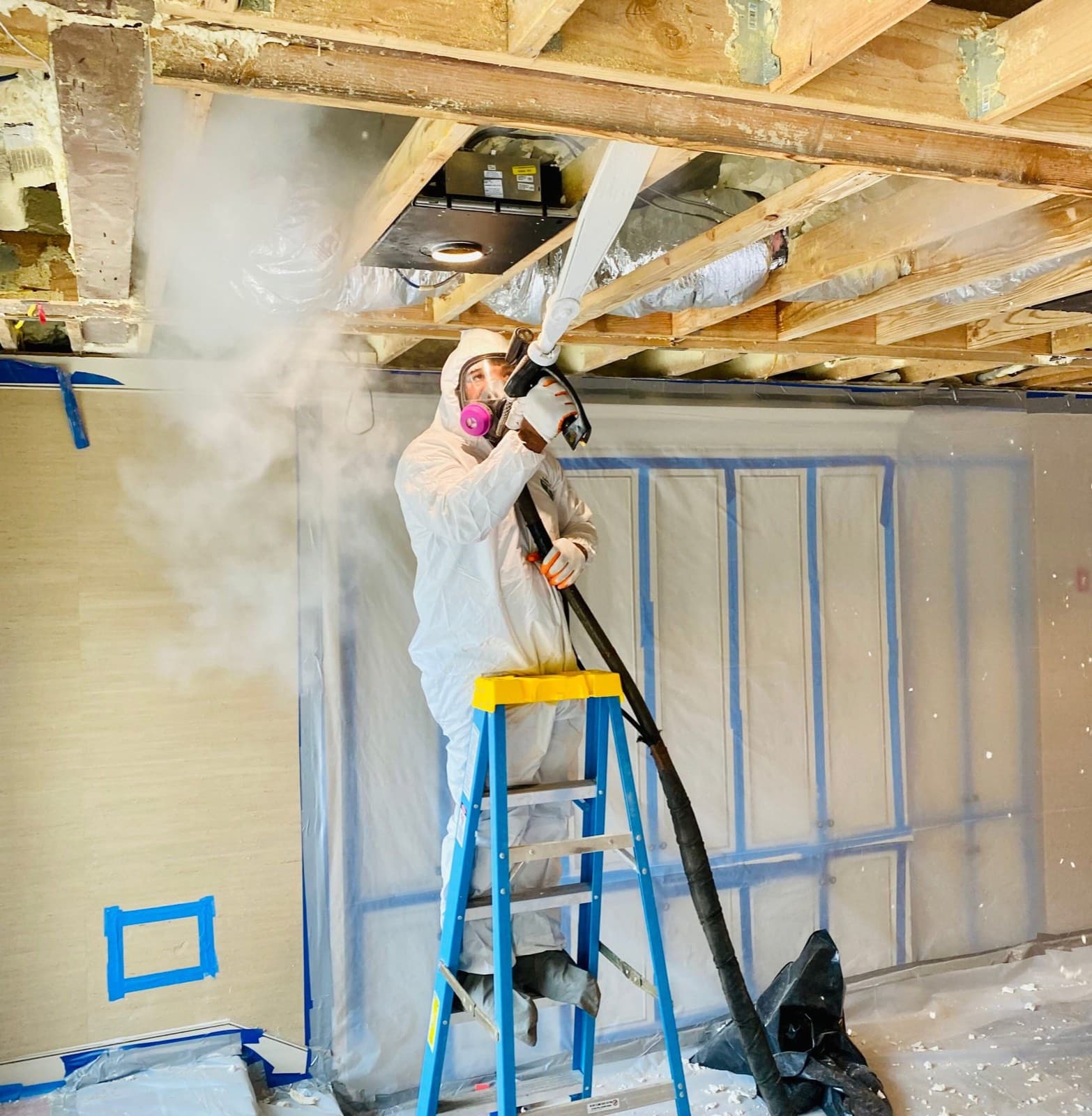
Surface cleaning does not solve a Bloomfield moisture path. Sealed containment, staged removal back to sound substrate, correction of the grade or groundwater route feeding the wall, and independent clearance sampling are what actually end the cycle.
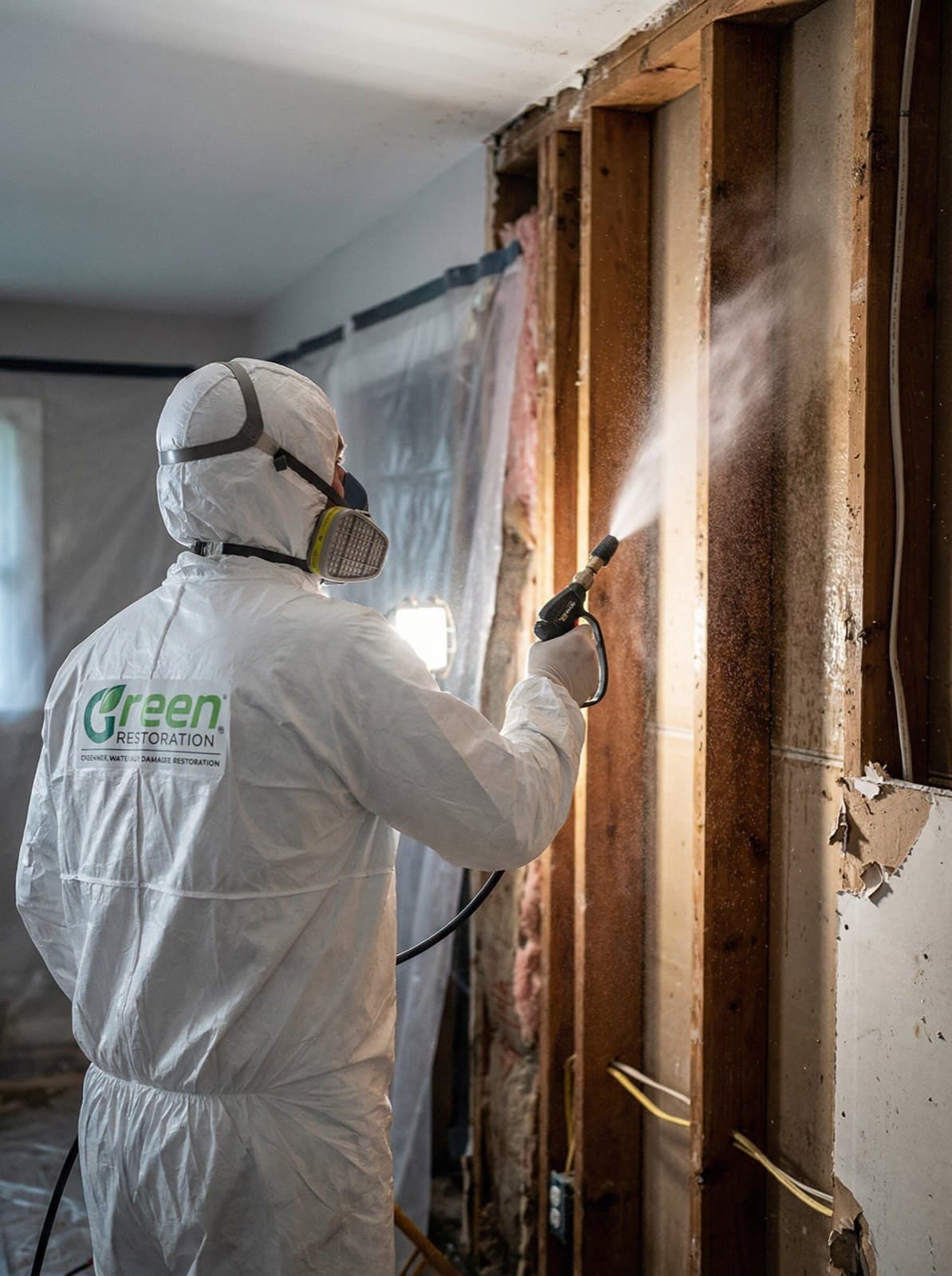
IICRC S520 Crews Who Know Bloomfield Assemblies
Every crew works to IICRC S520 and the owner carries IICRC AMRT and WRT credentials. The experience that matters here is assembly-specific: slab-edge openings in midcentury ranches, rim-joist and sill work in partly finished lower levels near the Park River North Branch, and low-pitch roof-deck cleanup above bath fans that were never ducted through the roof.
Same-Day Inspection Anywhere In Town
An inspector reaches Bloomfield the same day the call comes in, from Wintonbury and Bloomfield Center out to Tariffville Road, Stone Road, and the Tobacco Valley properties. Thermal imaging, moisture metering, and ACAC-certified air sampling all come on that first visit, so the written scope exists before anyone talks about price or demolition.
The Water Source Gets Fixed, Not Covered
Mold returns when the moisture path is left alone. On Bloomfield properties that path is usually grade, a downspout dumping against a slab edge, a saturated Tumbledown Brook side yard, or ridge runoff off the Talcott Mountain slope. We coordinate with the plumber, roofer, grading contractor, or HVAC technician who has to solve it, and the wall stays open until it is solved.
A File Your Adjuster Can Actually Use
Each Bloomfield project closes with independent air sampling read against the outdoor baseline and a written file containing the scope, daily logs, containment photography, and the laboratory reports. Major carriers including Liberty Mutual, Allstate, State Farm, Travelers, The Hartford, USAA, and Chubb work with documentation in this format, which is what keeps a Bloomfield claim moving.
The Mold We See Most in Bloomfield
These are the mold problems we remediate most often, every job run to the IICRC S520 standard, contained with HEPA negative air, and cleared by independent ACAC air testing.
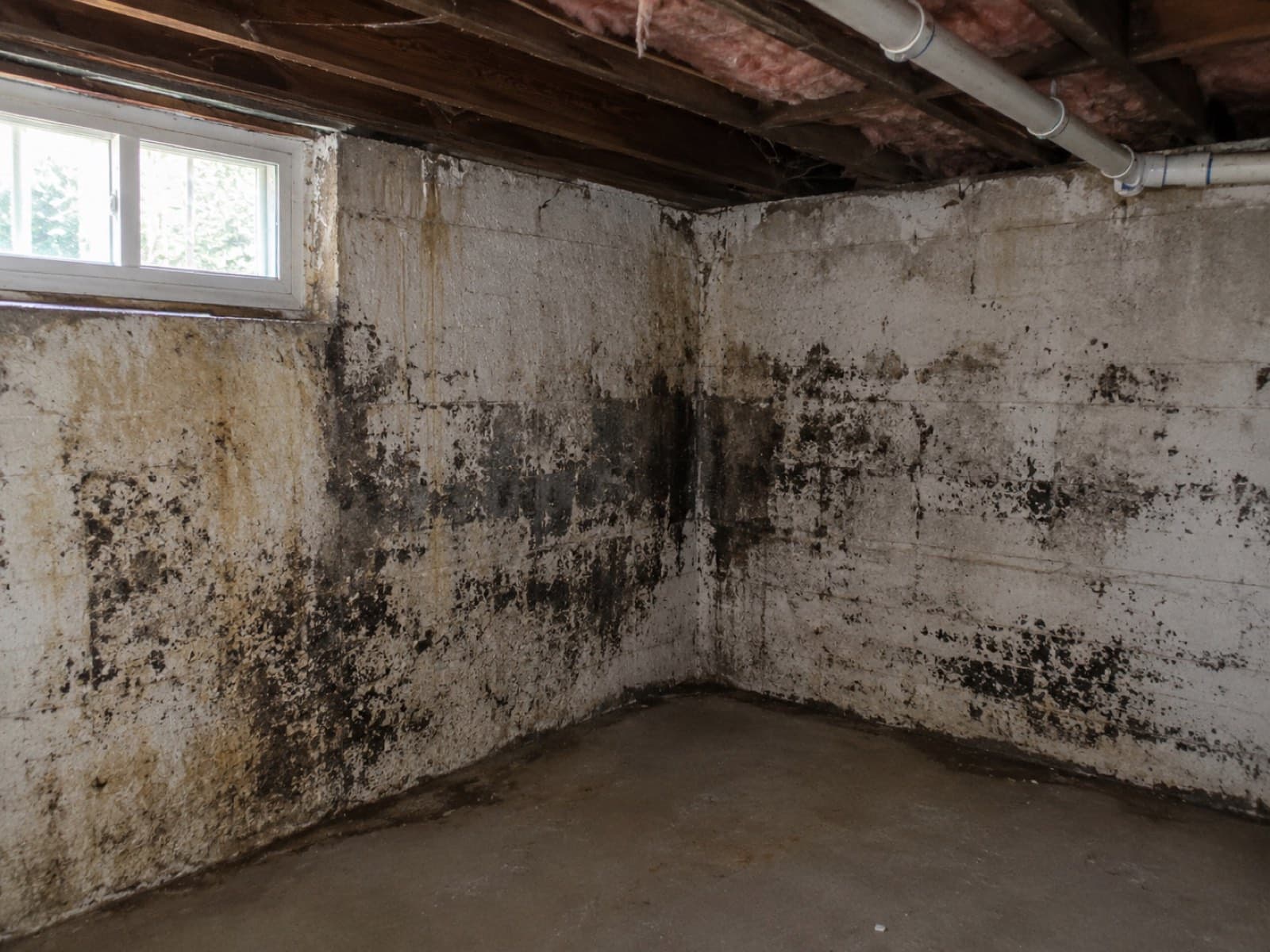
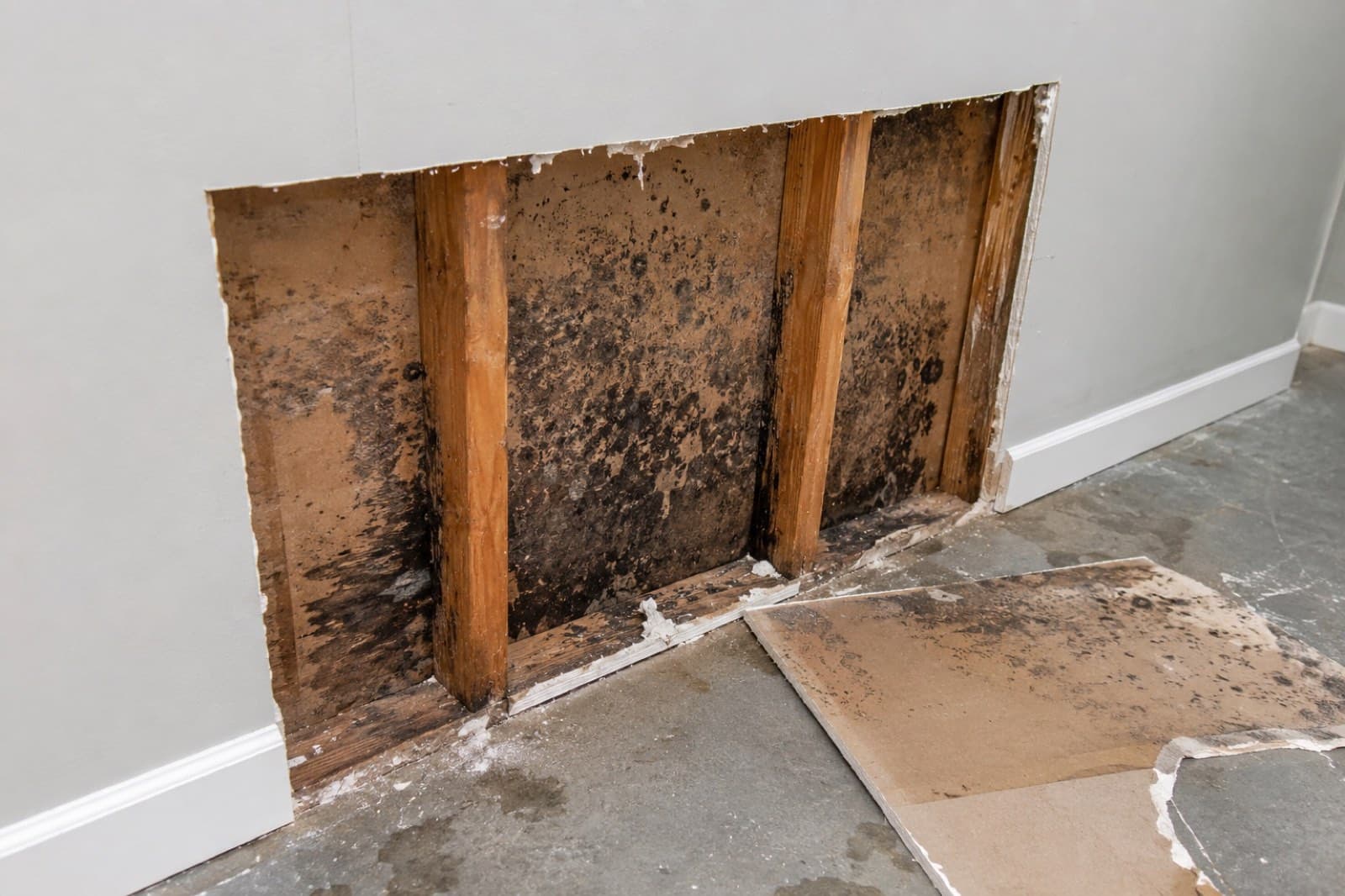
Basement Wall Mold, Fully Removed
In Bloomfield, groundwater along the Park River North Branch pushes against lower level walls in Bloomfield Center and Cottage Grove until the framing behind the finish stays wet.
Chronic humidity, a sump failure, or seepage through the slab edge and foundation wall keeps a basement damp enough for mold to spread across concrete, framing, and stored belongings. On finished basements the same moisture colonizes the back of drywall and the wall cavity long before any stain reaches the room.
Our crews set sealed containment with negative air pressure and HEPA-filtered air scrubbers, then remove or HEPA-clean the affected materials and treat the foundation wall and framing with an EPA-registered antimicrobial per IICRC S520. The moisture source, seepage, a failed sump, or high humidity, is corrected and dehumidification is set before anything is closed back up.
Third-party ACAC air sampling confirms spore counts at or below the outdoor baseline before reconstruction begins. Every scope line, containment photo, and lab report is documented for your insurer so the claim moves on evidence.
Scenario 1 of 5: Basement & Wall Mold
What To Do While You Wait For The Bloomfield Mold Crew
Slab-built ranches and lower levels near the Park River North Branch spread spores quickly once air starts moving. These IICRC-aligned steps hold the scope down before the crew arrives.
What To Do Immediately
Keeping the affected Bloomfield room closed limits how far spores travel while the containment is still on the truck.
Close the supply valve if the moisture is plumbing. For groundwater sitting against a lower level slab, do not pump without protective equipment.
A single-zone ranch system moves air through the whole floor, so one running fan can seed rooms that were clean.
Wide shots and close-ups with a tape measure in frame. Pre-remediation photographs are what an adjuster needs on a Bloomfield claim file.
Same-day inspection across Bloomfield. Every additional day of wet framing widens the removal line at the bottom plate.
Children, older adults, and anyone immunocompromised should stay out until IICRC S520 containment is established.
What NOT To Do
Bleach lifts the visible stain and leaves the colony living in the stud bay behind a Bloomfield wall board.
Disturbing growth aerosolizes spores. One sanding pass can spread a slab-level problem through an entire ranch floor plan.
A Tumbledown Brook side yard or a downspout dumping at the slab edge will re-wet the same wall within weeks of any cleanup.
Paint hides growth without stopping it. Coated Stachybotrys on a lower level wall keeps colonizing under the film.
List and photograph contents before anything leaves a mold-affected Bloomfield room. Carriers want the inventory before disposal.
Pressure changes pull spores past the barrier. Windows in adjacent rooms stay shut while negative air is running.
Our Mold Remediation Process In Bloomfield, CT
From the first call to final walkthrough, every step is documented, insured, and owner-supervised.
Mold Remediation Coverage In Bloomfield, CT
Mold inspection, air sampling, sealed containment, removal, and independent clearance for Bloomfield homes and businesses, performed under CT HIC.0668405 with same-day inspection response across Hartford County.
Green Restoration provides IICRC S520 certified mold remediation in Bloomfield, CT, serving local neighborhoods throughout Hartford County. Our certified technicians arrive same day with thermal imaging, moisture meters, and ACAC-certified air sampling kits. We work directly with all major insurance carriers, from initial inspection through hospital-grade containment and lab-verified clearance testing.
As a service-area business led by our owner across Hartford County, our crews know the specific mold conditions Bloomfield properties face. We coordinate directly with adjusters from Liberty Mutual, State Farm, Travelers, Allstate, USAA, Chubb, Hartford Insurance Group, and all other major carriers, documenting scope from inspection through ACAC clearance for every claim across Bloomfield and surrounding Hartford County. Green Restoration is not a licensed public adjuster and does not negotiate claims on your behalf.
Active Mold Exposure In Bloomfield?
Same-day inspection dispatch, 24/7/365.
(860) 222-9498IICRC S520 · Licensed & Insured · HIC.0668405
All Towns Served By Green Restoration Of Hartford For IICRC S520 Mold Inspection And Remediation.
Same-Day Mold Inspection In Bloomfield, CT
IICRC S520 crews dispatch across Bloomfield the same day, from Park River North Branch lower levels in Bloomfield Center and Cottage Grove to slab ranches on the Talcott Mountain side of Blue Hills and unconditioned Tobacco Valley outbuildings. Green Restoration is not a licensed public adjuster and does not negotiate claims on your behalf.
Bloomfield covers ZIP 06002 and was set off from Windsor in 1835 as the Wintonbury parish, a name built from Windsor, Farmington, and Simsbury. Same-day dispatch runs from Bloomfield Center and Wintonbury out to Scotland Road, Stone Road, Tariffville Road, and the Tobacco Valley properties on the northern side of town.
The dominant Bloomfield pattern is the midcentury ranch on a slab or a shallow crawl, with living space sitting close to exterior grade and very little separation between finished surface and wet soil. That assembly changes the containment geometry and the removal line, so crews scope the bottom plate and rim joist before quoting any demolition.
The Park River North Branch takes the low ground through Bloomfield and Tumbledown Brook feeds into it, keeping soil around those corridors loaded well after a storm passes. Scope sequencing starts with the assemblies nearest that drainage, because groundwater pressure is the recurrence driver when a wall is closed before the water path is corrected.
The Talcott Mountain and Penwood trap-rock ridge forms the western edge of Bloomfield and sheds rain downslope rather than absorbing it. Properties on the receiving grade take concentrated runoff against one elevation, which produces a single slow-drying wall, and the Tobacco Valley flats east of the ridge hold humid air in unconditioned structures.
About Green Restoration In Bloomfield, CT
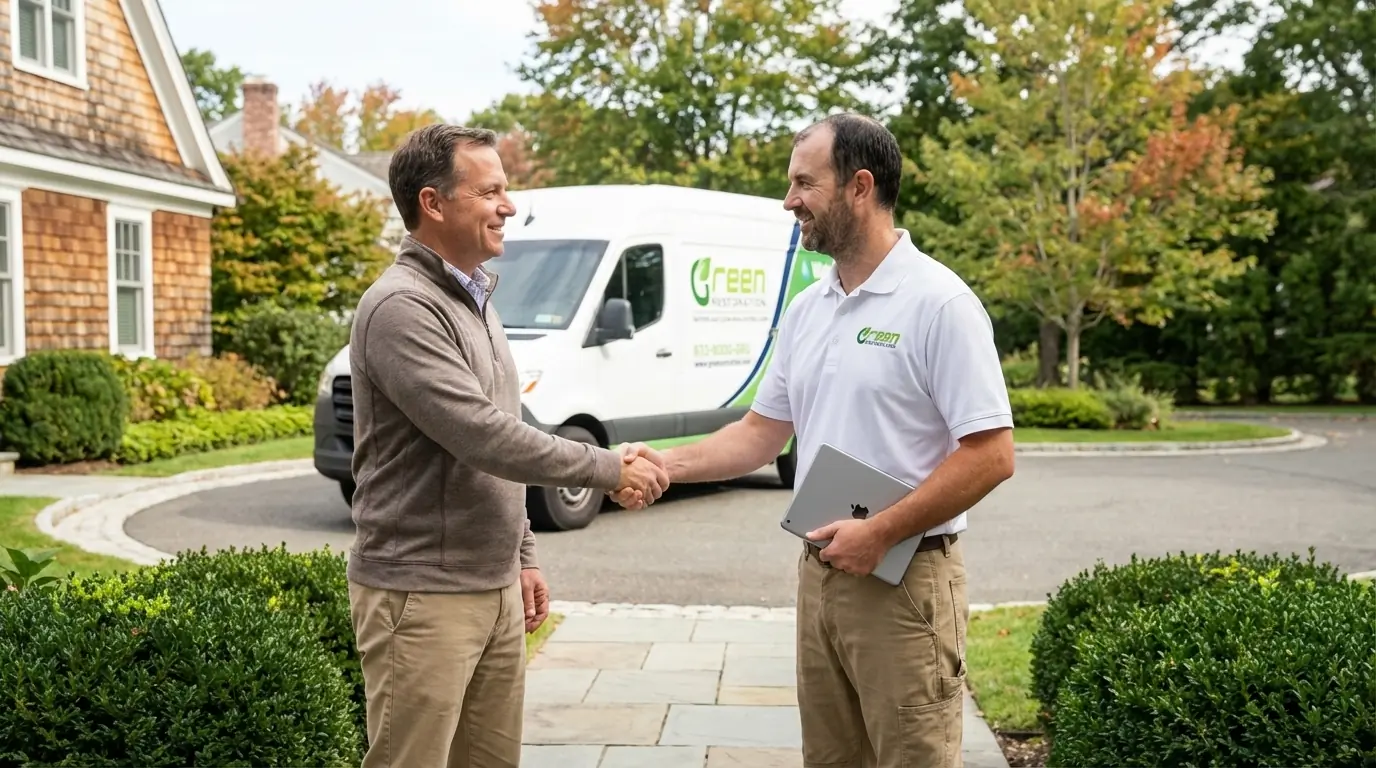
Your Bloomfield Mold Remediation Specialists Since 2014
Green Restoration provides IICRC S520 mold inspection, air sampling, containment, removal, and independent clearance testing for homes and businesses in Bloomfield, CT, owner-operated with IICRC AMRT and WRT certified leadership. The work here is shaped by two things: groundwater along the Park River North Branch and Tumbledown Brook, and trap-rock runoff arriving off the Talcott Mountain slope. Both put water at the base of a wall in a town built largely of slab-on-grade ranches, so scopes begin at the bottom plate and the rim joist rather than at the visible stain, and the wall stays open until the water path itself has been corrected.

“I have run this franchise since 2017 and spent more than fifteen years in restoration, IICRC certified in both AMRT and WRT. As the local co-owner covering Bloomfield and the Hartford County corridor, I look at the grade and the drainage before I look at the stain, because in a slab ranch the wall is only telling you where the water finally surfaced. Every project gets my direct oversight, is documented for your insurer, and stays open until independent sampling confirms the work is finished.”
Trusted by Families in Bloomfield &
Hartford County
4.9 out of 5, Rated by your neighbors on Google
We discovered mold when removing our pellet stove and called Green Restoration for help. David was very communicative and helpful throughout the entire process. He did the job thoroughly and professionally. Highly recommended!
David Woolner
Mold RemediationI had a fantastic experience with Green Restoration. From start to finish, the team was professional, thorough, and extremely knowledgeable. David came for the initial inspection and took the time to explain the entire process.
Annmarie Gieparda
Mold RemediationWe had mold due to a water leak in our half finished basement. David and his crew did a great job, we were very satisfied. I would highly recommend Green Restoration to anyone.
Tanya
Water DamageI needed my entire condo completely cleaned after a soot blow back. Green Restoration was top shelf! So thorough and professional. Thank you so much!
Jacki Hornish
Fire & Soot CleanupHow Much Does Mold Remediation Cost In Bloomfield, CT?
Most Bloomfield lower level and crawl claims settle between $3,000 and $8,000. Slab-edge openings that cross into a second room move a project into the upper band.
Small Project, Single Area
$1,500 to $4,500
Bathroom ceiling, closet wall, isolated attic patch, growth under 10 sq ft
Medium Project, Lower Level / Crawl
$3,000 to $8,000
Slab-edge wall run, crawl-space section, single-room containment and removal
Large Project, Whole-Home
$8,000 to $25,000+
Multi-room Stachybotrys, structural drying, duct decontamination, attic sheathing
Priced by scope under IICRC S520. Read the full mold cost guide.
Bloomfield CT Mold Remediation FAQs
Direct answers on Bloomfield mold conditions, pricing bands, insurance coverage, and independent clearance sampling.
Green Restoration runs same-day mold inspection across Bloomfield, and the line at (860) 222-9498 is answered around the clock. An inspector arrives carrying thermal imaging, a Tramex moisture meter, and ACAC-certified air sampling equipment, so the scope of the growth is written down on the first visit instead of after a second appointment. The routing is the same whether the call comes from a slab ranch off Blue Hills Avenue, a finished lower level near Bloomfield Center, a Cottage Grove split-level sitting low against the Park River North Branch, or a Tobacco Valley outbuilding with a dirt floor.
Bloomfield sits inside the Hartford County dispatch radius that our 860 crews cover daily, which is why a Tunxis or Scotland Road address does not wait longer than a Hartford address for a first look.
Bloomfield mold remediation generally falls into three bands. Single-area cleanup, meaning one bathroom ceiling, a closet wall, or a small patch of attic sheathing in a Wintonbury cape, runs about $1,500 to $4,500. Basement-wall, crawl-space, and single-room work, which is where most Bloomfield claims land, runs about $3,000 to $8,000. Whole-home Stachybotrys, multi-room containment, or a full HVAC decontamination in a larger Stone Road or Park Avenue property runs $8,000 to $25,000 and up. What actually moves the number is containment complexity, the square footage of colonized material, and whether the ranch slab, subfloor, or ductwork has to be opened.
A midcentury ranch with one wall cavity to open prices very differently from a house where the growth crossed a slab edge into three rooms.
Most Connecticut homeowner policies respond to mold when it follows a sudden covered water loss, such as a burst supply line in a Blue Hills ranch, a failed water heater in a Bloomfield Center basement, a dishwasher or icemaker leak, or a storm-driven roof opening on a Scotland Road property. Mold that grew slowly from Park River North Branch groundwater pressure, from long-running slab wicking, or from chronic humidity in an unconditioned space usually needs a separate endorsement to be payable. Green Restoration submits the IICRC S520 scope, containment photography, daily logs, and independent lab results directly to your carrier in the format an adjuster expects. We are not licensed public adjusters and do not negotiate claims on your behalf.
A typical Bloomfield project runs three to seven days from the day containment goes up to the day clearance sampling is pulled. A single bathroom or one kitchen wall in a Wintonbury ranch usually closes in three to four days. Work that involves structural drying, a slab-edge opening, duct decontamination, or Stachybotrys across a finished lower level near the Park River North Branch can run to ten days, and occasionally twelve when several rooms are contained at once. The variable that extends a Bloomfield timeline most often is source correction.
If the water is arriving through a grade problem, a failed gutter run off a low ranch roofline, or a Tumbledown Brook side yard that never dries, the correction has to happen before close-up, which adds a day or two but stops the growth from returning in the same cavity.
Yes. Connecticut permits the same firm to assess and to remediate, so a Bloomfield property can have inspection, air sampling, and remediation handled without bringing in a second company for the first step. Pre-remediation sampling sets the baseline at your address, and post-remediation sampling is read against the outdoor control for that same day. Sampling pumps run five to fifteen minutes per zone, an independent laboratory returns the analysis in roughly 24 to 72 hours, and the written report goes into your file and to your adjuster.
Clearance sampling is a separate decision and a separate engagement from the remediation itself, and we say so in writing before either one starts, whether the property is a Cottage Grove split-level or a Tobacco Valley commercial building.
In Bloomfield the recurring hiding places are the bottom sixteen inches of drywall on a slab, the back of the sill and rim joist in a partly finished lower level, and the cold roof deck above a bath fan that was never ducted outside. Midcentury ranch construction puts a lot of finished surface directly against the slab and against exterior grade, so moisture that arrives at the base of a wall travels sideways behind the paper face of the board long before a stain shows up in the room. Properties along the Park River North Branch and the Tumbledown Brook side of town see this first.
Thermal imaging and a Tramex meter find the differential behind the finish, which lets the crew open a measured section instead of guessing at three walls.
Close the door to the affected room and leave it closed. Do not run a box fan, a window unit, or the central system, because moving air through a colonized cavity pushes spores into rooms that were clean, and in a single-zone ranch the whole floor shares one duct trunk. Do not bleach the surface or wipe it down. A surface wipe removes the visible stain and leaves the framing colonized, and it also destroys the evidence an adjuster needs to see. Photograph the growth with a tape measure in the frame and note the date.
If the moisture is still arriving, shut the supply valve if the source is plumbing. Then wait for the crew, which will set negative-air containment before anything is opened.
The work is owner-operated and IICRC S520 certified, with AMRT and WRT credentials held by the owner who runs the Bloomfield jobs personally. The crews already know how this town behaves, from Park River North Branch groundwater against a Cottage Grove foundation, to Talcott Mountain runoff arriving at the west side of a slab ranch, to bath-fan condensation on a low-pitch Wintonbury roof deck, to duct mold in a Tobacco Valley building that runs unconditioned half the year. Containment sheeting, HEPA negative-air machines, and air sampling equipment ride on the truck rather than being rented after the fact.
Direct carrier billing, licensing under CT HIC.0668405, and a line answered day or night at (860) 222-9498 mean one call starts the documentation and the containment together.

