Testing the air in a house is not one test. It is six different measurements with six different methods, and the reason most people end up confused is that a single search result mixes a fifteen dollar radon kit, a two hundred dollar sensor, and a laboratory spore analysis as though they were interchangeable options for the same question.
They are not. Two of the six are genuinely valid as home tests and cost very little. Three are useful as continuous monitors, meaning they tell you about trends and ventilation rather than producing a pass or fail. And one, mold, is the one people most often buy a kit for and the one where consumer kits are least meaningful, because a dish left open on a counter has no calibrated air pump, no outdoor control, and nothing to compare against.
So the useful sequence is cheapest and most conclusive first. This guide runs through what each measurement actually tells you, what number to expect in a normal home, which device or method produces it, when laboratory work earns its cost, and what the results are good for once you have them.
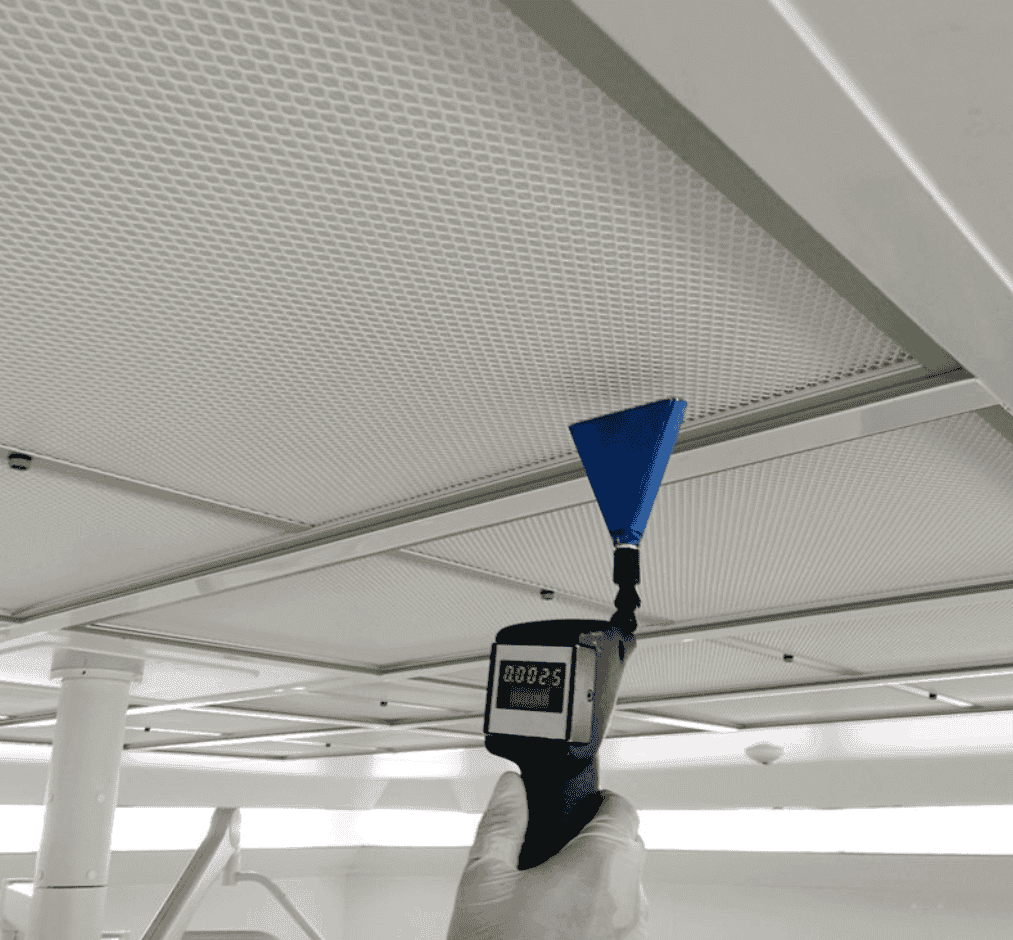
What Does Testing The Air Quality In Your Home Actually Measure?
Six measurements cover almost every real complaint. Knowing which one your symptom points at saves buying the wrong device.
What each indoor measurement means, where a reasonable target sits, and what a poor reading points at.
Relative humidity
- Reasonable indoor target
- 30 to 50 percent year round
- How it is measured
- A hygrometer, ten to thirty dollars, one per floor
- What a poor reading points at
- Above 60 supports growth. Below 25 in winter means very dry air and static
Carbon dioxide
- Reasonable indoor target
- Under about 800 parts per million with outdoor air near 420
- How it is measured
- A monitor with a true NDIR sensor
- What a poor reading points at
- Above 1,000 means not enough fresh air is arriving for the number of people present
Fine particulate, PM2.5
- Reasonable indoor target
- Low single digits at rest, with WHO 24 hour guidance at 15 micrograms per cubic meter
- How it is measured
- A laser particle counter in a consumer monitor
- What a poor reading points at
- Cooking, candles, a fireplace, or outdoor smoke entering the house
Carbon monoxide
- Reasonable indoor target
- Zero in a healthy home
- How it is measured
- A listed CO alarm on every level, replaced on its stamped date
- What a poor reading points at
- A combustion appliance, a blocked flue, or an attached garage. Leave and call for help
Radon
- Reasonable indoor target
- Under 4 picocuries per liter, with action considered between 2 and 4
- How it is measured
- A short-term charcoal kit or a long-term alpha track detector, mailed to a lab
- What a poor reading points at
- Soil gas entering through the slab, sump, or foundation joints
Volatile organic compounds
- Reasonable indoor target
- No single number. Compare against outdoor and against the room next door
- How it is measured
- Consumer sensors give a relative index. Compound identification needs a lab sampler
- What a poor reading points at
- New finishes, adhesives, stored solvents, or a fuel odor that needs a real source trace
Mold and allergen spores
- Reasonable indoor target
- Judged against a same-day outdoor control, not against a fixed limit
- How it is measured
- Calibrated pump and spore trap cassette, analyzed by an accredited lab
- What a poor reading points at
- A moisture source in the building rather than an air problem to be filtered away
| Measurement | Reasonable indoor target | How it is measured | What a poor reading points at |
|---|---|---|---|
| Relative humidity | 30 to 50 percent year round | A hygrometer, ten to thirty dollars, one per floor | Above 60 supports growth. Below 25 in winter means very dry air and static |
| Carbon dioxide | Under about 800 parts per million with outdoor air near 420 | A monitor with a true NDIR sensor | Above 1,000 means not enough fresh air is arriving for the number of people present |
| Fine particulate, PM2.5 | Low single digits at rest, with WHO 24 hour guidance at 15 micrograms per cubic meter | A laser particle counter in a consumer monitor | Cooking, candles, a fireplace, or outdoor smoke entering the house |
| Carbon monoxide | Zero in a healthy home | A listed CO alarm on every level, replaced on its stamped date | A combustion appliance, a blocked flue, or an attached garage. Leave and call for help |
| Radon | Under 4 picocuries per liter, with action considered between 2 and 4 | A short-term charcoal kit or a long-term alpha track detector, mailed to a lab | Soil gas entering through the slab, sump, or foundation joints |
| Volatile organic compounds | No single number. Compare against outdoor and against the room next door | Consumer sensors give a relative index. Compound identification needs a lab sampler | New finishes, adhesives, stored solvents, or a fuel odor that needs a real source trace |
| Mold and allergen spores | Judged against a same-day outdoor control, not against a fixed limit | Calibrated pump and spore trap cassette, analyzed by an accredited lab | A moisture source in the building rather than an air problem to be filtered away |
The Two Safety Measurements
Carbon monoxide and radon are the two that are about safety rather than comfort, and both have established action levels. Carbon monoxide is handled by an alarm on every level of the home rather than by a test. Radon is a soil gas that varies enormously house to house across Connecticut, and EPA recommends fixing a home at or above four picocuries per liter and considering action between two and four.
The Three Comfort And Ventilation Measurements
Relative humidity tells you whether the building supports growth. Carbon dioxide is not itself a hazard at indoor levels, it is a proxy for how much fresh air is arriving, which makes it the single best number for a stuffy house. Fine particulate, PM2.5, tracks combustion, cooking, and outdoor smoke that has made it inside. All three are read continuously rather than as a one-off test.
The One That Needs A Laboratory
Mold and airborne allergens are identified by drawing a measured volume of air through a cassette and having an accredited laboratory analyse what it captured, always against a sample taken outdoors at the same time. That outdoor control is the whole point, since indoor spores are compared to what is naturally in the air outside rather than to a fixed limit. No agency publishes an acceptable airborne mold level, and EPA does not recommend routine sampling to decide whether to clean.
Can You Test Indoor Air Quality Yourself?
Partly, and the part you can do yourself is the part that matters most for safety. The part you cannot is the part most kits are sold for.
Which home tests are valid, which are indicative only, and what to do instead.
Radon kit, short or long term
- Valid at home
- Yes
- Why
- A measured exposure analyzed by a laboratory, with a published action level
- Better option
- Nothing better for a first result. Long term kits average out seasonal swings
Carbon monoxide alarm
- Valid at home
- Yes
- Why
- A listed life safety device with a defined alarm threshold
- Better option
- One per level, replaced on the date stamped on the unit
Humidity, carbon dioxide and PM2.5 monitor
- Valid at home
- Yes, for trends
- Why
- Continuous readings show patterns a single test cannot
- Better option
- Place one per floor and watch the daily curve, not a single number
Consumer TVOC sensor
- Valid at home
- Indicative only
- Why
- It reports a relative index rather than identifying any compound
- Better option
- Useful to spot a change. A lab sampler is needed to name a compound
Petri dish mold kit
- Valid at home
- No
- Why
- No calibrated pump, no measured volume, no outdoor control, no chain of custody
- Better option
- Spore trap sampling with a paired outdoor control, analyzed by an accredited lab
Do it yourself duct swab kits
- Valid at home
- No
- Why
- Surface dust in a duct grows something in almost every house
- Better option
- Inspect the system, and treat visible growth or a moisture source as the finding
| Test or device | Valid at home | Why | Better option |
|---|---|---|---|
| Radon kit, short or long term | Yes | A measured exposure analyzed by a laboratory, with a published action level | Nothing better for a first result. Long term kits average out seasonal swings |
| Carbon monoxide alarm | Yes | A listed life safety device with a defined alarm threshold | One per level, replaced on the date stamped on the unit |
| Humidity, carbon dioxide and PM2.5 monitor | Yes, for trends | Continuous readings show patterns a single test cannot | Place one per floor and watch the daily curve, not a single number |
| Consumer TVOC sensor | Indicative only | It reports a relative index rather than identifying any compound | Useful to spot a change. A lab sampler is needed to name a compound |
| Petri dish mold kit | No | No calibrated pump, no measured volume, no outdoor control, no chain of custody | Spore trap sampling with a paired outdoor control, analyzed by an accredited lab |
| Do it yourself duct swab kits | No | Surface dust in a duct grows something in almost every house | Inspect the system, and treat visible growth or a moisture source as the finding |
Radon Is The One Real Home Test
A short-term charcoal kit costs very little, sits in the lowest lived-in level for the stated period with windows closed, and goes to a laboratory that returns a number. It is a genuine measurement with an established action level behind it. If the result is at or above four picocuries per liter, mitigation is its own specialty trade with its own certified contractors, and that is who installs a system.
Why Petri Dish Mold Kits Do Not Work
A settle plate left open on a counter collects whatever happens to fall into it and then grows something, because viable spores are present in every building on earth. There is no calibrated air pump, no measured volume, no paired outdoor control, and no chain of custody, so the result is not usable by a lender, an insurer, an attorney, or a physician. It reliably produces growth and reliably answers nothing.
What A Free Walk Around Tells You
Before buying anything, do the survey. Does a room smell musty in the morning with the door closed. Does a window or an exterior wall feel damp. Does the bath fan hold a sheet of tissue against the grille. Is there a hygrometer reading above sixty percent anywhere. Most indoor air complaints we are called about are answered by that walk, and the source is a moisture path rather than the air itself.
Which Home Monitors Are Worth Buying?
Three sensors cover nearly everything a homeowner can act on. The rest is mostly a dashboard.
Start With A Hygrometer Per Floor
It is the cheapest device in this article and it changes more decisions than any other. Thirty to fifty percent is the band. Above sixty in a basement in July means a dehumidifier before anything else. Below twenty five in January means the heating is drying the house out. Two of them, in the basement and on the main floor, tell you more about mold risk than any test kit sold for that purpose.
Then A Carbon Dioxide Monitor
Buy one with a true non-dispersive infrared sensor rather than an estimated equivalent reading. Outdoor air sits near four hundred and twenty parts per million, so a bedroom that reaches fourteen hundred overnight with the door shut is telling you that ventilation, not filtration, is the constraint. This single number resolves most complaints of stale or stuffy air.
"A hygrometer, a carbon dioxide monitor, and a radon kit answer more household air questions than any test we sell. We would rather tell you that than sell you a sample you did not need."
When Do You Need A Professional Indoor Air Quality Test?
Four situations, and in three of them what you are buying is a defensible third-party record rather than a number you could not otherwise get.
When The Source Is Disputed
A smell in one room, growth suspected behind a wall, a tenant and an owner disagreeing, or a crawl space suspected of feeding the floor above. Paired indoor and outdoor sampling shows whether indoor spore levels and types depart from what is naturally outside, which is the comparison that actually means something. Our independent mold inspection and air testing is built around that pairing.
When A Transaction Or A Claim Needs A Record
Real estate transactions, insurance files, and disputes all move on third-party documentation rather than a homeowner photograph. A lab result with a chain of custody and a certified interpretation letter is a record. Where insurance is involved we document the loss and submit the file directly to the carrier. We are not licensed public adjusters and do not negotiate claims on your behalf.
When A Physician Has Asked For A Baseline
EPA notes mold exposure is associated with respiratory symptoms in sensitive individuals, and where someone in a household has been advised to reduce exposure, a documented baseline and a post-work comparison are reasonable. That is a measurement request, not a diagnosis. Interpretation of symptoms stays with the physician.
What Does Professional Air Quality Testing Cost, And Then What?
Published numbers, what the report should contain, and the part that decides whether any of it was worth doing.
The Numbers
A single-room residential screening with a paired outdoor control typically runs 425 to 650 dollars all in, including laboratory fees and a written interpretation. Whole-house panels with three to five interior samples run 850 to 1,400 dollars. Commercial multi-zone audits and extended compound panels are quoted per scope and in writing before work begins. Full detail sits on our indoor air quality testing page.
The Part That Actually Matters
A result is a description of a condition, not a repair. If sampling points at growth, the answer is finding and correcting the moisture and removing the affected material, which is mold remediation work. If it points at particulate and distribution, air duct cleaning and filtration are the lever, and our air duct cleaning cost guide covers what that runs. If it points at settled dust and household allergens, allergen removal is the relevant service.
Where To Read Next
If your question is less about measuring the air and more about what is in it and why, our companion guide on indoor air quality, mold and allergens covers sources, filtration, and what actually reduces exposure in a house.
Need Restoration Services?
60-minute response across CT, NY & MA. Licensed, insured, free inspections.
Questions Homeowners Ask
How do I test the air quality in my house cheaply?+
Buy a hygrometer for each floor and a short-term radon kit, and confirm there is a working carbon monoxide alarm on every level. That combination costs very little, covers the two measurements with real action levels, and answers the humidity question that sits behind most mold complaints.
Are home air quality monitors accurate?+
Humidity and carbon dioxide sensors are reliable enough to act on, particularly monitors using a true non-dispersive infrared carbon dioxide sensor. Particulate sensors are good at showing change rather than absolute values. Volatile compound readings are a relative index and do not identify any specific compound, so treat them as a trend line.
Do home mold test kits work?+
Settle plate kits do not produce a usable result. They have no calibrated pump, no measured air volume, no paired outdoor control, and no chain of custody, and they grow something in nearly every house because viable spores are present everywhere. Valid sampling uses a calibrated pump, an outdoor control, and an accredited laboratory.
What is a normal carbon dioxide level in a house?+
Outdoor air sits near 420 parts per million. Under about 800 indoors suggests ventilation is keeping up. Readings above 1,000, and bedrooms that climb past 1,400 overnight with the door closed, indicate not enough fresh air is arriving for the number of people in the space.
How often should you test indoor air quality?+
Continuous monitors run all the time and are read as trends rather than events. Radon is tested once, then again after any foundation work, mitigation, or major renovation. Laboratory sampling is done for a reason, such as a disputed source, a transaction, or a before and after comparison, rather than on a schedule.
What does an indoor air quality test cost?+
A single-room residential screening with a paired outdoor control typically runs 425 to 650 dollars all in, including laboratory fees and a written interpretation. Whole-house panels with three to five interior samples run 850 to 1,400 dollars. Commercial multi-zone work is quoted per scope in writing beforehand.
Should I test for radon in Connecticut?+
Yes. Radon levels vary sharply house to house across the state, so a neighbor result tells you nothing about your own. EPA recommends fixing a home at or above four picocuries per liter and considering action between two and four. Mitigation is a separate specialty trade with its own certified contractors.
Will an air purifier fix a bad test result?+
It reduces what is airborne while it runs, and it changes nothing about the source producing it. If sampling points at a moisture problem, the durable fix is correcting the water and removing affected material. Filtration is a useful supplement during and after that work, not a substitute for it.