Connecticut has regulated who may sell residential restoration work for years, but until now it has never said anything about who is qualified to remediate mold or what standard the work has to meet. A handyman with a Home Improvement Contractor registration and a bottle of bleach could legally call himself a mold remediation company. That ends on October 1, 2026.
The change arrived quietly. The mold provisions were added by amendment to House Bill 5222, a large consumer protection package, passed both chambers on May 5, 2026, and were signed into law on June 2, 2026 as Public Act 26-100. Sections 34 through 37 are the mold sections, and every one of them carries an October 1, 2026 effective date.
This guide walks through what the law actually says, section by section, what it does not say, and what a Connecticut homeowner or landlord should do differently when hiring after October 1. The details below come from the enacted act text and the Office of Legislative Research analysis, not from secondhand summaries.
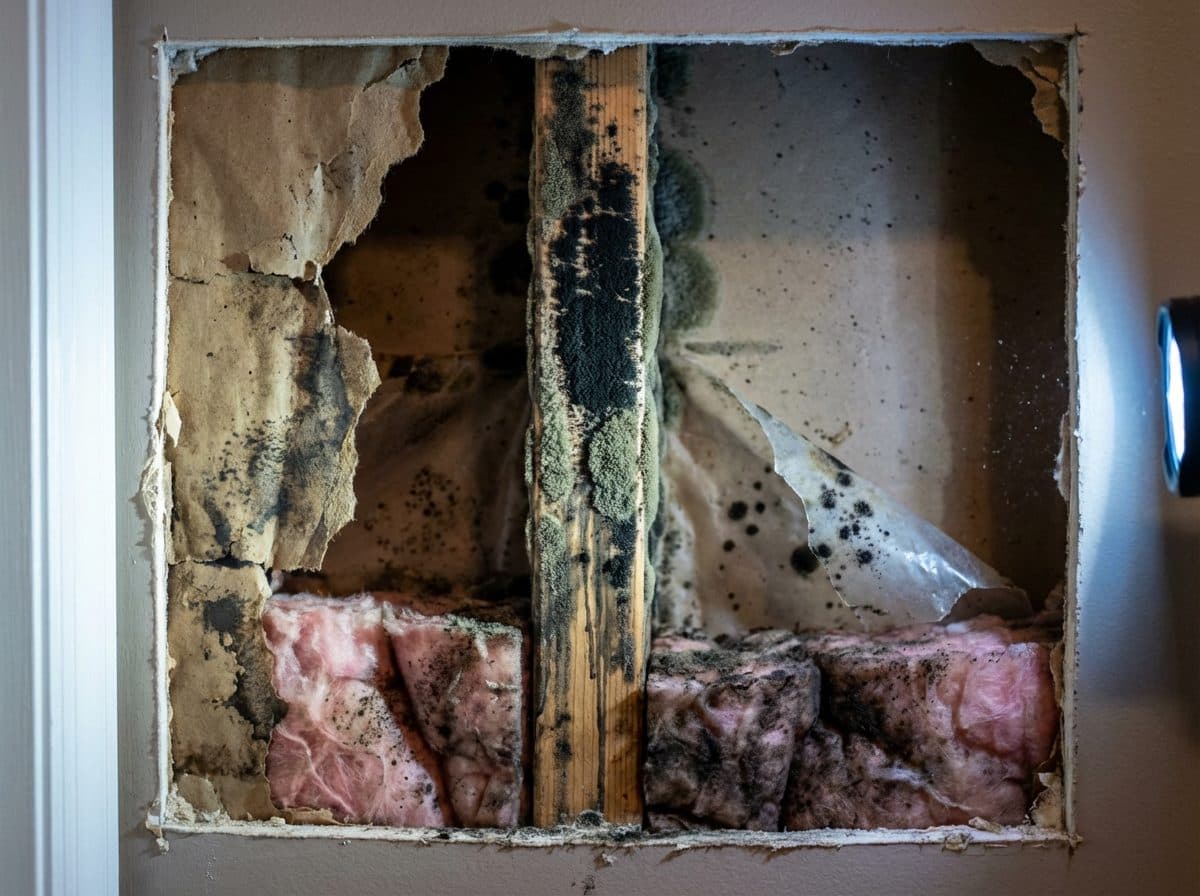
What Is The New Connecticut Mold Law?
Public Act 26-100 adds mold to the Home Improvement Act, Chapter 400 of the general statutes, through four short sections. Two definitions, one certification requirement, one work standard, and a homeowner guidance mandate.
The four mold sections of Public Act 26-100, all effective October 1, 2026.
Section 34
- What it does
- Defines mold and mold remediation for the Home Improvement Act. Remediation means removal, cleaning, sanitizing, demolition or other treatment of mold or mold contaminated matter in a building.
- Statute touched
- Amends CGS 20-419
Section 35
- What it does
- Blocks a Home Improvement Contractor registration for anyone holding out as a mold remediation contractor unless the contractor attests to certification by the IICRC, NORMI, or another body approved by the Department of Consumer Protection.
- Statute touched
- Amends CGS 20-420
Section 36
- What it does
- Requires every mold remediation job in Connecticut to follow the ANSI IICRC S520 Standard for Professional Mold Remediation, Fourth Edition, or its approved successor.
- Statute touched
- New section
Section 37
- What it does
- Directs the Department of Consumer Protection to publish website guidance for homeowners recovering from catastrophic fire or water loss.
- Statute touched
- New section
| Section | What it does | Statute touched |
|---|---|---|
| Section 34 | Defines mold and mold remediation for the Home Improvement Act. Remediation means removal, cleaning, sanitizing, demolition or other treatment of mold or mold contaminated matter in a building. | Amends CGS 20-419 |
| Section 35 | Blocks a Home Improvement Contractor registration for anyone holding out as a mold remediation contractor unless the contractor attests to certification by the IICRC, NORMI, or another body approved by the Department of Consumer Protection. | Amends CGS 20-420 |
| Section 36 | Requires every mold remediation job in Connecticut to follow the ANSI IICRC S520 Standard for Professional Mold Remediation, Fourth Edition, or its approved successor. | New section |
| Section 37 | Directs the Department of Consumer Protection to publish website guidance for homeowners recovering from catastrophic fire or water loss. | New section |
The Model It Follows
Section 35 is modeled on an existing Connecticut rule for radon mitigators, who have long had to attest to a national certification before the state issues their registration. The legislature took that template and applied it to mold. The practical effect is the same: the state does not train or test mold contractors itself, it requires proof that a recognized industry body already has.
When Does The New Mold Law Take Effect?
October 1, 2026. Connecticut statutes commonly take effect on October 1 of the year they pass, and all four mold sections carry that date explicitly.
How The Date Works In Practice
The certification attestation applies when a Home Improvement Contractor registration is issued, so new registrants face it immediately on October 1 and existing contractors face it at their next renewal. Connecticut HIC registrations now run on an annual cycle ending March 31, which puts the first renewal under the new rule around March 31, 2027. The work standard in section 36 has no phase in at all: from October 1, 2026, a mold remediation job in Connecticut either follows S520 or it violates the statute.
What To Watch Before Then
As of late August 2026 the Department of Consumer Protection has not yet published implementation guidance, and its Home Improvement Contractor pages do not yet mention the mold attestation. Expect forms and instructions closer to the effective date. The statute itself is already fixed, so the requirements described here do not depend on that guidance.
Is This A Mold License? Not Exactly
Connecticut did not create a mold license, and describing the law that way overstates it. What it created is a certification gate on an existing registration plus a mandatory work standard.
The Registration Already Existed
Residential mold, water, fire, and storm restoration work in Connecticut has required a Home Improvement Contractor registration since January 1, 2017, under Public Act 16-35. That part is not new. What is new is that the registration now carries a competence condition for mold work: the contractor must attest that the IICRC, NORMI, or another approved organization has certified it in mold remediation.
No Assessor And Remediator Split
New York separates mold assessment and mold remediation into different licenses and bars one company from performing both on the same property. Connecticut considered nothing of the kind. Under Public Act 26-100 the same Connecticut firm may still inspect, test, remediate, and verify its own work, which makes the written scope and post remediation documentation you receive worth reading closely.
Which Certifications Does Connecticut Accept?
The statute names two organizations and leaves room for more. The certification is the contractor qualification the whole law hangs on, so it is worth knowing what each name means.
Certifying bodies recognized under section 35 of Public Act 26-100.
IICRC
- What it is
- The Institute of Inspection Cleaning and Restoration Certification, the standards body behind the S500 water and S520 mold standards. Certifies both firms and individual technicians.
- Relevant credential
- Applied Microbial Remediation Technician, AMRT, and Certified Firm status
NORMI
- What it is
- The National Organization of Remediators and Microbial Inspectors, a training and certification body focused on mold assessment and remediation.
- Relevant credential
- Certified Mold Remediator
DCP approved
- What it is
- Any other organization the Department of Consumer Protection approves and posts on its website.
- Relevant credential
- Posted by DCP, none announced yet
| Body | What it is | Relevant credential |
|---|---|---|
| IICRC | The Institute of Inspection Cleaning and Restoration Certification, the standards body behind the S500 water and S520 mold standards. Certifies both firms and individual technicians. | Applied Microbial Remediation Technician, AMRT, and Certified Firm status |
| NORMI | The National Organization of Remediators and Microbial Inspectors, a training and certification body focused on mold assessment and remediation. | Certified Mold Remediator |
| DCP approved | Any other organization the Department of Consumer Protection approves and posts on its website. | Posted by DCP, none announced yet |
Where Green Restoration Stands
Green Restoration is an IICRC Certified Firm, and the certification the new law requires is the one our mold work has been built on since 2014. David Megeneishvili, who owns the New Haven County and Western Massachusetts operations, personally holds the IICRC Applied Microbial Remediation Technician and Water Damage Restoration Technician credentials. For firms like ours the October 1 change is an attestation form. For uncertified operators it is a locked door.
What Is The ANSI IICRC S520 Standard The Law Requires?
Section 36 turns an industry standard into a statutory requirement. S520 is the consensus standard for professional mold remediation, and its fourth edition is the one the statute names.
What S520 Work Looks Like
Under S520 the work area is isolated with containment barriers and held under negative air pressure with HEPA filtration, porous materials with rooted growth are removed rather than surface treated, the underlying moisture problem is corrected before rebuild, and the condition is returned to normal ecology with documentation to show it. Our mold remediation page walks through that sequence as we perform it in Connecticut.
Why Making It Law Matters
Before October 1, S520 was the professional benchmark but a contractor could legally ignore it, fog a basement with biocide, paint over the staining, and call the job done. After October 1 that job violates the statute, and the homeowner holding a written scope has something to point to. The EPA notes mold exposure is associated with respiratory symptoms in sensitive individuals, which is exactly why the standard leans on source removal and verification rather than chemicals alone.
How Do You Verify A Mold Contractor After October 1?
Three checks, all free, all fast. The new law makes the second one meaningful for the first time.
The Three Checks
First, look up the Home Improvement Contractor registration on the Department of Consumer Protection license lookup site, which shows status and any complaint history. Second, ask which mold certification the firm attested to and who holds it, then verify it with the certifying body. The IICRC runs a public locator for certified firms. Third, ask for the written S520 scope before work starts: containment plan, what gets removed, how the moisture source is corrected, and what documentation you receive at the end. A contractor who cannot produce that scope on paper is telling you how the job will go.
What Happens To Contractors Who Skip It?
The mold sections plug into the Home Improvement Act enforcement machinery that already exists, and that machinery has teeth.
Misdemeanor, CUTPA, And Restitution
Performing home improvement work without a valid registration is a class B misdemeanor under CGS 20-427, and any violation of the chapter is a per se unfair trade practice under the Connecticut Unfair Trade Practices Act, which opens the door to Attorney General enforcement and private claims. A homeowner who paid an unregistered or non compliant contractor also gains leverage in a payment dispute, because the Home Improvement Act limits an unregistered contractor from enforcing the contract.
Does The New Law Cover Commercial Buildings?
No. The commercial half of this effort died in committee, and the enacted law reaches residential work through the Home Improvement Act.
The Bill That Did Not Pass
House Bill 5227 would have created a registration program for commercial mold remediation and a licensing framework for fire and catastrophic restoration businesses, with a January 1, 2027 start. It was referred to Appropriations on April 7, 2026 and never came to a vote before the session ended on May 6, 2026. The restoration trade groups that backed Public Act 26-100 have signaled they will be back, so commercial requirements in the 2027 session are a live possibility. For now, commercial mold work in Connecticut remains outside the new rules.
What Does It Mean For Landlords And Tenants?
The law regulates the contractor a landlord hires, not the landlord. Nothing in Public Act 26-100 changes habitability duties, and nothing in it sets an exposure limit.
The Hiring Side Changed, The Duty Side Did Not
A Connecticut landlord still owes tenants fit and habitable premises under CGS 47a-7, and the water intrusion behind mold growth is still generally the code condition at issue. What changed is that when a landlord hires out remediation in a rental after October 1, the contractor must be certified and the work must follow S520, which gives tenants a concrete question to ask about any cleanup done in their unit. Our renter guide to mold in an apartment covers the documentation and reporting side in both Connecticut and New York.
Still No Airborne Mold Limit
Public Act 26-100 sets no numerical standard for mold in indoor air, and the Connecticut Department of Public Health continues to state that there are no state or federal standards for airborne mold levels. The law regulates who does the work and how, not a number on a lab report. Health questions belong with a physician, and hiring questions now have a statute behind them.
What Green Restoration Is Doing Before October 1
For a firm already certified and already working to S520, compliance is mostly paperwork. Here is the checklist we are running, because it is the same one worth asking any contractor about.
Our Pre Effective Date Checklist
Confirming IICRC certification renewals are current for the firm and for certified technicians. Citing ANSI IICRC S520 Fourth Edition by name in mold scopes, protocols, and contracts. Preparing the certification attestation for the March 31, 2027 registration renewal cycle. Watching the Department of Consumer Protection site for the attestation form and the approved certifier list. None of this changes how we remediate, because S520 containment, HEPA filtration, source removal, and documented drying have been the process all along. October 1 makes that process the legal floor in Connecticut.
Questions Homeowners Ask
What is the new Connecticut mold law?+
Public Act 26-100, signed June 2, 2026. Sections 34 through 37 define mold remediation, require contractors holding out for residential mold remediation to attest to IICRC, NORMI, or other approved certification on their Home Improvement Contractor registration, require all mold remediation in Connecticut to follow the ANSI IICRC S520 Fourth Edition standard, and direct the Department of Consumer Protection to publish homeowner guidance after catastrophic fire and water losses.
When does the Connecticut mold law take effect?+
October 1, 2026. All four mold sections of Public Act 26-100 carry that effective date. The certification attestation applies to new registrations immediately and to existing contractors at their next annual renewal, which falls around March 31, 2027. The S520 work standard applies to every mold remediation job from October 1 with no phase in.
Do mold remediation contractors need a license in Connecticut now?+
Connecticut did not create a standalone mold license. Residential restoration work has required a Home Improvement Contractor registration since 2017, and the new law adds a condition to it: a contractor holding out for mold remediation must attest to certification by the IICRC, NORMI, or another body the Department of Consumer Protection approves. The registration plus the attested certification is the full requirement.
Which mold certifications does Connecticut accept?+
The statute names the Institute of Inspection Cleaning and Restoration Certification, the IICRC, and the National Organization of Remediators and Microbial Inspectors, NORMI. It also lets the Department of Consumer Protection approve additional organizations and post them on its website. No additional bodies have been announced yet.
What is the ANSI IICRC S520 standard?+
S520 is the consensus industry standard for professional mold remediation. It calls for containment of the work area, negative air pressure with HEPA filtration, removal of porous materials with rooted growth rather than surface treatment, correction of the underlying moisture source, and documented return to normal conditions. Section 36 of Public Act 26-100 makes following the Fourth Edition of that standard mandatory for every mold remediation job in Connecticut from October 1, 2026.
What happens if a contractor does mold work without certification in Connecticut?+
Unregistered home improvement work is a class B misdemeanor under CGS 20-427, and any violation of the Home Improvement Act is a per se unfair trade practice under CUTPA, which allows Attorney General enforcement and private claims. An unregistered contractor also faces limits on enforcing the contract, which matters in any payment dispute.
Does the new Connecticut mold law cover commercial buildings?+
No. The enacted law works through the Home Improvement Act, which covers residential work. A companion bill, House Bill 5227, would have added commercial mold registration and fire and catastrophic restoration licensing, but it died in the Appropriations Committee when the session ended in May 2026. Similar proposals may return in 2027.
Does Connecticut separate mold inspectors from mold remediators like New York does?+
No. New York licenses assessors and remediators separately under Article 32 of its Labor Law and bars one licensee from performing both roles on the same property. Connecticut has no such split. The same Connecticut firm may inspect, remediate, and verify its own work, so the written scope and the post remediation documentation carry the weight that a second company provides in New York.