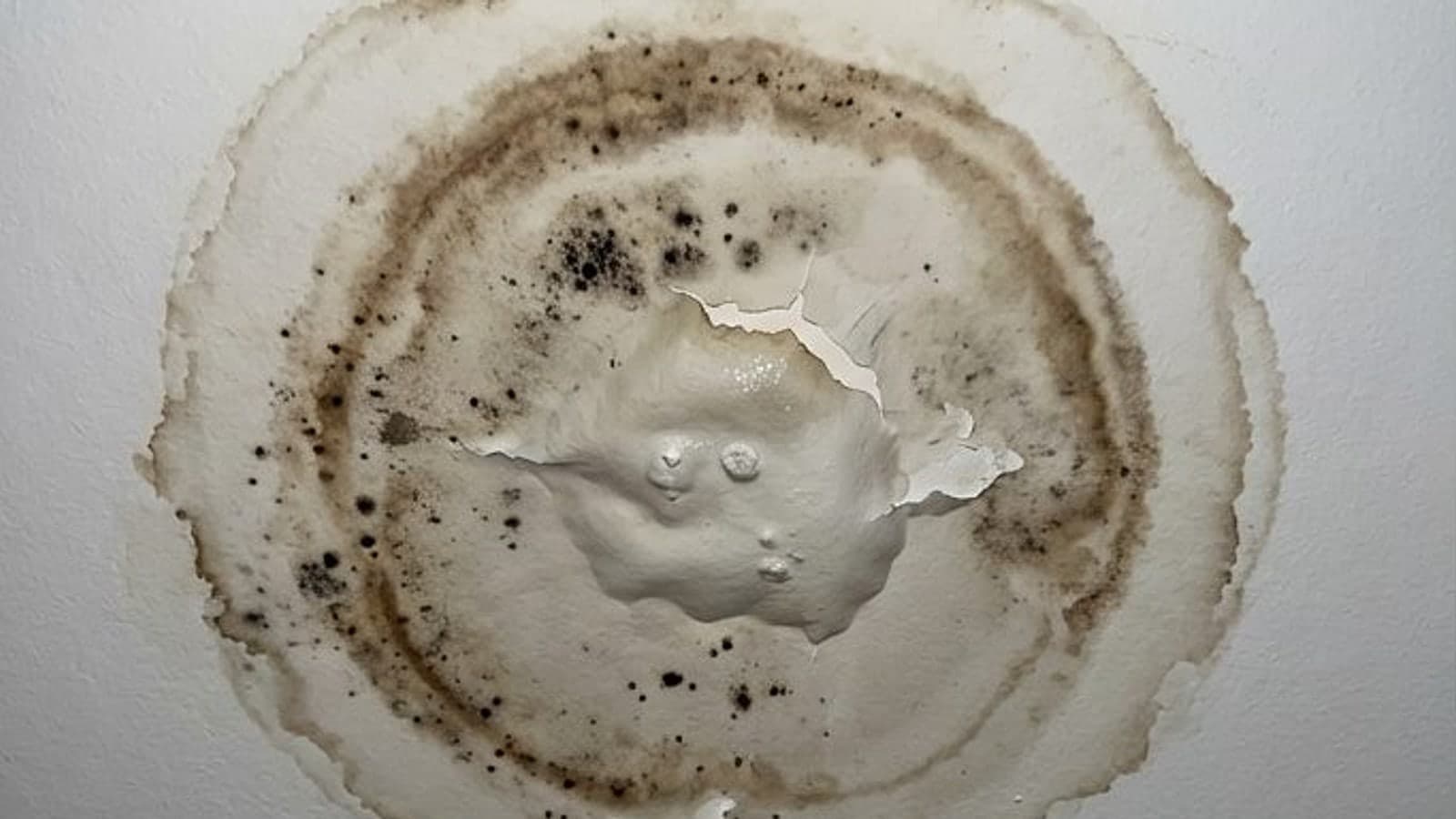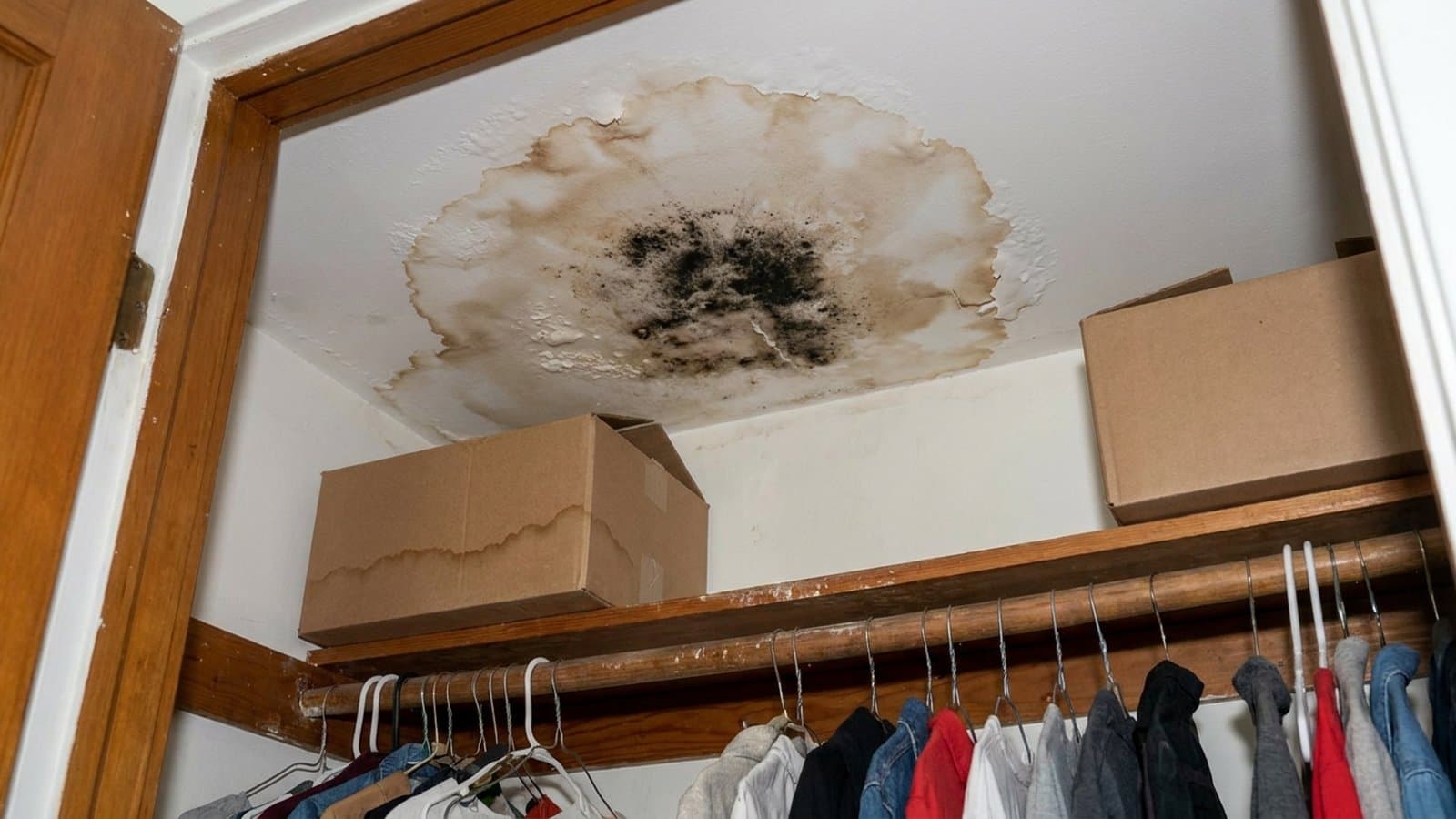
Crawl space mold is usually discovered upstairs. A room above the crawl smells musty on humid mornings, a hardwood floor cups along one wall, or a family notices the smell arrives with the air conditioning and leaves when it shuts off. By the time anyone opens the hatch, the condition below has generally been running for a season or more.
That delay is built into the design of a vented crawl space. The old logic was that outside air moving through foundation vents would keep the space dry. In a southern New England summer it does the reverse, because air at eighty five degrees carries far more water than air at fifty five degrees can hold, and the crawl is near the lower figure. Every hour of that airflow deposits water on the joists.
This guide is the inspection itself: what to bring, the zones to read in order, what a wood moisture reading actually means, when a lab test earns its cost and when it does not, and where the line sits between cleaning a section of subfloor and removing material under containment.
How Do You Inspect A Crawl Space For Mold?
Bring five things and read the space in a fixed order. The order matters, because the first two zones usually explain everything you find in the last two.
The inspection zones in order, what each one is telling you, and why it gets photographed.
Access hatch and first impression
- What to look for
- Smell, visible daylight, hygrometer reading before you move
- What it means
- A musty smell with humidity above sixty percent is the condition, before any growth is seen
- Why photograph it
- A baseline reading makes any later comparison meaningful
Ground cover
- What to look for
- Bare soil, torn plastic, seams that have separated, standing or ponded water
- What it means
- Exposed soil releases vapor continuously and is the largest single moisture source
- Why photograph it
- Records the percentage of soil left uncovered, which drives the fix
Perimeter walls and vents
- What to look for
- Damp bands, efflorescence, blocked or missing vent screens, mud lines from past flooding
- What it means
- A mud line records how high water has stood, which no one remembers accurately
- Why photograph it
- Locates the wall section that lines up with a downspout or a low grade outside
Piers and columns
- What to look for
- Dark staining at the base, growth on wood posts, rust at metal bases
- What it means
- Persistent ground contact moisture in one area rather than general humidity
- Why photograph it
- Shows whether the problem is local or across the whole footprint
Plumbing and ductwork
- What to look for
- Sweating supply lines, loose duct joints, torn duct insulation, condensate lines
- What it means
- Cold surfaces in humid air condense, and open ducts move crawl air into the house
- Why photograph it
- Duct faults explain smells upstairs better than anything else in the space
Subfloor sheathing
- What to look for
- Discoloration between joists, dark patches under bathrooms and kitchens, delamination
- What it means
- Growth in plywood or OSB, or a fixture leaking from above
- Why photograph it
- The pattern separates a leak, which is local, from humidity, which is general
Joists and rim
- What to look for
- Fuzzy or powdery growth standing off the grain, insulation slumping or fallen
- What it means
- Growth on structural framing, which is the trigger for a removal scope
- Why photograph it
- Fallen insulation is a reliable marker that the space has been wet repeatedly
| Zone | What to look for | What it means | Why photograph it |
|---|---|---|---|
| Access hatch and first impression | Smell, visible daylight, hygrometer reading before you move | A musty smell with humidity above sixty percent is the condition, before any growth is seen | A baseline reading makes any later comparison meaningful |
| Ground cover | Bare soil, torn plastic, seams that have separated, standing or ponded water | Exposed soil releases vapor continuously and is the largest single moisture source | Records the percentage of soil left uncovered, which drives the fix |
| Perimeter walls and vents | Damp bands, efflorescence, blocked or missing vent screens, mud lines from past flooding | A mud line records how high water has stood, which no one remembers accurately | Locates the wall section that lines up with a downspout or a low grade outside |
| Piers and columns | Dark staining at the base, growth on wood posts, rust at metal bases | Persistent ground contact moisture in one area rather than general humidity | Shows whether the problem is local or across the whole footprint |
| Plumbing and ductwork | Sweating supply lines, loose duct joints, torn duct insulation, condensate lines | Cold surfaces in humid air condense, and open ducts move crawl air into the house | Duct faults explain smells upstairs better than anything else in the space |
| Subfloor sheathing | Discoloration between joists, dark patches under bathrooms and kitchens, delamination | Growth in plywood or OSB, or a fixture leaking from above | The pattern separates a leak, which is local, from humidity, which is general |
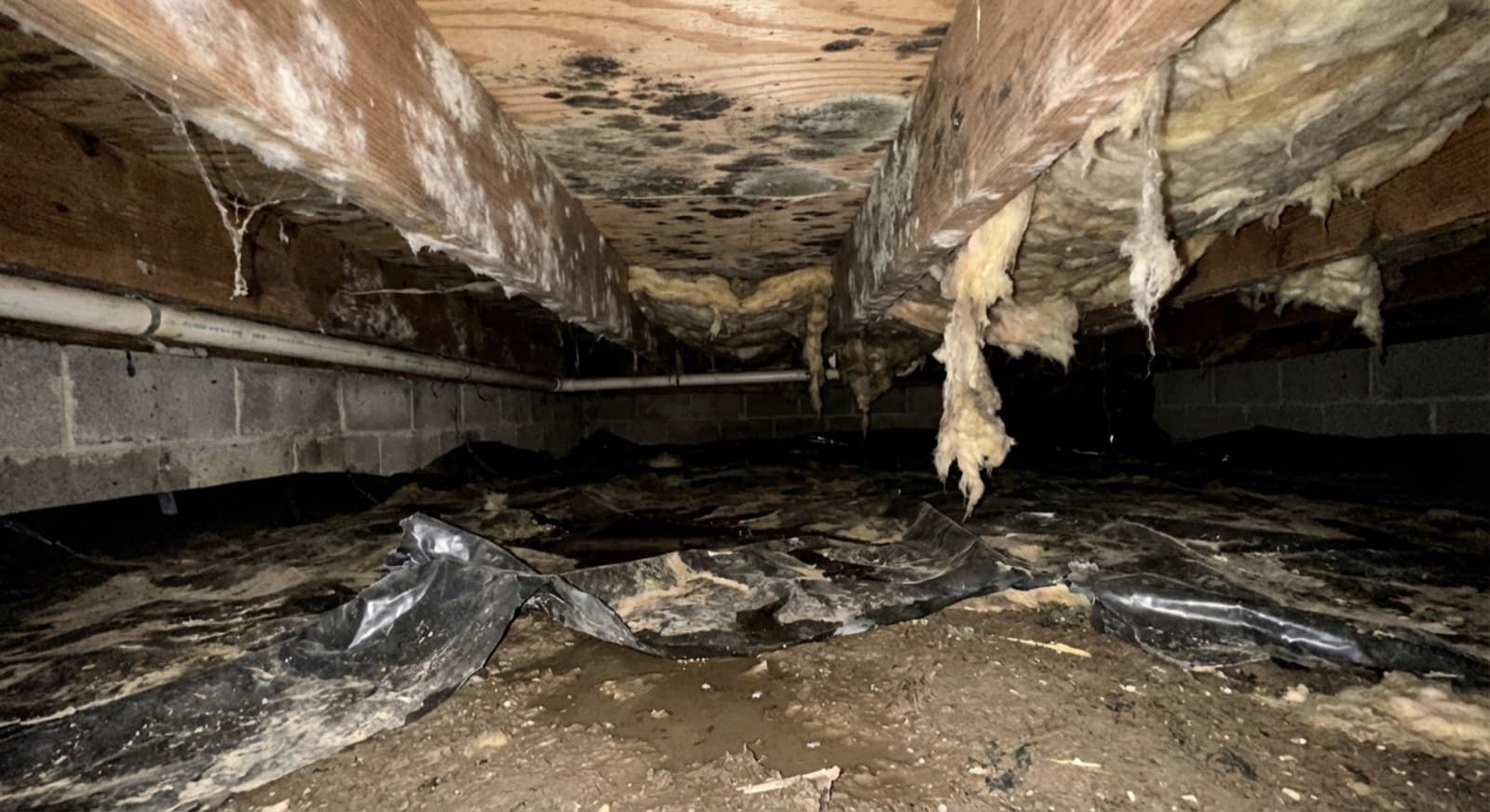
| Joists and rim | Fuzzy or powdery growth standing off the grain, insulation slumping or fallen | Growth on structural framing, which is the trigger for a removal scope | Fallen insulation is a reliable marker that the space has been wet repeatedly |
What To Bring
A bright flashlight held low so the beam rakes across surfaces rather than washing them out, a pin-type moisture meter, a hygrometer, an N95 with gloves and eye protection, and a phone for photographs. Coveralls are worth it. A raking beam is the single most useful tool in the list, because it makes growth stand off a joist in a way direct light hides completely.
The Order To Read It In
Start at the access and record the smell and the hygrometer reading before you disturb anything. Then the ground cover, then the perimeter and vents, then the piers, then the plumbing and ductwork, then the subfloor, then the joists and rim. Photograph each zone as you go with something in frame for scale, and note where any reading was taken so it can be repeated later.
Safety Before Anything Else
Do not enter a crawl space with standing water and live electrical, with visible animal waste, or where the access is too tight to exit quickly. Rodent droppings and nesting material require different handling than mold does. If any of those are present, photograph from the hatch and stop. EPA notes mold exposure is associated with respiratory symptoms in sensitive individuals, and disturbing growth in a confined space is exactly the wrong way to find out how sensitive you are.
What Does Crawl Space Mold Look Like On Joists And Subfloor?
It rarely looks like the photographs people expect, and two of the three things homeowners report as mold usually are not.
What Growth Actually Looks Like Down There
On joists it reads as a fuzzy or powdery bloom sitting on top of the grain, often following the lower face where condensation collects, and it casts small shadows under a raking beam. On plywood subfloor it is flatter and follows the sheet, sometimes strongest between joists where airflow is weakest. Color varies from white through gray to green and black, and it says nothing about severity.
When It Is Rot Rather Than Mold
Surface mold sits on wood. Decay fungi consume it, and the difference matters structurally. Press a joist or a subfloor sheet with a screwdriver tip. If it goes in with light pressure, if the grain is stringy or crumbling in cubes, or if a joist has visibly deflected, that is decay and it is a structural repair question rather than a cleaning question. Those two conditions frequently sit side by side.
"Every crawl space we open tells the same story in the same order. The ground cover explains the humidity, the humidity explains the joists, and the joists explain the smell in the room above."
Do You Need A Mold Test, Or Just A Look?
For most crawl spaces, a look and a meter answer it. There are three situations where lab work genuinely earns its cost.
Reading wood moisture content in crawl space framing, using standard in-service figures.
Under 15 percent
- What it means
- Normal for framing in service in this climate
- Growth risk
- Low. Surfaces are not supporting growth at this level
- What to do
- Record it as a baseline and move on
16 to 19 percent
- What it means
- Elevated. The assembly is holding more water than it should
- Growth risk
- Marginal, and seasonal humidity can push it over
- What to do
- Find the source, add a ground cover, and re-read in a month
20 to 27 percent
- What it means
- Wet. This range supports surface growth on wood
- Growth risk
- Active. Expect visible growth at or near these readings
- What to do
- Correct the moisture, then treat the growth as a removal scope
28 percent and above
- What it means
- Saturated, and in the range associated with decay fungi
- Growth risk
- Structural as well as biological
- What to do
- Have the framing assessed for decay, not just cleaned
| Reading | What it means | Growth risk | What to do |
|---|---|---|---|
| Under 15 percent | Normal for framing in service in this climate | Low. Surfaces are not supporting growth at this level | Record it as a baseline and move on |
| 16 to 19 percent | Elevated. The assembly is holding more water than it should | Marginal, and seasonal humidity can push it over | Find the source, add a ground cover, and re-read in a month |
| 20 to 27 percent | Wet. This range supports surface growth on wood | Active. Expect visible growth at or near these readings | Correct the moisture, then treat the growth as a removal scope |
| 28 percent and above | Saturated, and in the range associated with decay fungi | Structural as well as biological | Have the framing assessed for decay, not just cleaned |
The Three Times A Lab Test Is Worth It
When the smell reaches the living space and the source is disputed, because air sampling with a paired outdoor control shows whether crawl air is entering the house. When a real estate transaction needs a third-party record. And when someone in the household has been advised by a physician to reduce exposure, and a documented baseline is wanted. Our independent mold inspection and air testing covers all three.
What Causes Crawl Space Mold In The First Place?
Four sources, and in most homes the ground and the vents are doing the majority of it together.
Bare Ground
Uncovered soil releases water vapor continuously, and a crawl space with no ground cover can pass a remarkable volume of it into the space over a season. This is why a torn or partial vapor barrier is treated as no barrier at all in practice. Sealed, overlapped ground cover running up the walls is the single largest reduction available in most crawl spaces.
Vents Working Backwards
Foundation vents were meant to dry the space. In a humid New England summer they import moisture instead, because outside air at eighty five degrees carries far more water than the cool crawl can hold, and the surplus condenses on framing. That is the mechanism behind most joist growth we find in Fairfield County and Westchester crawl spaces.
The Duct Connection To The Rest Of The House
If supply or return ducts run through the crawl and have open joints, the space and the living area share air. That is why crawl growth is so often reported as a smell in a bedroom. Where ductwork is implicated, air duct cleaning is part of resolving the smell, though the crawl itself is still the source to correct.
How Is Crawl Space Mold Removed, And What Keeps It Out?
Removal and prevention are one project down here, because a cleaned crawl with an open ground and open vents is a crawl that regrows.
The Removal Sequence
Under IICRC S520 the space is contained and held under negative air pressure with HEPA filtration. Fallen insulation, debris, and any porous material with rooted growth is removed and bagged out. Framing is HEPA vacuumed, then cleaned, with abrasive methods used where growth has rooted into the grain. The space is dried to a documented standard and HEPA cleaned before anything is reinstalled.
Then The Conditions Are Changed
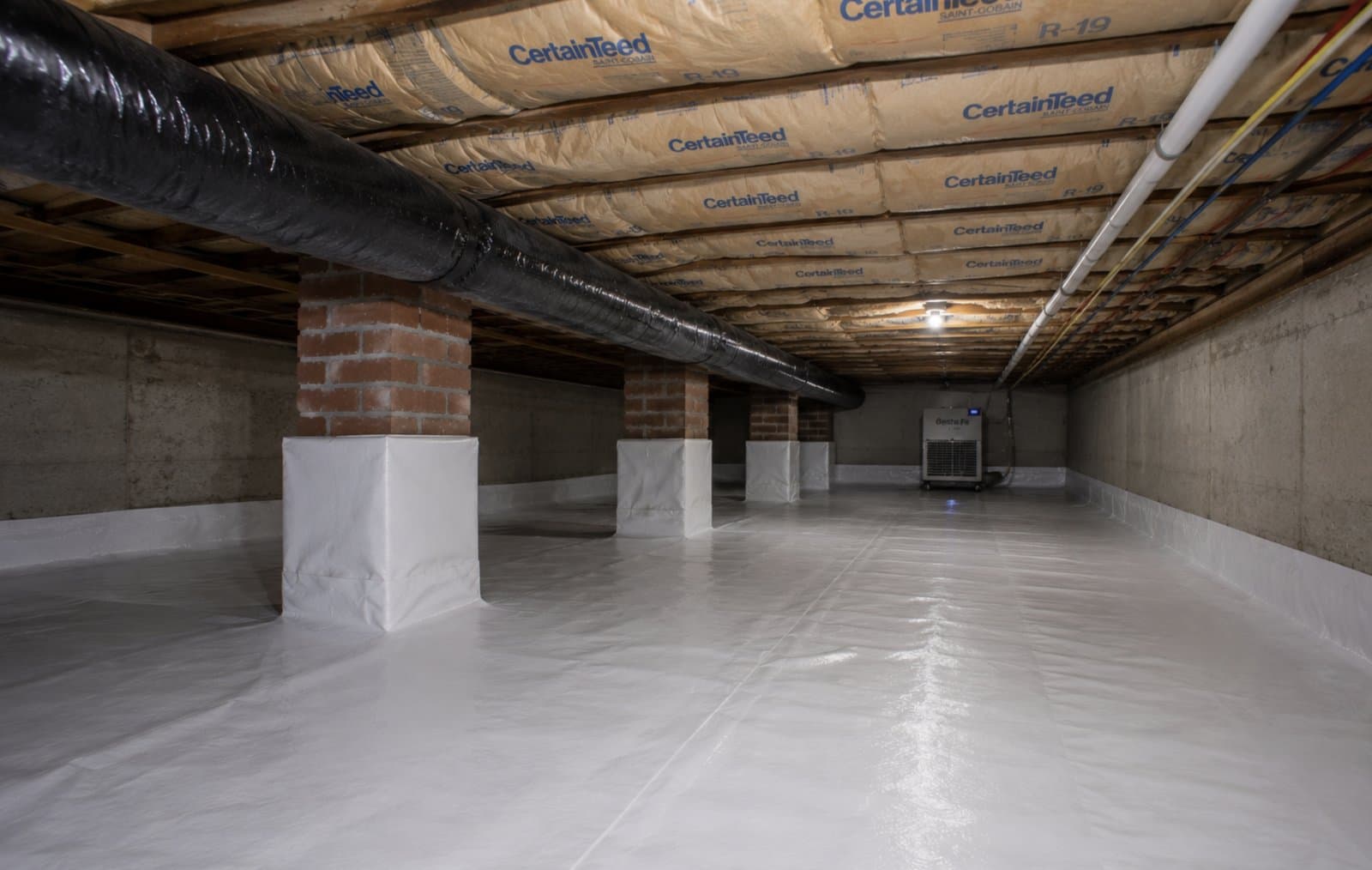
A sealed ground cover overlapped at the seams and run up the foundation wall, vents addressed rather than left open, the rim air sealed, and a dehumidifier with a drain sized for the space, holding the crawl in the same thirty to fifty percent band the rest of the house should sit in. Our crawl space cleanup page covers that work, with local scope on the Stamford crawl space and Greenwich crawl space pages.
What It Costs, And What Insurance Usually Says
In Connecticut and Massachusetts a small single-area project runs 1,500 to 4,500 dollars and a larger single-area scope, which is where most crawl spaces land, runs 3,000 to 8,000 dollars, roughly 14 to 28 dollars per square foot. The derivation is in our mold remediation cost guide, and the removal scope is described on our mold remediation page. On insurance, carriers generally cover growth that followed a sudden covered event and exclude growth from long term humidity. We document the loss and submit the scope directly to your insurer. We are not licensed public adjusters and do not negotiate claims on your behalf.
Need Restoration Services?
60-minute response across CT, NY & MA. Licensed, insured, free inspections.
Questions Homeowners Ask
How do I know if my crawl space has mold without going in?+
Three signals from inside the house. A musty smell that is strongest on humid mornings or when the air handler runs. Cupping or lifting in a hardwood floor along one wall. And a hygrometer in the room above holding above sixty percent while the rest of the house sits lower. Any two of those justify opening the hatch.
What moisture reading is too high for crawl space framing?+
Under fifteen percent is normal for wood in service in this climate. Sixteen to nineteen is elevated and worth tracking. Twenty percent and above supports surface growth on wood, and twenty eight and above is the range associated with decay fungi, which is a structural question rather than a cleaning one.
Do I need air sampling to confirm crawl space mold?+
Not usually. Visible growth with a moisture source answers the question, and no agency publishes an acceptable indoor level to compare a result against. Sampling earns its cost when the odor reaches living space and the source is disputed, when a transaction needs a third-party record, or when a documented baseline is wanted.
Should crawl space vents be open or closed?+
Open vents were designed to dry the space, and in a humid southern New England summer they do the opposite by importing air that condenses on cool framing. Current practice in this climate is a sealed ground cover with the crawl conditioned and dehumidified rather than ventilated with outdoor air.
Can mold in a crawl space affect the air upstairs?+
Air moves from a crawl into a house through floor penetrations and through open joints in ductwork that runs below, which is why the smell is often reported in a bedroom rather than at the hatch. Correcting the crawl is the fix. Cleaning ducts addresses the residue in the distribution system, not the source.
Is a vapor barrier enough to stop crawl space mold?+
Sealed ground cover is the largest single reduction available and it is rarely sufficient alone. A partial or torn barrier performs close to bare soil. Durable results in this climate come from the ground cover plus addressing the vents, air sealing the rim, and holding the space at thirty to fifty percent humidity.
How much does crawl space mold removal cost?+
Most crawl spaces fall between 1,500 and 8,000 dollars in Connecticut and Massachusetts depending on footprint and access, at roughly 14 to 28 dollars per square foot. Tight access, fallen insulation, and framing that needs abrasive cleaning rather than wiping are what move a job toward the top of that range.
Can I clean crawl space mold myself?+
A small area on a hard surface, with the moisture already corrected, is within EPA homeowner guidance at roughly ten square feet. Growth across framing is not, because joists and sheathing are porous, the space is confined, and disturbing growth without containment moves spores into the house through the floor above.