Most people meet this problem twice. The first time they clean everything they can reach, the house smells fine for a few days, and then a warm afternoon or a run of the furnace brings it all back. The second time they start asking why.
The answer is physical. Smoke moves as an aerosol, so it goes wherever air goes, which includes the cavity behind your outlet covers, the fiberglass in your attic, the underside of your kitchen cabinets and the return side of your ductwork. As it cools it deposits particulate on surfaces, and at the same time it drives vapor phase compounds into anything porous. Two different problems, sitting in the same room, and only one of them responds to a sponge.
This guide covers where the smell actually lives, what genuinely removes it and what only masks it, how professional treatment sequences the work, and how to tell the difference between a nuisance odor and a signal that something in your building still needs attention.
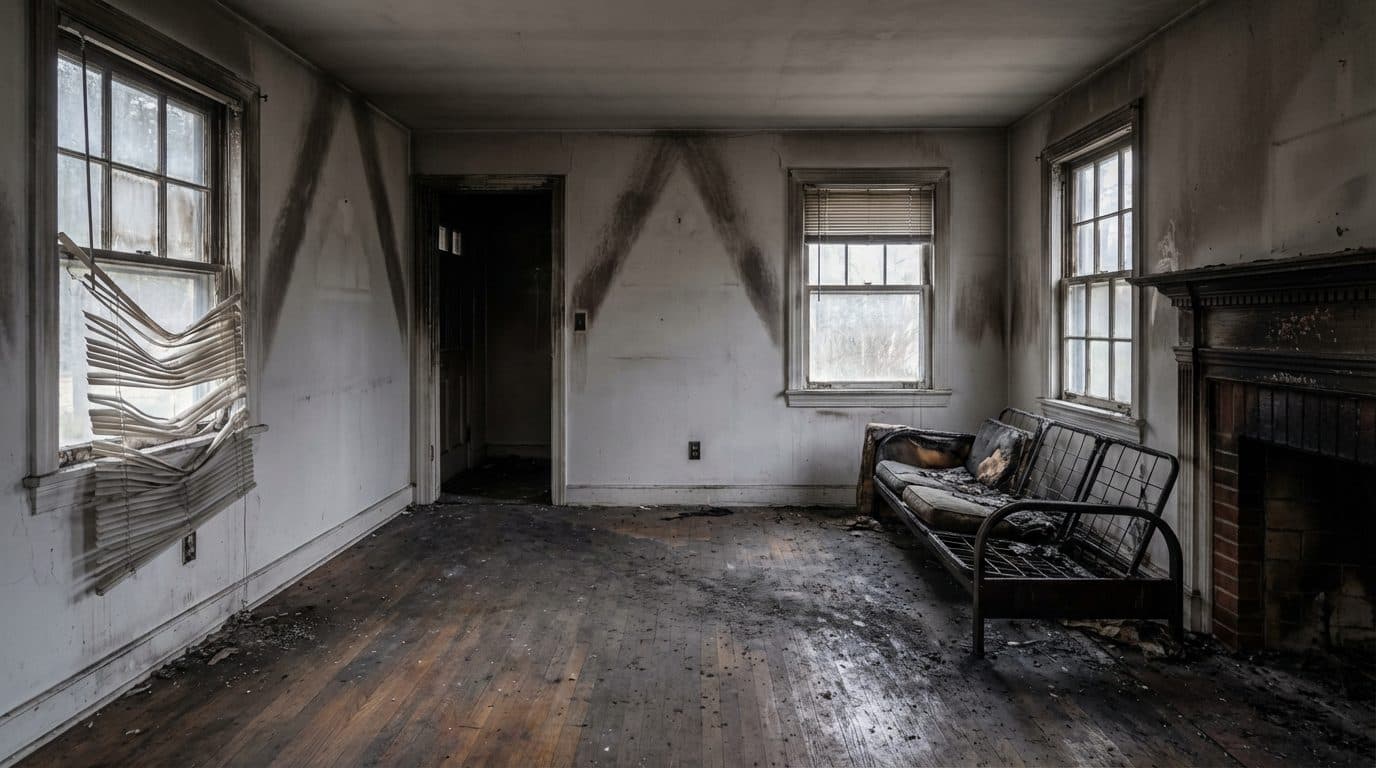
Why Does Smoke Smell Come Back After Cleaning?
Because cleaning addresses the surface and the odor is in the substrate. Until the absorbed fraction is dealt with, every warm or humid day releases it again.
The Two Fractions Of Smoke
The visible fraction is particulate, the soot film on a windowsill or the grey haze on a ceiling. It wipes off. The invisible fraction is vapor phase, the volatile and semi volatile compounds that condensed into paint film, bare wood, grout, carpet backing, upholstery foam and gypsum. That fraction is inside the material, not on it, and no surface cleaning reaches it.
Why Heat And Humidity Bring It Back
Absorbed compounds re-release as temperature and humidity rise, which is why a house that smelled acceptable in February smells like an ashtray in July, and why the smell blooms when the heat first runs in autumn. If your odor has a season, you are smelling the absorbed fraction, not a surface you missed.
The Test That Tells You Which One You Have
Close the house for six hours with the HVAC off, then walk in from outside. A faint smell that fades within a minute is usually residual surface odor. A smell that hits immediately and stays while you stand in it means the building materials themselves are holding it, and that is not a cleaning problem any more.
Where Does Smoke Odor Actually Hide?
Five places account for nearly every case where a homeowner cleaned thoroughly and the smell returned anyway.
The five reservoirs that hold smoke odor after visible cleaning, and what each one needs.
HVAC system and ductwork
- Why it holds odor
- Smoke was pulled through the return during and after the event, coating the coil, blower wheel and duct interior. The system then redistributes it every cycle.
- What it needs
- Coil and blower cleaning, duct cleaning to NADCA ACR, filter replacement. Cleaning the house without the system means recontaminating it.
Attic and wall insulation
- Why it holds odor
- Fiberglass and cellulose are enormous surface area with no cleanable face. They hold the vapor phase fraction indefinitely.
- What it needs
- Removal and replacement. Insulation is not cleanable and attempts to treat it in place generally fail.
Textiles and soft goods
- Why it holds odor
- Carpet backing, upholstery foam, mattresses, drapery and clothing absorb through their full thickness.
- What it needs
- Laundering or specialist textile cleaning, or disposal. Surface vacuuming does not reach the foam.
Paint film and bare wood
- Why it holds odor
- Latex paint is porous. Unfinished wood in closets, subfloor and framing absorbs deeply.
- What it needs
- Cleaning, then a shellac based or purpose made odor sealing primer once the substrate is dry and clean.
Concealed cavities
- Why it holds odor
- Wall and ceiling cavities, outlet and switch boxes, cabinet toe kicks, behind trim. Smoke pressurised into them and stayed.
- What it needs
- Detail cleaning of accessible cavities, sealing, and in heavy cases opening the assembly.
| Where it hides | Why it holds odor | What it needs |
|---|---|---|
| HVAC system and ductwork | Smoke was pulled through the return during and after the event, coating the coil, blower wheel and duct interior. The system then redistributes it every cycle. | Coil and blower cleaning, duct cleaning to NADCA ACR, filter replacement. Cleaning the house without the system means recontaminating it. |
| Attic and wall insulation | Fiberglass and cellulose are enormous surface area with no cleanable face. They hold the vapor phase fraction indefinitely. | Removal and replacement. Insulation is not cleanable and attempts to treat it in place generally fail. |
| Textiles and soft goods | Carpet backing, upholstery foam, mattresses, drapery and clothing absorb through their full thickness. | Laundering or specialist textile cleaning, or disposal. Surface vacuuming does not reach the foam. |
| Paint film and bare wood | Latex paint is porous. Unfinished wood in closets, subfloor and framing absorbs deeply. | Cleaning, then a shellac based or purpose made odor sealing primer once the substrate is dry and clean. |
| Concealed cavities | Wall and ceiling cavities, outlet and switch boxes, cabinet toe kicks, behind trim. Smoke pressurised into them and stayed. | Detail cleaning of accessible cavities, sealing, and in heavy cases opening the assembly. |
The Order Matters More Than The Products
The single most common failure we see is sealing before cleaning. A shellac primer over a soot loaded surface locks the odor source under a film that will fail at the edges within a year. Clean first, verify the substrate is sound, then seal only what cannot be replaced.
What Actually Removes Smoke Smell, And What Does Not
The market sells a lot of products for this problem. Here is an honest sort, with the reasoning behind each.
Common approaches ranked by whether they address the source or the symptom.
Air fresheners and plug ins
- Does it work
- No
- Honest assessment
- Adds a second odor on top of the first. Your nose adapts to the mixture, visitors do not. Zero effect on the absorbed fraction.
Bowls of vinegar, coffee grounds, charcoal briquettes
- Does it work
- Marginal
- Honest assessment
- Activated carbon has genuine adsorptive capacity for vapor phase compounds, but the quantity in a bowl is trivial against a whole house. Useful in a closet, not a solution for a building.
Ventilation and airing out
- Does it work
- Partly
- Honest assessment
- Genuinely helps with the airborne fraction and costs nothing. Does nothing for what is already inside the materials. Worth doing first, never sufficient alone.
Cleaning hard surfaces with a degreaser
- Does it work
- Yes, necessary
- Honest assessment
- This is real work and it removes the particulate fraction. It is step one, not the whole job.
HEPA air scrubbing
- Does it work
- Yes, for particulate
- Honest assessment
- Removes suspended particulate continuously during the work. Standard practice on any professional job. Does not address vapor phase alone.
Activated carbon filtration
- Does it work
- Yes, for vapor phase
- Honest assessment
- The correct filtration answer for the compounds HEPA cannot capture. Often paired with HEPA in the same unit.
Hydroxyl generation
- Does it work
- Yes
- Honest assessment
- Produces hydroxyl radicals that break down odor compounds. Slower than ozone, and safe to run in occupied space, which is why it is the usual professional choice for a house people still live in.
Ozone
- Does it work
- Yes, with a hard restriction
- Honest assessment
- Effective oxidiser, and genuinely unsafe to breathe. See below.
Thermal fogging
- Does it work
- Yes, in the right case
- Honest assessment
- Heats a deodorising compound into a vapor that follows the same paths the smoke took, reaching cavities that cleaning cannot. Used after cleaning, not instead of it.
Sealing with odor blocking primer
- Does it work
- Yes, last step
- Honest assessment
- Locks down what remains in substrate that cannot be replaced. Only valid after cleaning, never before.
| Approach | Does it work | Honest assessment |
|---|---|---|
| Air fresheners and plug ins | No | Adds a second odor on top of the first. Your nose adapts to the mixture, visitors do not. Zero effect on the absorbed fraction. |
| Bowls of vinegar, coffee grounds, charcoal briquettes | Marginal | Activated carbon has genuine adsorptive capacity for vapor phase compounds, but the quantity in a bowl is trivial against a whole house. Useful in a closet, not a solution for a building. |
| Ventilation and airing out | Partly | Genuinely helps with the airborne fraction and costs nothing. Does nothing for what is already inside the materials. Worth doing first, never sufficient alone. |
| Cleaning hard surfaces with a degreaser | Yes, necessary | This is real work and it removes the particulate fraction. It is step one, not the whole job. |
| HEPA air scrubbing | Yes, for particulate | Removes suspended particulate continuously during the work. Standard practice on any professional job. Does not address vapor phase alone. |
| Activated carbon filtration | Yes, for vapor phase | The correct filtration answer for the compounds HEPA cannot capture. Often paired with HEPA in the same unit. |
| Hydroxyl generation | Yes | Produces hydroxyl radicals that break down odor compounds. Slower than ozone, and safe to run in occupied space, which is why it is the usual professional choice for a house people still live in. |
| Ozone | Yes, with a hard restriction | Effective oxidiser, and genuinely unsafe to breathe. See below. |
| Thermal fogging | Yes, in the right case | Heats a deodorising compound into a vapor that follows the same paths the smoke took, reaching cavities that cleaning cannot. Used after cleaning, not instead of it. |
| Sealing with odor blocking primer | Yes, last step | Locks down what remains in substrate that cannot be replaced. Only valid after cleaning, never before. |
About Ozone, Plainly
Ozone does break down odor compounds, and the EPA states clearly that ozone generators sold as air cleaners are not safe to use in occupied spaces, because at concentrations high enough to affect odor it is high enough to irritate and damage the lungs. Legitimate use means an unoccupied structure, people and pets and plants out, the treatment run for a controlled period, then the building ventilated and cleared before anyone returns. Anyone offering to run ozone while your family is home is telling you something about how they work.
Why Professionals Combine Methods
No single tool covers both fractions and all five reservoirs. A typical sequence is source removal, then detail cleaning of every surface, then HVAC cleaning, then air treatment with HEPA and carbon or hydroxyl while the work proceeds, then thermal fogging where cavities are involved, then sealing what stays. The order is what makes it hold.
How Do You Get Cigarette Smoke Smell Out Of A House?
Long term tobacco odor is the hardest version of this problem, because it was deposited daily over years rather than in one event.
Why It Is Different
Years of smoking build a tar film on every surface in the building, including the inside of the ductwork and the back of the drywall behind switch plates. The residue is sticky rather than dry, which means it holds particulate and continues to off gas. Homes bought from long term smokers usually need the full sequence, not a treatment.
What The Job Usually Involves
When Green Restoration scopes one of these, expect textile and carpet removal, full HVAC cleaning including the coil and blower, degreasing of every hard surface including ceilings, replacement of any accessible insulation that was in the air path, sealing of walls and ceilings with an odor blocking primer, and repainting. Skipping the ceiling is the classic shortcut and it is why the smell returns.
When The Smell Means Something Else
Not every smoke smell is leftover odor. Two versions of it are telling you about an active condition, and both are worth acting on quickly.
A Puffback, Not A Fire
If an oily black film appeared across the house over hours or days with no fire, that is likely a puffback, a furnace or boiler misfire that pushes atomised fuel and soot through the system. The residue is oily rather than dry and smears badly if wiped, so wiping it makes the job larger. Our guide to what a puff back is covers what happens and why it needs different handling.
A Burning Smell With No Source
An electrical or hot plastic smell with no visible cause is not an odor problem and does not belong in this guide. Shut off the circuit if you can identify it, and call an electrician or the fire department. Odor work happens after the building is confirmed safe, never instead of that.
Smoke Odor After Wildfire Or Distant Fire
Regional smoke enters through the building envelope and the HVAC system and deposits the same two fractions on a lighter scale. Filtration and cleaning usually resolve it without the full sequence. We covered the Connecticut version of this in our guide to wildfire smoke in Connecticut homes.
What Does Professional Smoke Odor Removal Cost?
Cost tracks the number of reservoirs involved, not the size of the smell. Two houses with identical odor can differ by a factor of ten in scope.
Typical Connecticut ranges by scope. Every property is quoted after a walkthrough.
Single room, light odor
- Typical range
- $500 to $1,500
- What is included
- Detail cleaning, air treatment, filter change. No demolition.
Whole home, no demolition
- Typical range
- $2,000 to $6,000
- What is included
- All hard surfaces, HVAC cleaning, air treatment, thermal fogging, textiles addressed.
Whole home with sealing and paint
- Typical range
- $6,000 to $15,000
- What is included
- The above plus insulation removal where needed, odor sealing primer, repaint.
Post fire structural
- Typical range
- $15,000 and up
- What is included
- Cleaning combined with demolition and rebuild of affected assemblies, coordinated with the fire restoration scope.
| Scope | Typical range | What is included |
|---|---|---|
| Single room, light odor | $500 to $1,500 | Detail cleaning, air treatment, filter change. No demolition. |
| Whole home, no demolition | $2,000 to $6,000 | All hard surfaces, HVAC cleaning, air treatment, thermal fogging, textiles addressed. |
| Whole home with sealing and paint | $6,000 to $15,000 | The above plus insulation removal where needed, odor sealing primer, repaint. |
| Post fire structural | $15,000 and up | Cleaning combined with demolition and rebuild of affected assemblies, coordinated with the fire restoration scope. |
The Insurance Question
Smoke odor from a covered fire or from a puffback is normally part of the loss rather than a separate claim. We document the condition with photographs and a written scope and submit it directly to your insurer. We are not licensed public adjusters and do not negotiate claims on your behalf. Odor from long term smoking is a property condition rather than a sudden event and is generally not covered.
What To Do This Week
A short sequence that costs almost nothing and either fixes a light case or tells you it is a real one.
The Order To Work In
Open the house and run fans outward for several hours on a dry day. Replace every HVAC filter and run the fan continuously for a day. Launder or remove every textile you can. Wipe hard surfaces with a degreasing cleaner, working ceilings before walls before floors. Then close the house for six hours and do the walk in test again. If the smell is gone you were dealing with the surface fraction. If it is unchanged, the absorbed fraction is in the building and the next step is a professional assessment rather than another round of cleaning.
Questions Homeowners Ask
How long does it take for smoke smell to go away on its own?+
A light odor from a single event, such as burnt food, usually clears within a few days with ventilation. Odor from an actual fire, a puffback, or years of smoking does not clear on its own at any useful timescale, because the compounds are absorbed into building materials rather than suspended in the air. If the smell is unchanged after a week of ventilation and cleaning, waiting longer will not resolve it.
Does an air purifier remove smoke smell?+
A purifier with both HEPA and a substantial activated carbon stage will reduce the airborne fraction while it runs, and carbon is the part that addresses odor compounds rather than particles. It cannot reach what is absorbed into paint, wood, insulation and textiles, so it manages the symptom rather than removing the source. It is a useful support during and after real cleaning, not a substitute for it.
Is ozone safe to use for smoke odor in my house?+
Not while anyone is in it. The EPA states that ozone generators sold as air cleaners are not safe for use in occupied spaces, because the concentration needed to affect odor also irritates and damages the lungs. Professional ozone use means the building is empty of people, pets and plants for the treatment, and is ventilated and cleared before anyone returns. For a home people are still living in, hydroxyl treatment is the usual choice because it can run safely in occupied space.
Do I have to replace the insulation after a fire?+
Usually yes for any insulation that was in the smoke path. Fiberglass and cellulose present enormous surface area with no cleanable face, so they hold the vapor phase fraction and release it back into the house indefinitely. Attempting to treat insulation in place is one of the most common reasons odor returns after an otherwise thorough job.
Will painting over smoke damage seal the smell?+
Ordinary paint will not. A shellac based or purpose made odor blocking primer will, but only over a surface that has already been cleaned and is dry and sound. Sealing over soot traps an active source under a film that tends to fail at the edges, and the smell returns looking like a paint problem. Clean first, seal second, paint third.
Why does my house smell like smoke when the heat turns on?+
Two likely causes. Absorbed odor in the ductwork, coil and blower is being re-released as the system warms and moves air, which points to HVAC cleaning. Or the appliance itself is producing the smell, which can indicate a combustion problem such as a puffback in an oil fired system. If the smell is oily and new, and especially if a black film appears on surfaces, treat it as a heating system issue and have the unit inspected.
Can thermal fogging alone remove smoke odor?+
No, and any company offering fogging as the entire scope is selling a shortcut. Fogging is effective at reaching the cavities and paths that smoke travelled and that cleaning cannot access, which is exactly why it is used after cleaning rather than instead of it. Fogging a house that still holds soot masks the problem for a period and then loses to it.
Does smoke smell mean there is mold too?+
Not by itself, though the two get confused because both are described as a musty or stale smell. Smoke odor is sharp and ashy and traces to the fire or smoking history. A musty earthy smell that is worse in a basement or after rain points at moisture instead. The EPA notes mold exposure is associated with respiratory symptoms in sensitive individuals, so a musty smell is worth identifying rather than deodorising. Our guide to [what a musty basement smell means](/blog/why-does-my-basement-smell-musty) covers that side.