Basements smell musty for a reason that has nothing to do with how clean they are. The odor is a set of microbial volatile organic compounds, produced by mold and bacteria as they digest damp paper, wood, dust and cardboard. Your nose is a genuinely good instrument for this. It detects those compounds at concentrations far below what a visual inspection would catch, which is why the smell so often arrives before anything is visible.
That makes the smell useful rather than annoying. It is a moisture reading. A basement that smells musty is telling you the relative humidity down there has been high enough, long enough, for something to start growing on a surface you probably have not looked at.
This guide covers what the smell is, the six sources that account for nearly every Connecticut case, how to find yours in an afternoon with a twelve dollar tool, and where the line sits between a dehumidifier problem and a remediation problem.
What Is That Musty Smell Actually Made Of?
It is a byproduct of active microbial growth, which is why it behaves so differently from a dirt smell or a smoke smell.
Microbial Compounds, Not Dust
Growing mold and bacteria release volatile compounds as a normal part of metabolism. Those compounds are what you smell. It follows that a musty smell means something is actively growing right now, not that something happened once. The odor rises and falls with humidity and temperature because growth does.
Why Your Nose Beats Your Eyes Here
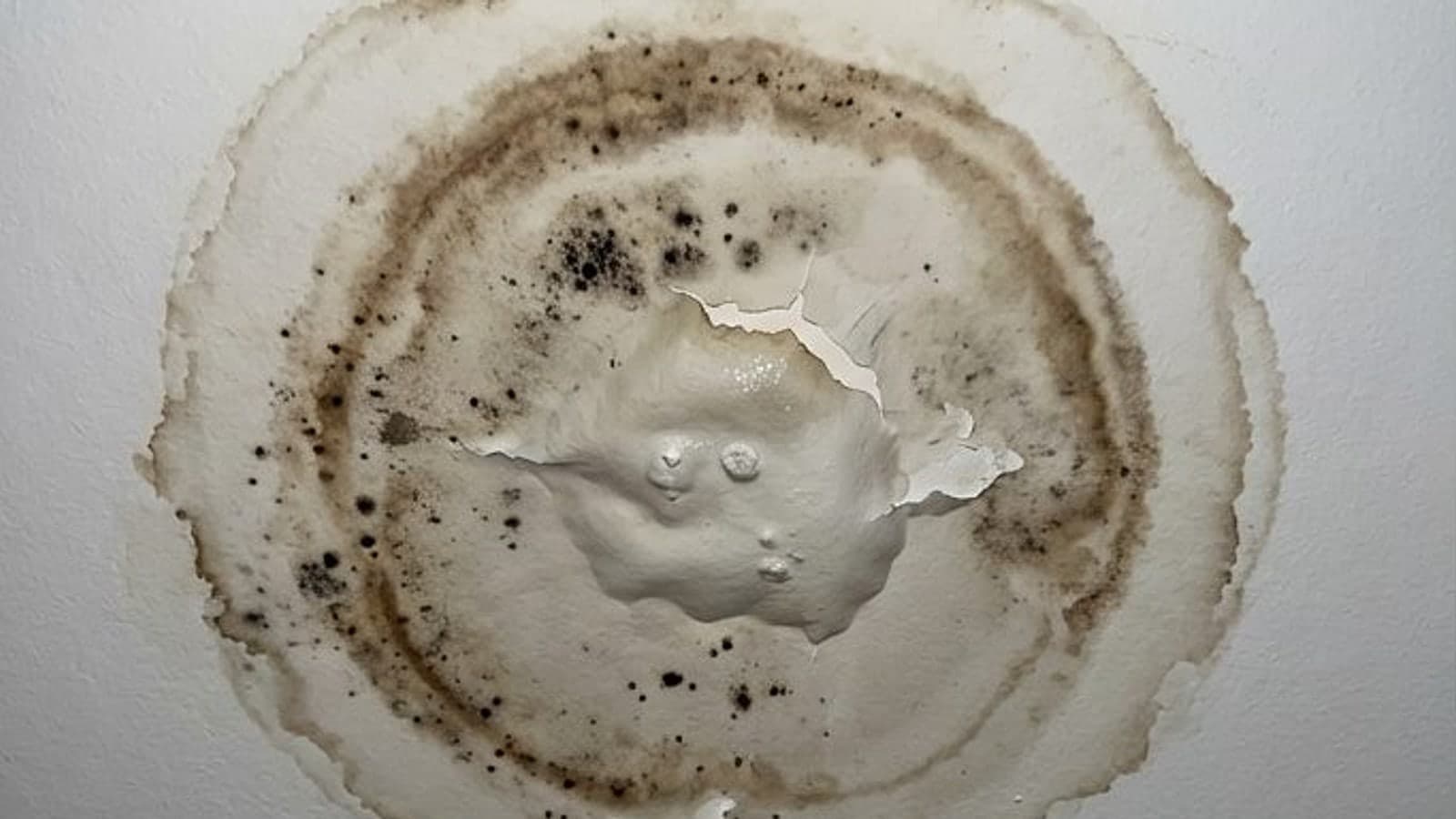
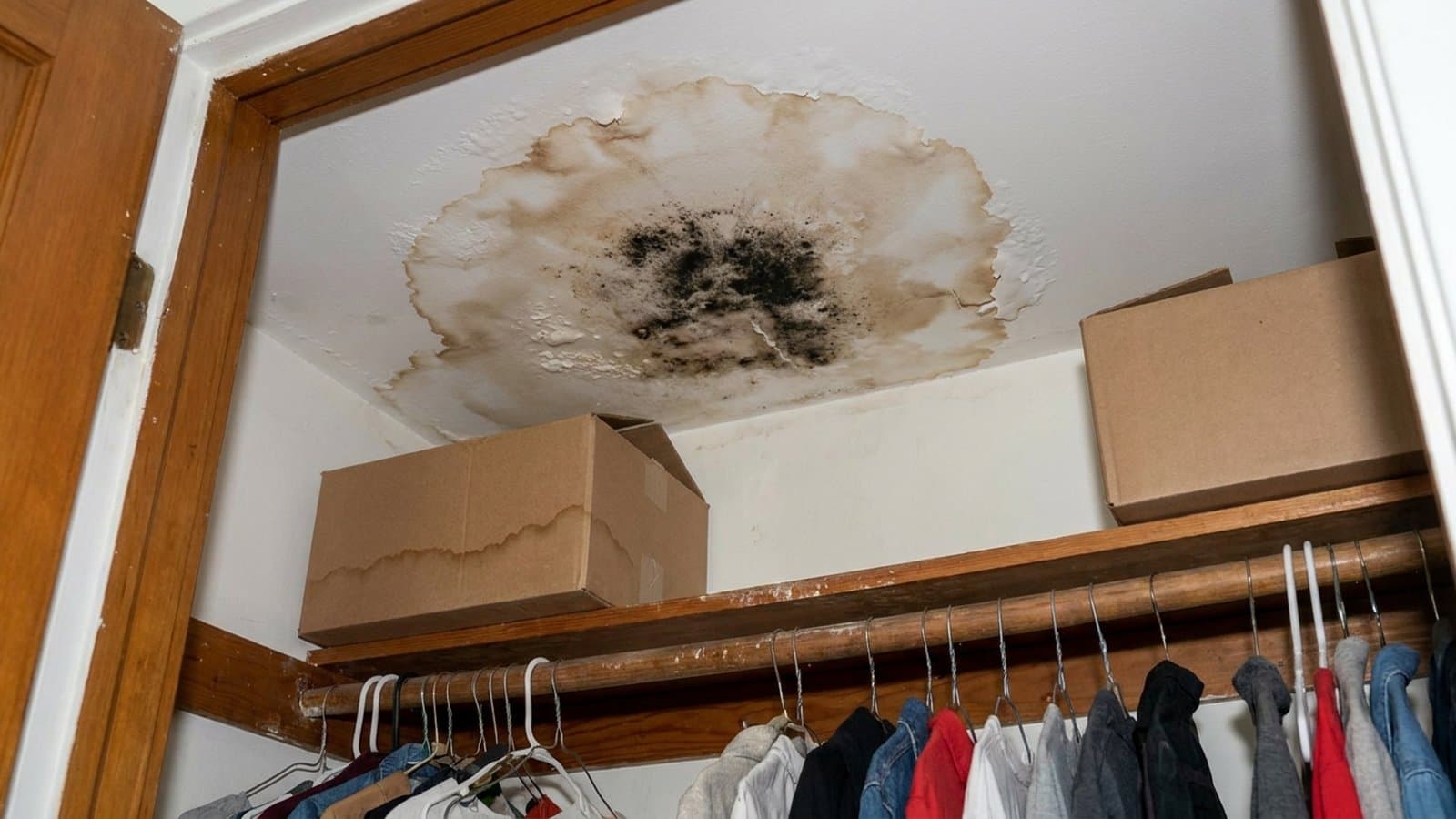
People routinely smell it for months before finding it, because growth starts on the hidden face of things. The back of drywall against a cool foundation wall, the underside of a carpet pad, the inside of a cardboard box on a slab, the joist bay above a damp crawl space. By the time it is visible on a surface you look at, it has usually been established for a while behind it.
What The Smell Does Not Tell You
It does not tell you the species and it does not tell you the health picture. EPA notes mold exposure is associated with respiratory symptoms in sensitive individuals, and health questions belong with a physician rather than with a lab result. EPA also does not recommend routine sampling to decide whether to clean, because the response is the same regardless of what is growing. Find the water, fix the water, remove the growth.
The Six Sources Behind Almost Every Musty Basement
In Connecticut housing stock these six cover nearly every case we walk into. Most basements have two of them at once.
Where basement moisture comes from, how to recognise each, and what actually resolves it.
Summer condensation
- How you recognise it
- Worst in July and August, better in winter. Walls and slab feel cool and damp. Cold water pipes drip.
- The fix
- Dehumidification to 50 percent or below, and stop ventilating with humid outdoor air, which makes it worse rather than better.
Grading and gutters
- How you recognise it
- Worse within a day or two of heavy rain. Staining or efflorescence low on the foundation wall.
- The fix
- Extend downspouts well away from the foundation, restore positive slope of the soil away from the house. This is the cheapest permanent fix on the list.
Foundation seepage
- How you recognise it
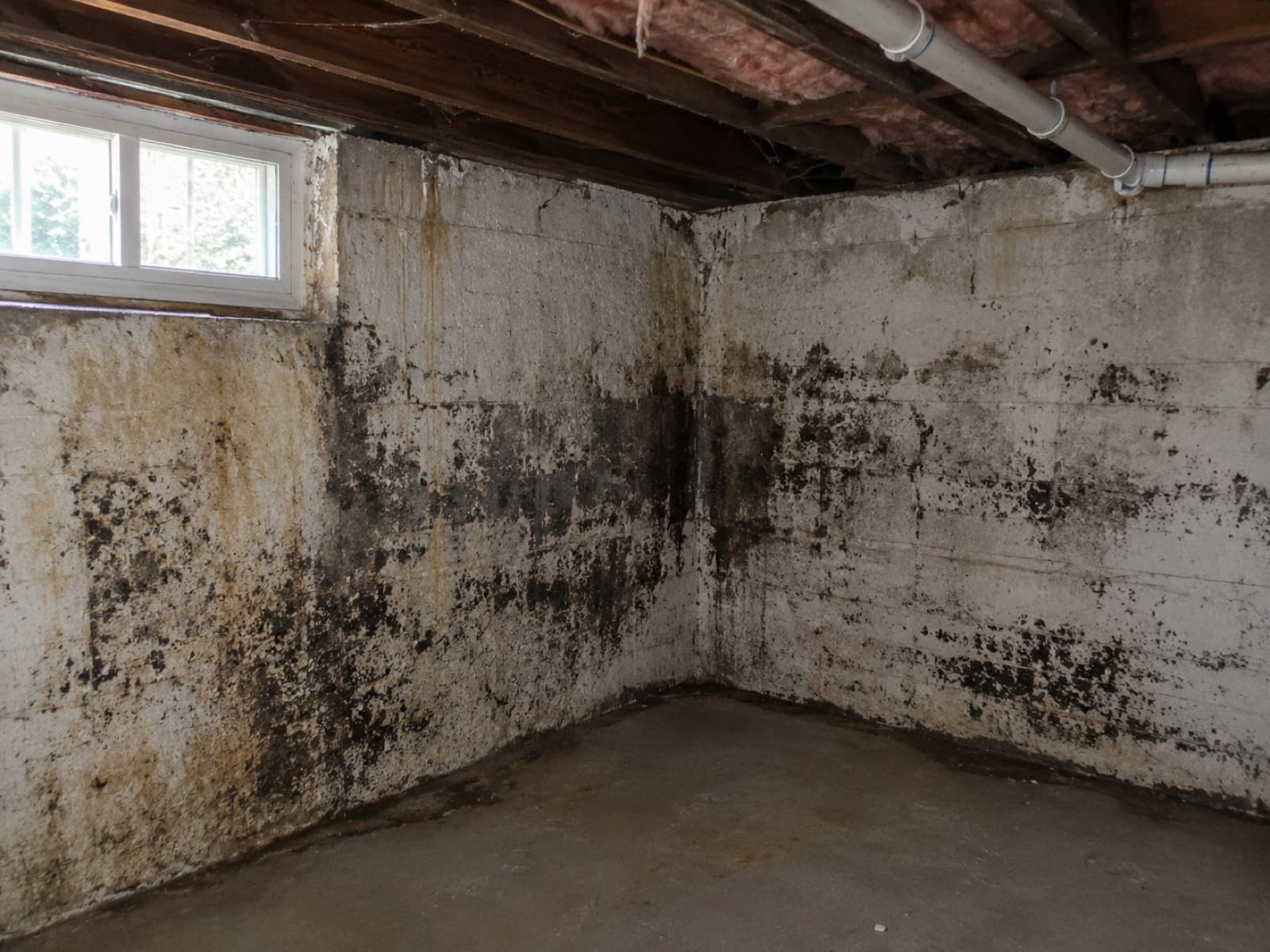
- Damp patches or white mineral bloom on block or poured walls, sometimes a wet line along the cove joint where wall meets slab.
- The fix
- Exterior drainage correction, or interior drainage and sump where the exterior is not practical.
Slab vapor drive
- How you recognise it
- Whole slab reads damp with no obvious leak. Flooring adhesive fails. Common in mid century homes built without a vapor barrier under the slab.
- The fix
- Vapor barrier under new flooring, dehumidification, and no organic flooring laid directly on the slab.
A crawl space next door
- How you recognise it
- The basement smells but the moisture is coming from an attached dirt floor crawl space sharing the air.
- The fix
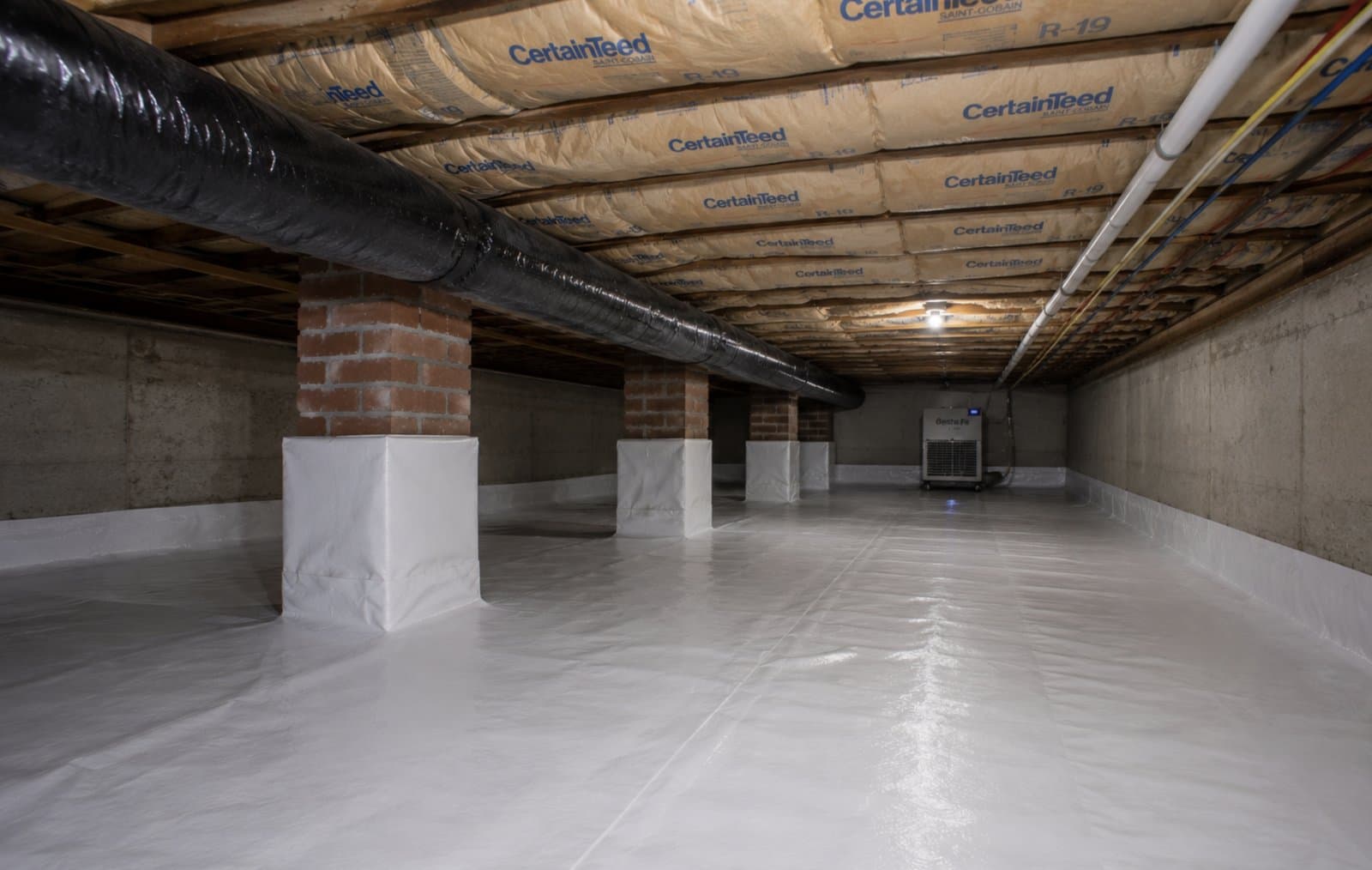
- Encapsulate the crawl space. Treating the basement alone never holds while the crawl space keeps feeding it.
A plumbing or appliance leak
- How you recognise it
- Localised, often behind or under the washer, water heater, or a supply line. Sometimes only a smell and a soft spot.
- The fix
- Repair, then dry the assembly to a documented standard before closing it back up.
| Source | How you recognise it | The fix |
|---|---|---|
| Summer condensation | Worst in July and August, better in winter. Walls and slab feel cool and damp. Cold water pipes drip. | Dehumidification to 50 percent or below, and stop ventilating with humid outdoor air, which makes it worse rather than better. |
| Grading and gutters | Worse within a day or two of heavy rain. Staining or efflorescence low on the foundation wall. | Extend downspouts well away from the foundation, restore positive slope of the soil away from the house. This is the cheapest permanent fix on the list. |
| Foundation seepage | Damp patches or white mineral bloom on block or poured walls, sometimes a wet line along the cove joint where wall meets slab. | Exterior drainage correction, or interior drainage and sump where the exterior is not practical. |
| Slab vapor drive | Whole slab reads damp with no obvious leak. Flooring adhesive fails. Common in mid century homes built without a vapor barrier under the slab. | Vapor barrier under new flooring, dehumidification, and no organic flooring laid directly on the slab. |
| A crawl space next door | The basement smells but the moisture is coming from an attached dirt floor crawl space sharing the air. | Encapsulate the crawl space. Treating the basement alone never holds while the crawl space keeps feeding it. |
| A plumbing or appliance leak | Localised, often behind or under the washer, water heater, or a supply line. Sometimes only a smell and a soft spot. | Repair, then dry the assembly to a documented standard before closing it back up. |
The Connecticut Pattern
Older Connecticut housing gives us fieldstone and rubble foundations that breathe moisture continuously, mid century poured walls with no exterior waterproofing left, and finished basements added in the 1990s where framing and carpet went straight onto a slab with no vapor barrier. That last combination is the one we see most often, because it puts paper faced drywall and carpet pad, both excellent food, against a cool damp surface.
How To Find Your Source This Weekend
Buy a hygrometer. They cost about twelve dollars and they turn a guessing game into a measurement.
Measure First
Put the hygrometer in the basement and read it over several days. Below 50 percent relative humidity, growth is not being driven by ambient humidity and you should be hunting a specific leak. Between 50 and 60, you are in the range where growth begins on cellulose. Above 60 percent sustained, you have found your answer and the problem is the room, not a spot in it.
Then Correlate To Weather
Note whether the smell tracks rain or tracks heat. Worse a day after heavy rain points at grading, gutters and seepage. Worse on hot humid days regardless of rain points at condensation and dehumidification. Constant year round with no pattern points at a plumbing leak or slab vapor drive.
Then Look Where It Hides
Pull a corner of carpet away from the wall and smell the pad and the slab underneath. Look behind stored cardboard against exterior walls. Check the joist bays at the rim, especially above a crawl space. Look at the underside of any finished wall base you can access. The smell is almost always strongest within a foot of where the growth actually is.
What Actually Removes The Smell
In order of what does real work. The first three are the job. The rest are support.
Approaches ranked by whether they address the moisture source, the growth, or only the odor.
Correct grading, gutters, downspouts
- What it addresses
- The water
- Verdict
- Highest return per dollar on this list and permanent. Do this before spending on anything else.
Dehumidify to 50 percent or below
- What it addresses
- The conditions
- Verdict
- A properly sized unit with a condensate drain, running continuously. Not a small consumer unit emptied by hand once a week.
Remove what grew
- What it addresses
- The source
- Verdict
- Porous material with rooted growth comes out. Drywall, carpet, pad, ceiling tile, cardboard. Nonporous surfaces are cleaned.
Vapor barrier on a dirt crawl space
- What it addresses
- The supply
- Verdict
- If an attached crawl space is feeding the basement, sealing it is the fix for both.
HEPA air scrubbing
- What it addresses
- Airborne particulate
- Verdict
- Useful during and after the work. Not a substitute for removal.
Ventilating with outdoor air in summer
- What it addresses
- Nothing, usually
- Verdict
- A common instinct that backfires. Warm humid outdoor air hitting cool basement surfaces condenses and adds moisture.
Deodorisers, sprays and scented products
- What it addresses
- The symptom only
- Verdict
- Masks the reading you actually need. If a basement stops smelling musty because of a plug in, you have lost your instrument, not your problem.
| Approach | What it addresses | Verdict |
|---|---|---|
| Correct grading, gutters, downspouts | The water | Highest return per dollar on this list and permanent. Do this before spending on anything else. |
| Dehumidify to 50 percent or below | The conditions | A properly sized unit with a condensate drain, running continuously. Not a small consumer unit emptied by hand once a week. |
| Remove what grew | The source | Porous material with rooted growth comes out. Drywall, carpet, pad, ceiling tile, cardboard. Nonporous surfaces are cleaned. |
| Vapor barrier on a dirt crawl space | The supply | If an attached crawl space is feeding the basement, sealing it is the fix for both. |
| HEPA air scrubbing | Airborne particulate | Useful during and after the work. Not a substitute for removal. |
| Ventilating with outdoor air in summer | Nothing, usually | A common instinct that backfires. Warm humid outdoor air hitting cool basement surfaces condenses and adds moisture. |
| Deodorisers, sprays and scented products | The symptom only | Masks the reading you actually need. If a basement stops smelling musty because of a plug in, you have lost your instrument, not your problem. |
Where The Line Sits
Green Restoration draws the line this way. A dry basement with a musty box in the corner is a housekeeping job. Growth across a wall or under flooring, or an area beyond roughly ten square feet, or any growth where the moisture source is still active, is remediation work under containment. Our mold removal page describes the sequence and our guide to what mold remediation costs covers the pricing.
A Note On Connecticut Law From October 2026
From October 1, 2026, Public Act 26-100 requires any contractor holding itself out for residential mold remediation in Connecticut to attest to certification by the IICRC, NORMI or another approved body, and requires every mold remediation job in the state to follow the ANSI IICRC S520 standard. If you hire this work out, that is now a question you can ask and verify. Our guide to the new Connecticut mold law covers what changed.
When A Musty Smell Is Something Else
Three smells get called musty that are not, and two of them matter more than mold.
Sewer Gas
A sour or rotten smell rather than an earthy one, often near a floor drain or a rarely used bathroom, usually means a dried out trap letting sewer gas into the room. Pour a bucket of water down the drain and wait a day. If that fixes it, the trap had simply evaporated. If it does not, it needs a plumber rather than a remediation crew.
Heating Oil
A distinctly petroleum smell near an oil tank is not an odor problem. Tanks weep at seams and fittings and the smell travels through the whole house. That needs the tank inspected, and a leak becomes an environmental matter rather than a cleaning one.
Dead Animal
Sweet, heavy and getting worse for a week or two before slowly fading points at a rodent that died in a wall or joist bay. It resolves on its own eventually but the source should come out, because the residue keeps attracting insects. Our guide to identifying household smells walks through telling these apart.
What It Costs To Fix Properly
Wide range, because the answer depends entirely on which of the six sources you have and how far growth travelled.
Typical Connecticut ranges. Every property is quoted after a walkthrough.
Drainage correction outside
- Typical range
- $200 to $2,000
- What it covers
- Downspout extensions and regrading at the low end, exterior drainage work at the high end. Usually the first money worth spending.
Dehumidification
- Typical range
- $1,200 to $3,000
- What it covers
- Properly sized unit with condensate drain, installed to run continuously.
Crawl space encapsulation
- Typical range
- $3,000 to $15,000
- What it covers
- Vapor barrier, sealing, dehumidification. Resolves the basement too where the crawl space was the supply.
Basement mold remediation
- Typical range
- $2,000 to $8,000
- What it covers
- Containment, removal of affected porous material, HEPA filtration, antimicrobial treatment, documented drying.
| Scope | Typical range | What it covers |
|---|---|---|
| Drainage correction outside | $200 to $2,000 | Downspout extensions and regrading at the low end, exterior drainage work at the high end. Usually the first money worth spending. |
| Dehumidification | $1,200 to $3,000 | Properly sized unit with condensate drain, installed to run continuously. |
| Crawl space encapsulation | $3,000 to $15,000 | Vapor barrier, sealing, dehumidification. Resolves the basement too where the crawl space was the supply. |
| Basement mold remediation | $2,000 to $8,000 | Containment, removal of affected porous material, HEPA filtration, antimicrobial treatment, documented drying. |
Insurance, Briefly
Homeowners policies generally cover sudden and accidental water, such as a burst supply line, and generally exclude long term seepage and humidity, which is what most musty basements are. Where a covered event is involved we document the loss with photographs, moisture readings and a written scope and submit it directly to your insurer. We are not licensed public adjusters and do not negotiate claims on your behalf.
Questions Homeowners Ask
Does a musty smell always mean mold?+
It means microbial growth, which is usually mold and sometimes bacteria on damp material. It does not tell you the species or the extent, and it can also be confused with sewer gas from a dried out floor drain trap or with heating oil near a tank. What a musty smell reliably tells you is that moisture is present and something is growing on it, which is worth finding either way.
Will a dehumidifier get rid of a musty basement smell?+
It will if ambient humidity was the whole problem and nothing has established itself yet. Hold the basement at 50 percent relative humidity or below with a properly sized unit plumbed to a drain, and a mild musty smell often resolves within a couple of weeks. If growth is already rooted in drywall, carpet pad or stored cardboard, the dehumidifier stops it spreading but the material still has to come out.
Should I open basement windows to air it out?+
Not in summer. Warm humid outdoor air entering a cool basement condenses on the walls and slab and adds moisture rather than removing it, which is the opposite of what you want. Close it up and dehumidify instead. Ventilating helps in cold dry weather, and hurts in exactly the months when the smell is worst.
How much mold is too much to handle myself?+
A common working line is about ten square feet. Below that, on a hard nonporous surface, with the moisture source fixed, a careful homeowner cleanup is reasonable. Beyond that, or on porous material, or where the water source is still active, the work needs containment and negative air so that disturbing it does not distribute spores through the rest of the house.
Why does my basement smell worse after it rains?+
That timing points at water entering from outside rather than at ambient humidity. Look at gutters, downspout discharge and the slope of soil against the foundation first, because those are the cheapest things to correct and they solve a surprising share of cases. If the smell tracks heat and humidity instead of rain, the driver is condensation and the answer is dehumidification.
Can I just paint the basement walls with waterproof paint?+
Waterproof coatings can help against light vapor transmission on a sound wall, but painting over active seepage traps water in the masonry and the coating eventually blisters off, usually taking a layer of the surface with it. Coatings are a finish step after the water is controlled, not a way to control the water.
Does a musty smell in the basement affect the rest of the house?+
Usually yes, because of stack effect. Air moves upward through a house and is replaced by air drawn from the lowest level, so a meaningful share of what you breathe upstairs started in the basement. That is why a basement odor problem often first gets noticed as a general staleness on the first floor.
Is a musty smell dangerous?+
The smell itself is a set of microbial compounds rather than a toxin, and it is best treated as information rather than as a hazard in its own right. EPA notes mold exposure is associated with respiratory symptoms in sensitive individuals, so persistent growth is worth removing, and any specific health concern belongs with a physician. What the smell warrants is investigation, not alarm.